Moisture
Soft Spots Underfoot
- You See
- Areas that feel spongy or crunch when you walk the roof.
- What It Means
- Foam board under the membrane has soaked up water or crushed. Core cuts show how far it runs.
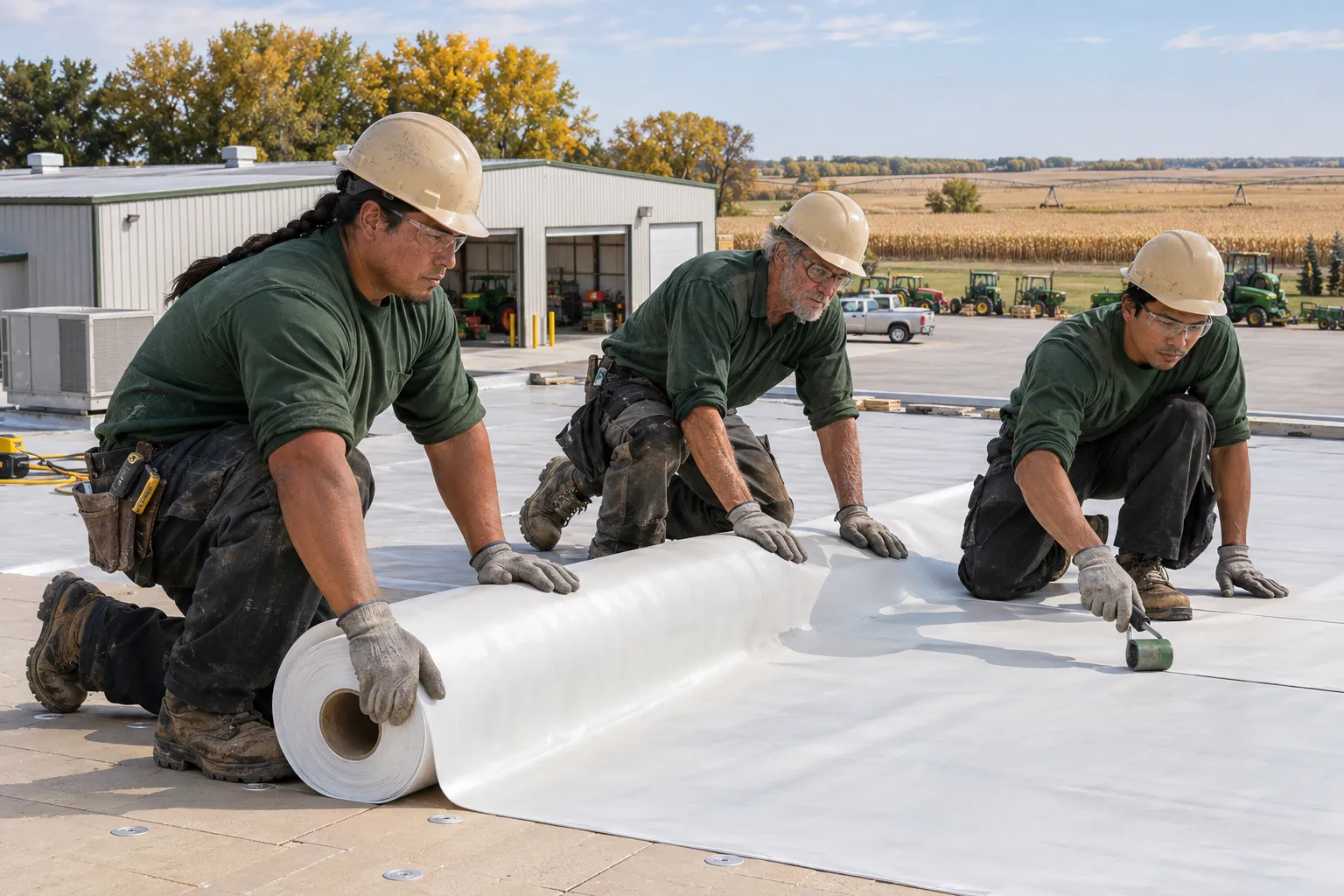
We plan Wood River commercial roofing around the insulation under the membrane, with core cuts, R-value choices, and tapered boards at low spots.
Wood River commercial roofing jobs often turn on what sits under the old roof. Wet insulation loses most of its value and keeps the deck damp.
We core-cut before pricing, replace wet board, and ask the building official what insulation the energy code calls for on a replacement roof. Then the scope lists the board, its thickness, the cover board, and any tapered sections, so you can see exactly what goes under the new membrane.
Insulation trouble rarely shows from the ground. These are the clues on the roof and inside.
What new insulation does under a new roof.
Dry board at the R-value the energy code calls for keeps heat in the building instead of the roof.
Tapered insulation adds slope at low spots, so rain stops standing on the membrane for days.
Cover board over the foam spreads foot traffic and hail, keeping the insulation from crushing.
A vapor retarder keeps damp indoor air from reaching the cold deck in winter.
Any of these systems goes on over fresh insulation in Wood River.
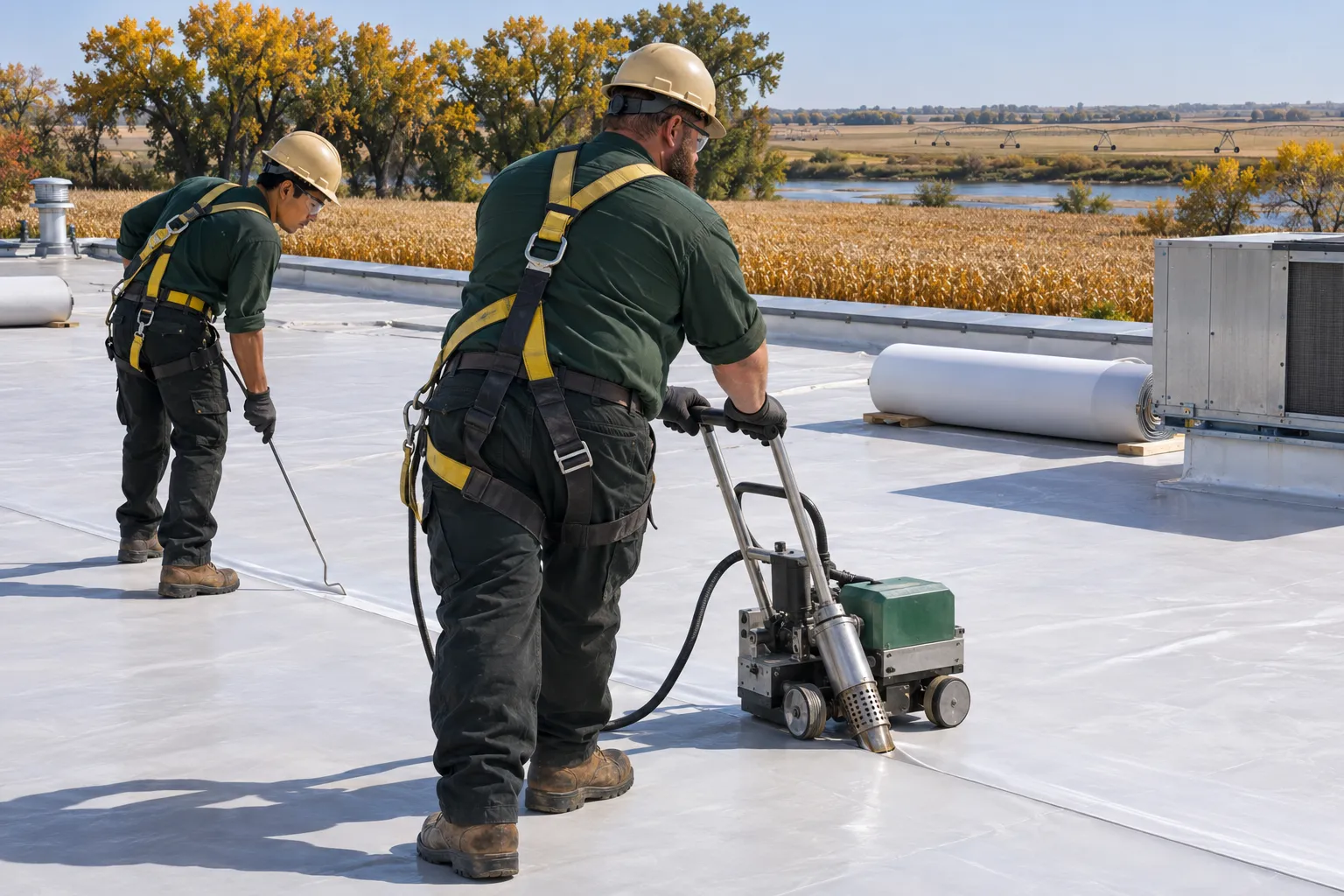
TPO over polyiso and cover board suits shops and warehouses with conditioned space below.
TPO Roofing details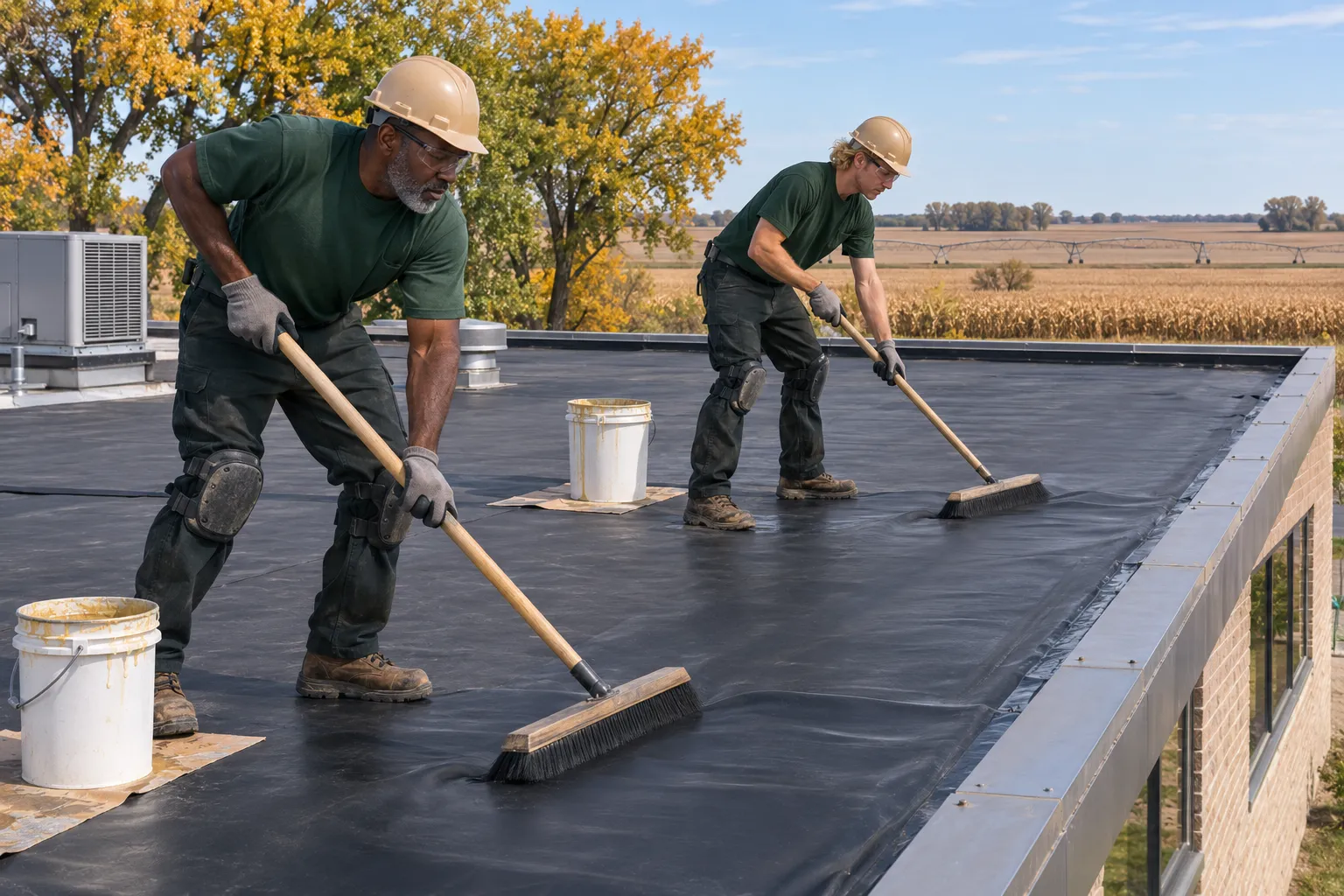
EPDM goes down adhered over new board on cold rooms and older flat roofs.
EPDM Roofing details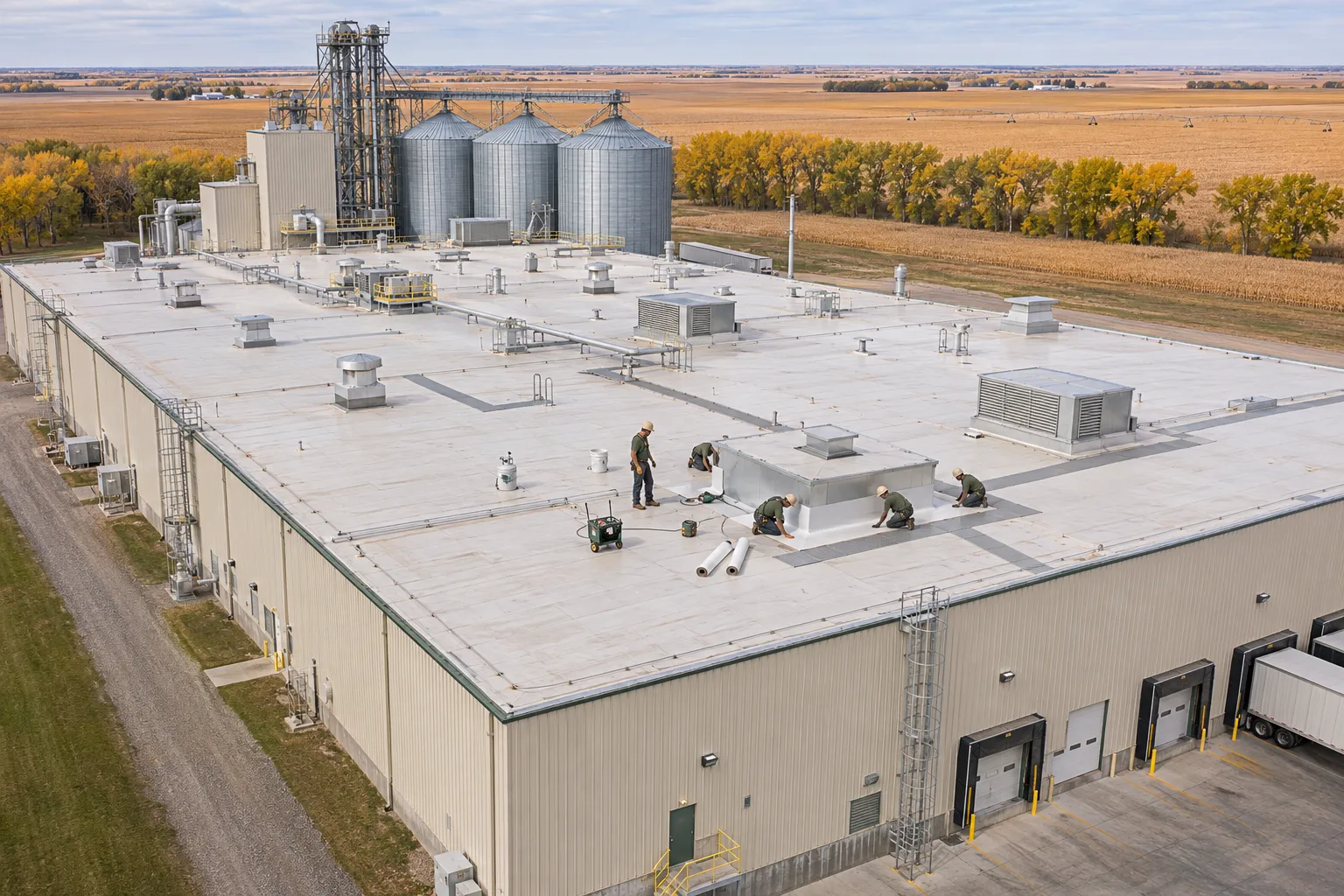
Process buildings get insulation and membrane chosen for exhaust and heavy curbs.
Industrial Roofing details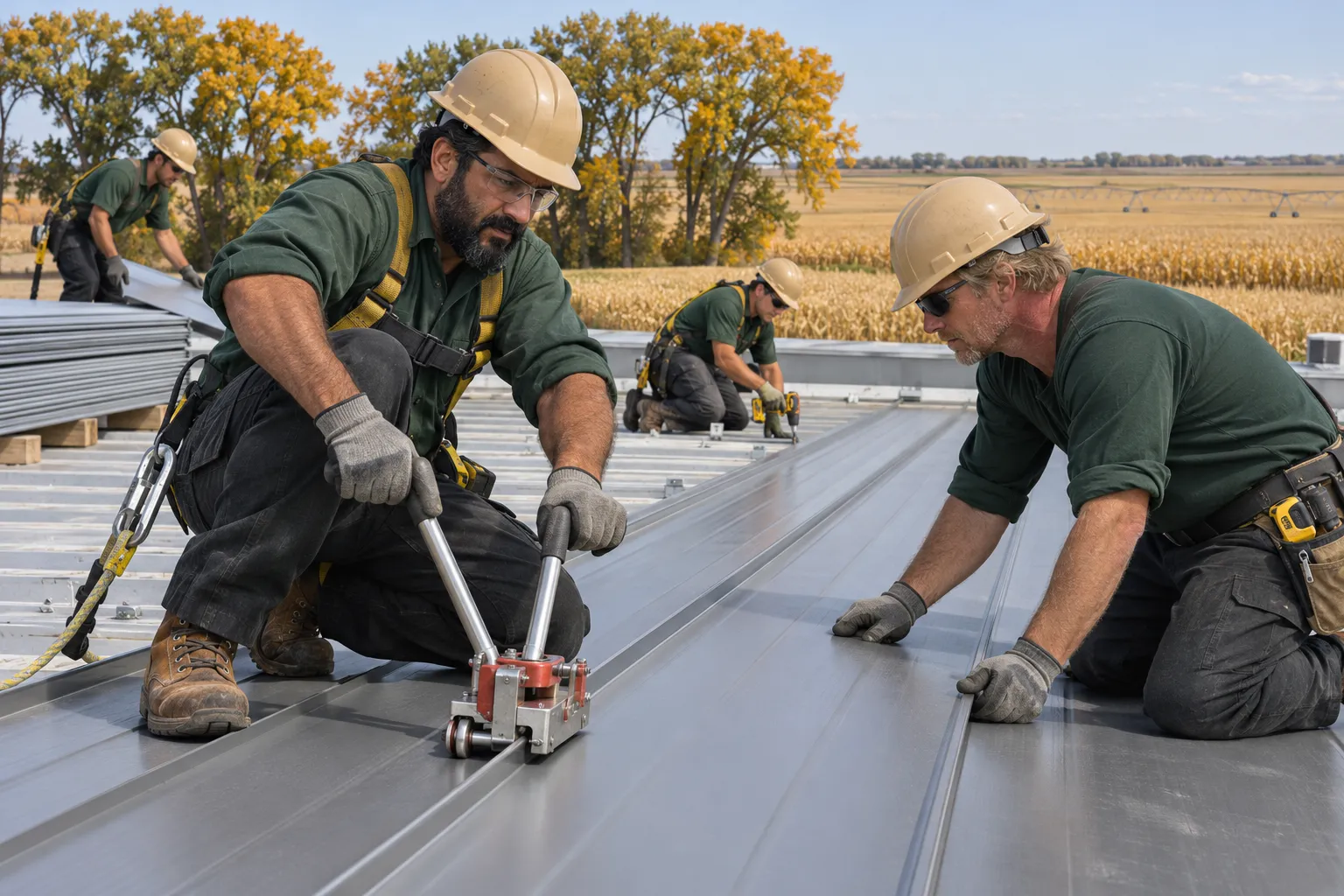
Metal panels go on with insulation and a vapor retarder under them to stop drips.
Commercial Metal Roofing detailsFive steps take the roof down to dry deck and back up with new board.
Samples across the roof show wet board, layer count, and deck condition before any number is written.
The building official confirms what insulation a replacement roof needs at your building.
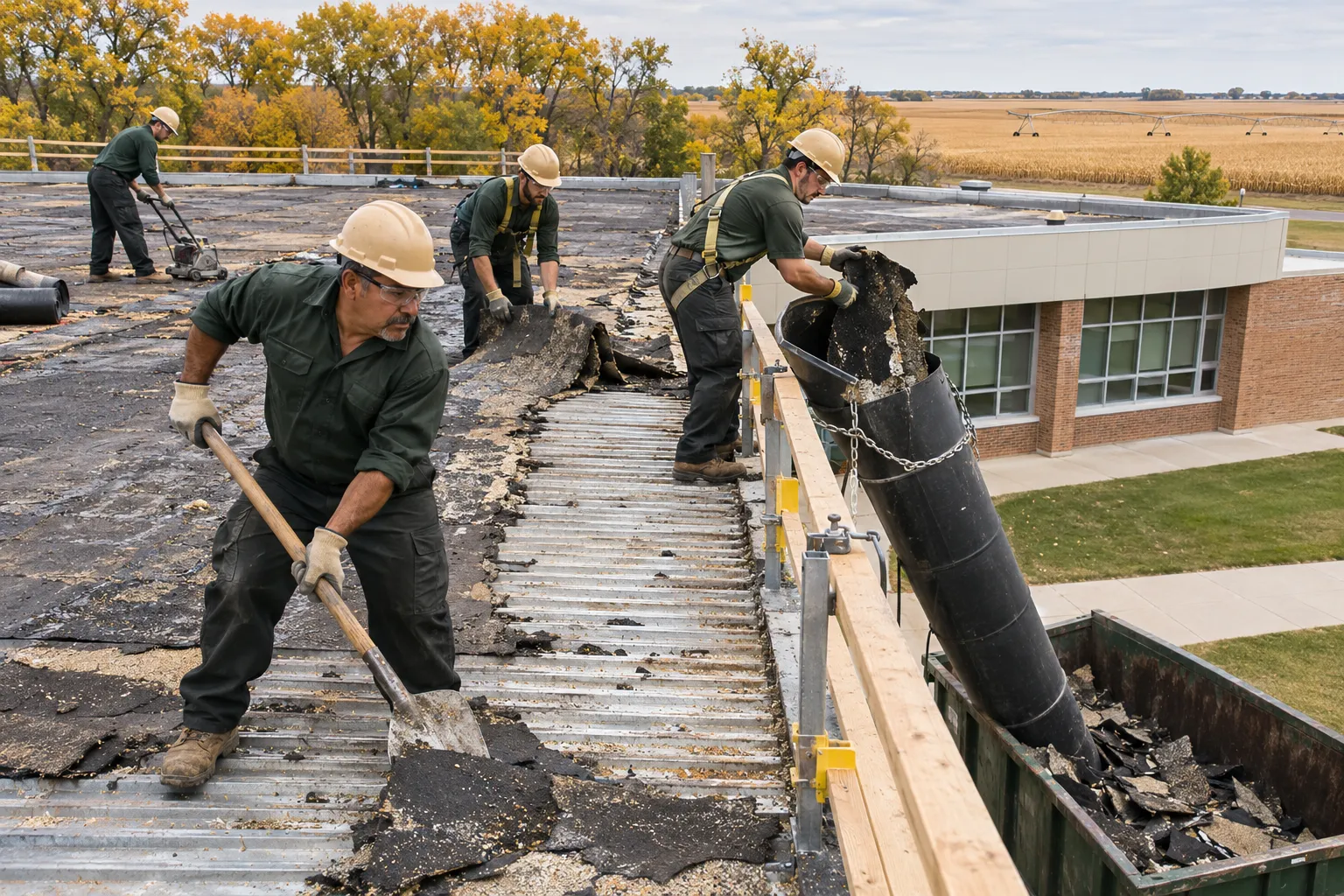
Old membrane and wet insulation come off one section at a time, and soft deck gets replaced.
Insulation goes down in layers, with tapered pieces pitching low spots toward the drains.
A cover board goes over the foam, then the chosen membrane, flashing, and edge metal.
Wood River is one of five towns we serve with Grand Island. Outside that list? Call us or send us a message.
What owners ask about insulation and reroofing.
Three things: how thick the insulation is, the R-value it reaches, and which cover board goes on top. The building official can tell you what the energy code expects on a replacement roof, and tapered pieces can level the low spots that hold water.
The share of wet board is the big swing. Roof size and system set the base, then every wet area adds removal, new insulation, and labor. Core cuts before pricing keep that number from changing after tear-off.
Not under a membrane. Water trapped in foam board stays there, loses insulating value, and rots wood decks or rusts steel ones. Wet areas get cut out and replaced.
It is a thin, hard board laid over the foam insulation. It spreads foot traffic and hail across a wider area so the foam keeps its shape.
More thickness adds R-value, though it also raises the roof edge and the height flashing has to reach. Parapet heights, door thresholds, and curb heights limit how much can be added, so the scope balances the code requirement against those details.
Tapered board fixes the slope that causes it. Drains still need clearing, and a crushed area from heavy traffic can create a new low spot, so walkway pads go where people walk.
Tell us where the roof feels soft or the ceiling stains, and we will start with core cuts.