
If Your Roof
Vents Grease or Chemical Exhaust
Residue builds up around fans and softens some membranes within a few seasons.
Start WithAn exhaust-resistant membrane
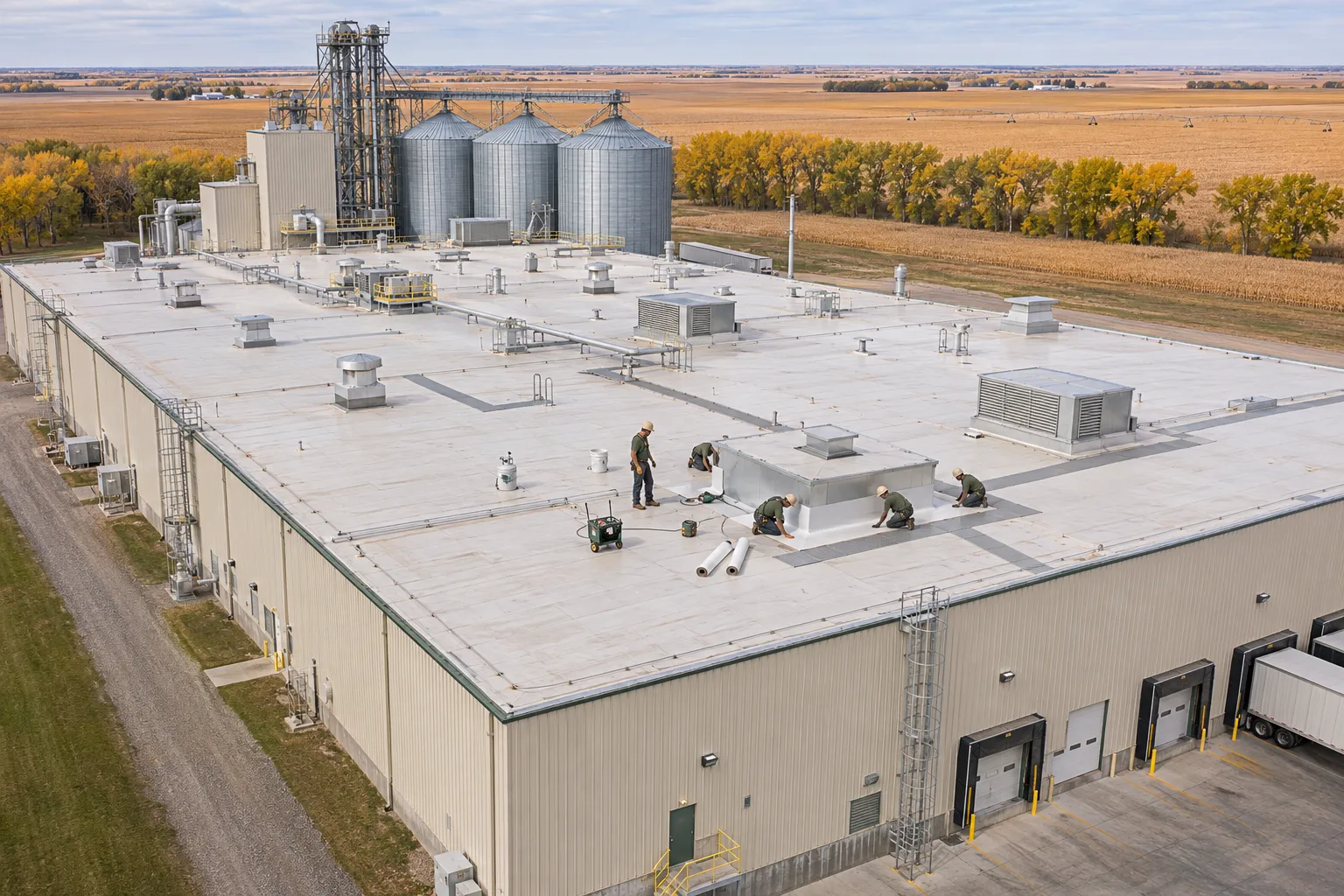
We handle Grand Island industrial roofing on plants and processing buildings, matching the membrane to the exhaust and phasing tear-off so lines keep running.
Grand Island industrial roofing starts with what the plant puts on and through its roof. Match your roof to the first step below.
Residue builds up around fans and softens some membranes within a few seasons.
Curbs sit low, flashing is cracked, and new equipment is on order.
Leaks drip near equipment that cannot get wet or shut down.
The rest of the roof checks out dry and tight.
Plant roofs wear out where the process meets the membrane. These are the conditions we see most.
Plants pick systems by exposure, equipment, and span. Here is how the main options line up.
| Need | System Detail | Why It Matters |
|---|---|---|
| Grease or chemical exhaust | Membrane rated for the exposure near vents | Keeps the sheet from softening and splitting around fans. |
| Heavy rooftop equipment | Reinforced curbs and walkway pads | Spreads the load and protects the membrane on service routes. |
| Wide, long spans | Extra attachment at corners and edges | Holds the sheet down where wind uplift is highest. |
| Hail exposure | Thicker sheet over cover board | Spreads impact so insulation underneath stays intact. |
| Sloped plant buildings | Standing-seam metal on clips | Lets panels move with heat and cold and shed snow. |
What the right industrial roof does for the floor below it.
Matching the membrane to the exhaust stops the soft, stained rings that turn into leaks over process lines and stored product.
Tear-off runs one section at a time with temporary seals each evening, so production keeps going under the rest of the roof.
Low or cracked curbs get rebuilt during the reroof, giving new fans and units proper flashing height above the membrane.
Walkway pads, clear routes, and marked edges help maintenance staff reach equipment without crossing open membrane.
Plant roofs get done in five steps, planned with plant maintenance from the start.
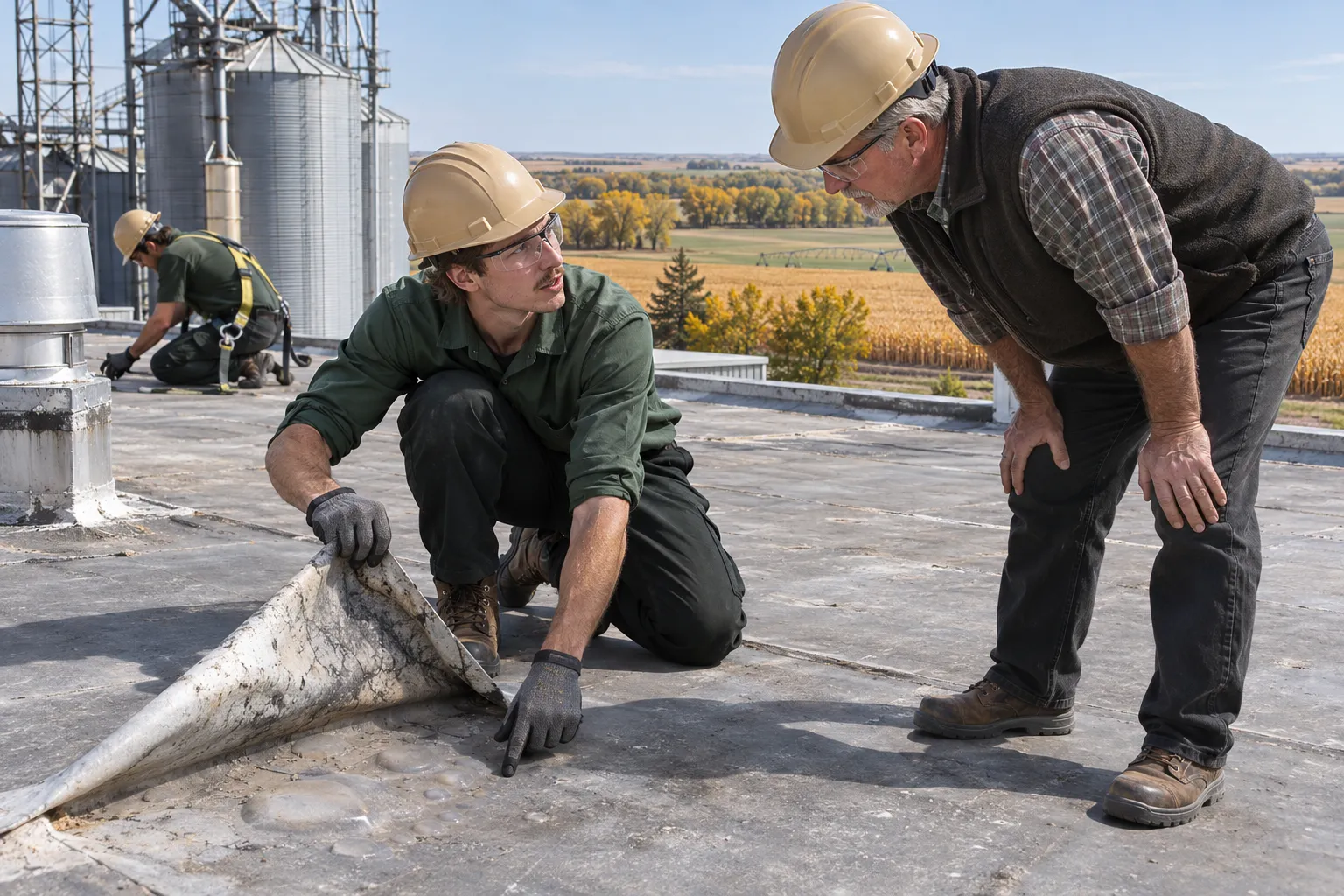
We cover the roof with plant staff to mark exhaust fans, air intakes, hot work limits, and equipment that has to stay dry.
Lockout steps for rooftop units, crane lift zones, and section order go in writing before work begins.
Interior protection goes over sensitive equipment under each open section, and intake work is timed to keep fumes out.
Old roof comes off, new insulation and membrane go down, and each section is sealed before the shift ends.
Fans and units get new curb flashing, walkway pads go along service routes, and maintenance walks the finished roof.
Offices, warehouses, and shop buildings on the same campus often take a different system.
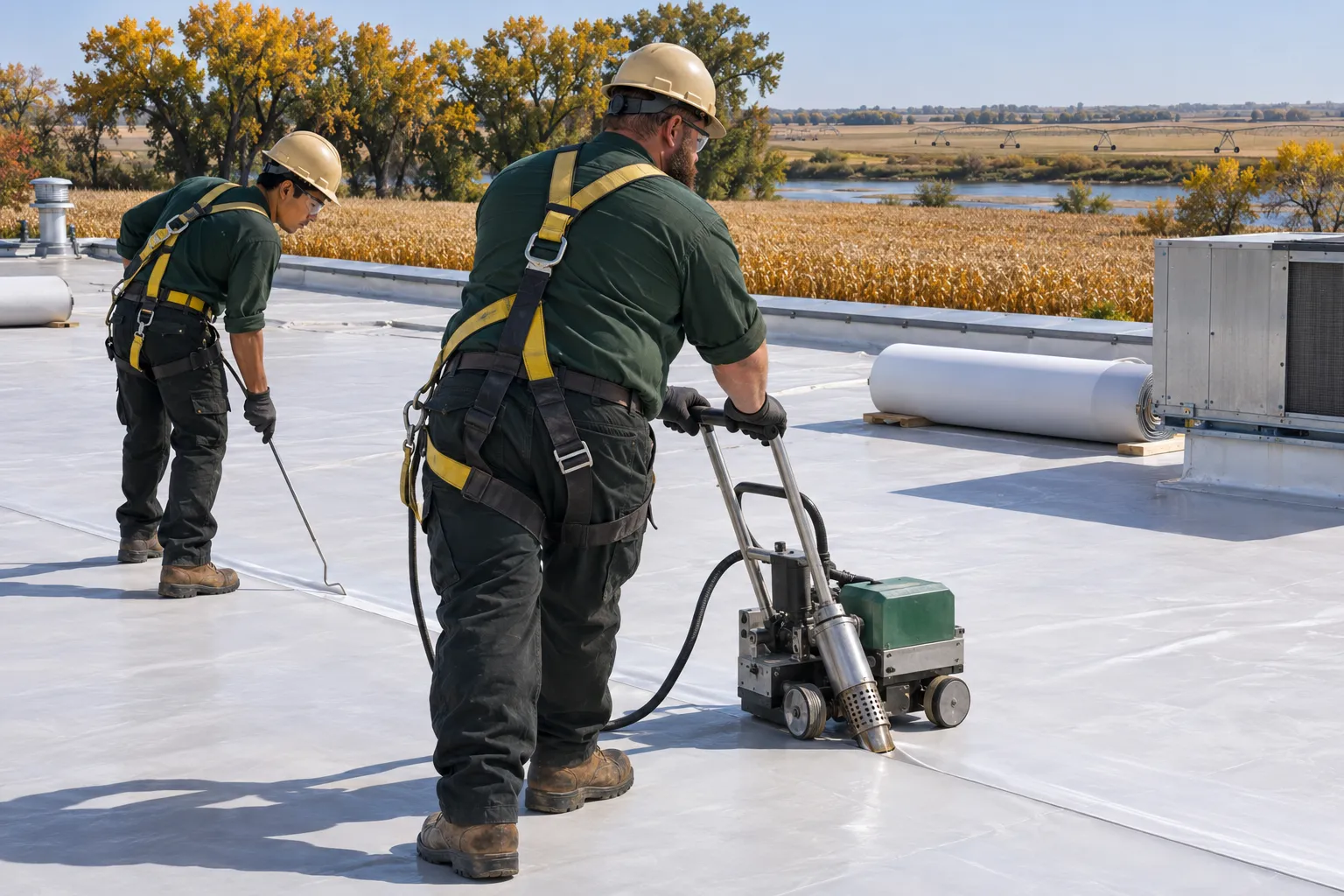
Front offices and conditioned warehouses beside the plant suit white TPO with welded seams.
How we install TPO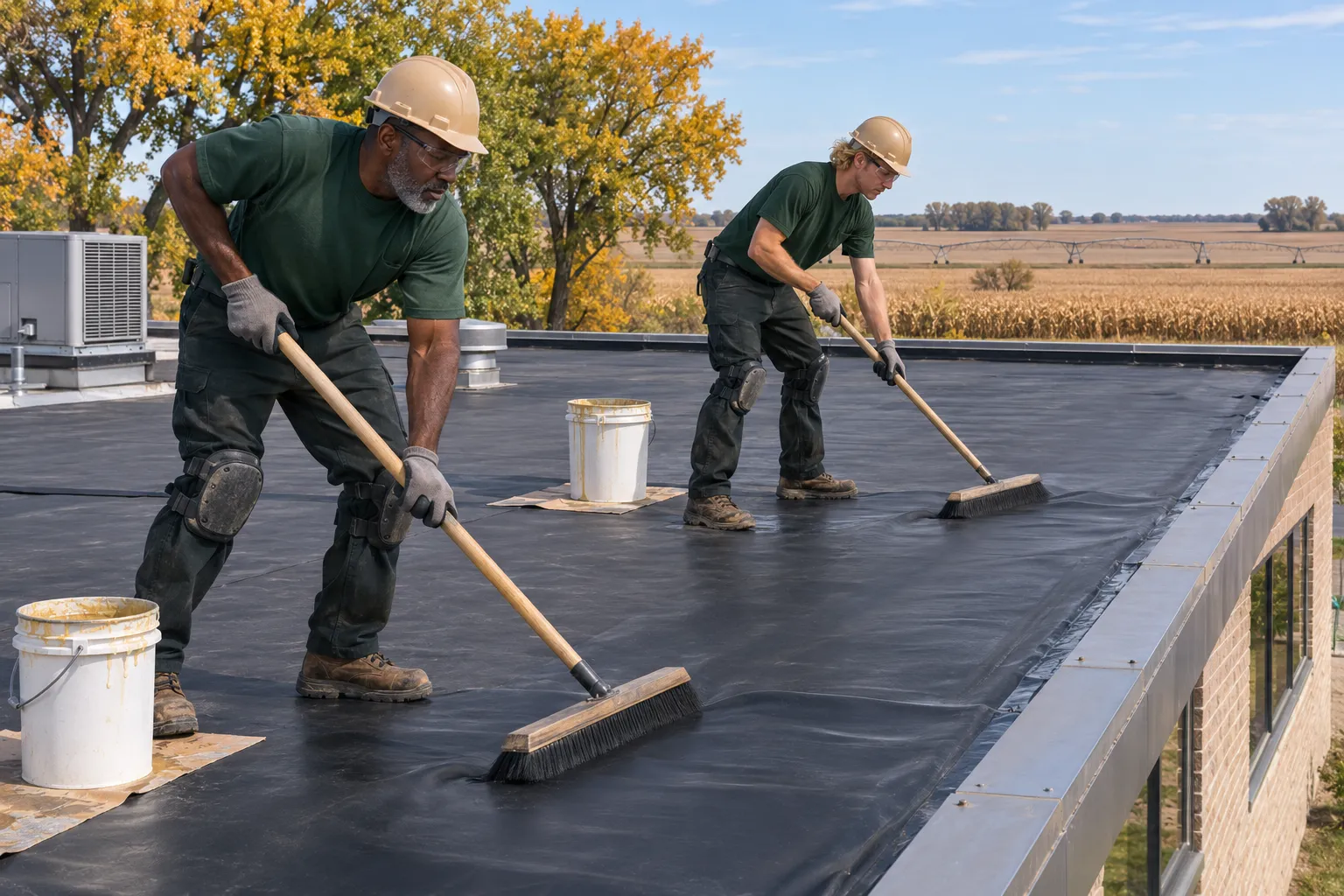
Cold storage and freezer rooms take flexible rubber membrane that handles the temperature swing.
How we install EPDM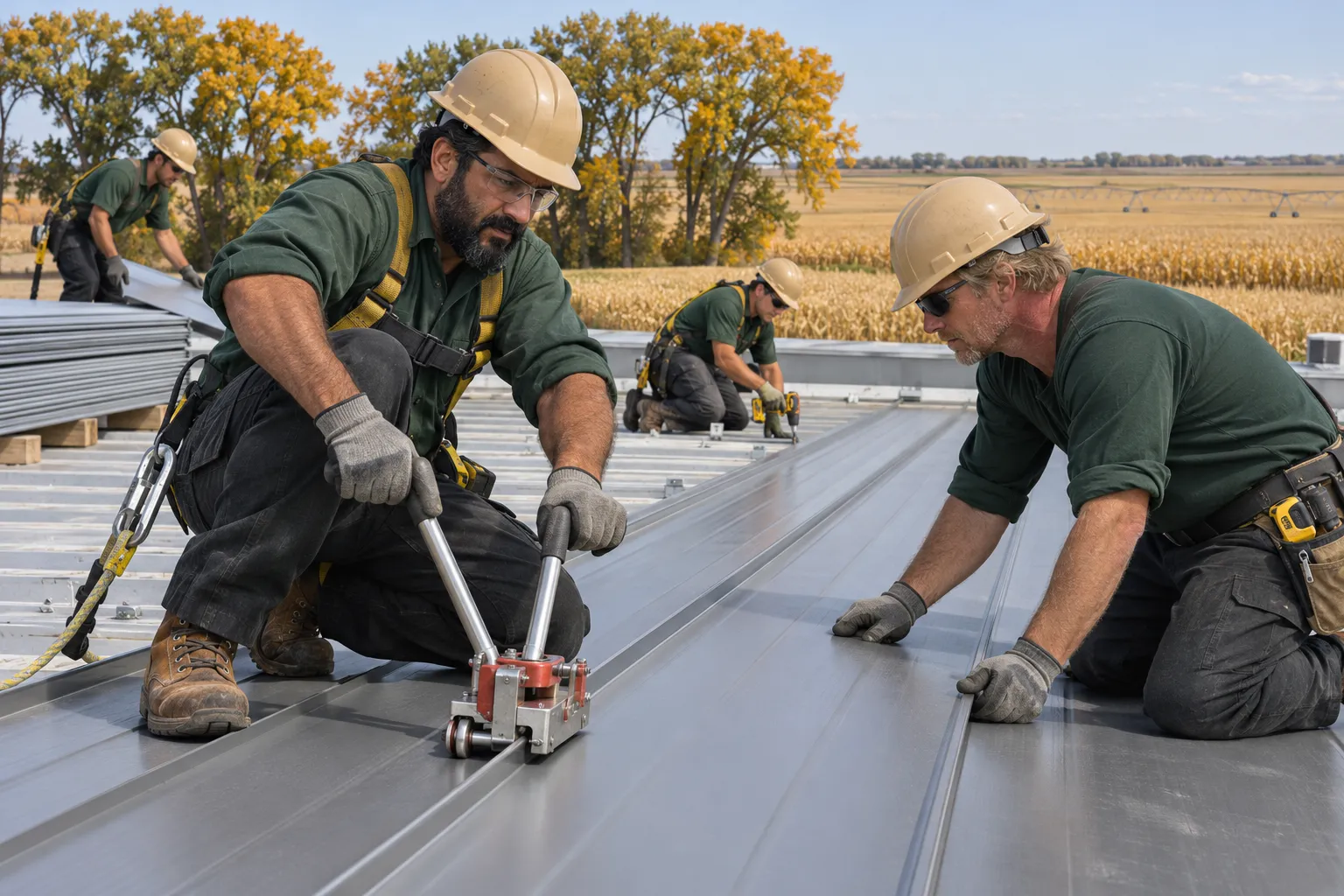
Equipment barns and sloped storage buildings on the property take standing-seam or ribbed steel panels.
How we install metalAnswers for plant managers and maintenance leads.
Most plants here run single-ply TPO or EPDM, or standing-seam metal, picked by what the process puts on the roof. Grease or chemical exhaust calls for a resistant membrane near vents. Heavy units need reinforced curbs and walkway pads, and wide spans need more attachment at corners and edges.
By phasing it. One section comes off and gets dried in at a time, with temporary seals each evening. Work near air intakes is timed to keep fumes out of the building, and interior protection goes over sensitive equipment under each open area.
Look for a written safety plan, rooftop equipment experience, and a phasing schedule you can follow. Ask how lockout of rooftop units, hot work near combustibles, and crane lifts are handled. Get the membrane, insulation, and attachment spec in writing, and confirm who handles the city permit.
Thicker membranes, cover boards over foam insulation, and heavier-gauge metal panels stand up to hail best. Cover boards spread the impact so the foam underneath stays intact. NWS Hastings reported hail up to tennis ball size inside Grand Island on June 13, 2017, and some membranes carry FM or UL hail ratings.
Wind piles snow against parapets, rooftop units, and lower roof levels, and those drifts add weight in concentrated spots. Adding equipment or a recover layer changes the loads the structure carries, so a structural review comes before any change that adds weight or creates new drift areas.
Tell us about the plant, the exhaust, and the hours it runs, and we will plan a roof walk with your maintenance lead.