
Grain Dust
Gutters Packed Solid
- You See
- Gutters full of dust and chaff, overflowing down the wall.
- What It Means
- Dust holds water against the eave and rusts it from the inside. Wider gutters and a cleaning schedule keep water moving.
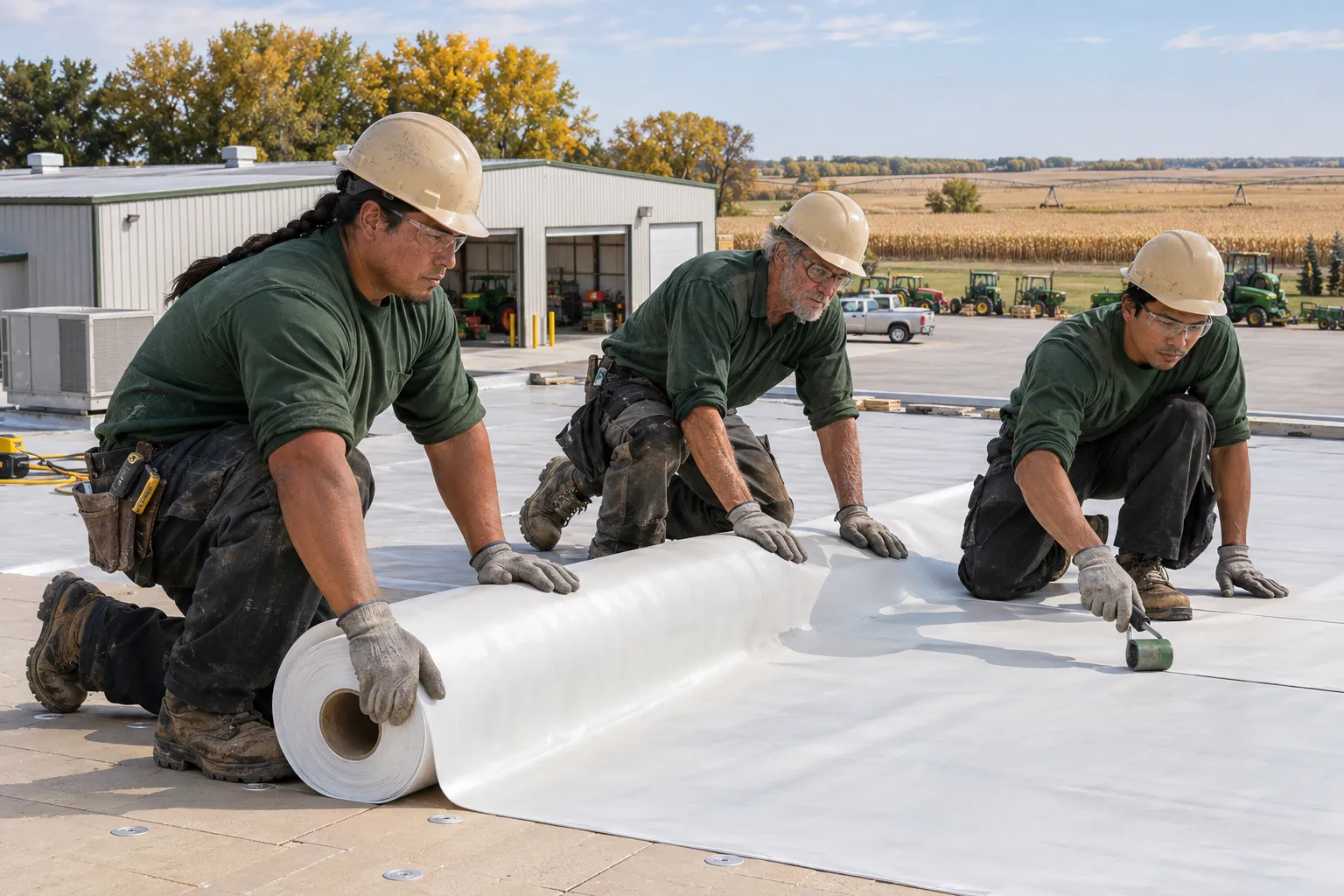
We take Ord commercial roofing work on farm supply stores, grain businesses, and metal shops, planning material for the longest drive in our area.
Most Ord commercial roofing jobs we see involve farm supply stores, grain businesses, and the metal shops beside them. Grain dust settles on these roofs and holds moisture against the steel.
We clear and resize gutters, replace rusted fasteners or whole panels, and bring every pallet on a planned trip, since Ord is the farthest town we cover. Panels, trim, and fasteners are counted on the first visit, so a missing box of screws never holds up a roof that is half done.
Dust, moisture, and open country wind shape what goes wrong on these roofs.
What a new roof protects on a farm supply property.
A tight roof and working gutters keep water off bagged feed, seed, and fertilizer stacked below the eaves.
Livestock and grain buildings get panels and fasteners suited to damp air and ammonia, so rust starts slower.
Snow guards keep snow off loading areas, so trucks and staff move without waiting for it to clear.
Low-slope offices and retail counters on the same lot get single-ply membrane in the same trip.
Farm supply, grain, and retail buildings in Ord use these systems.
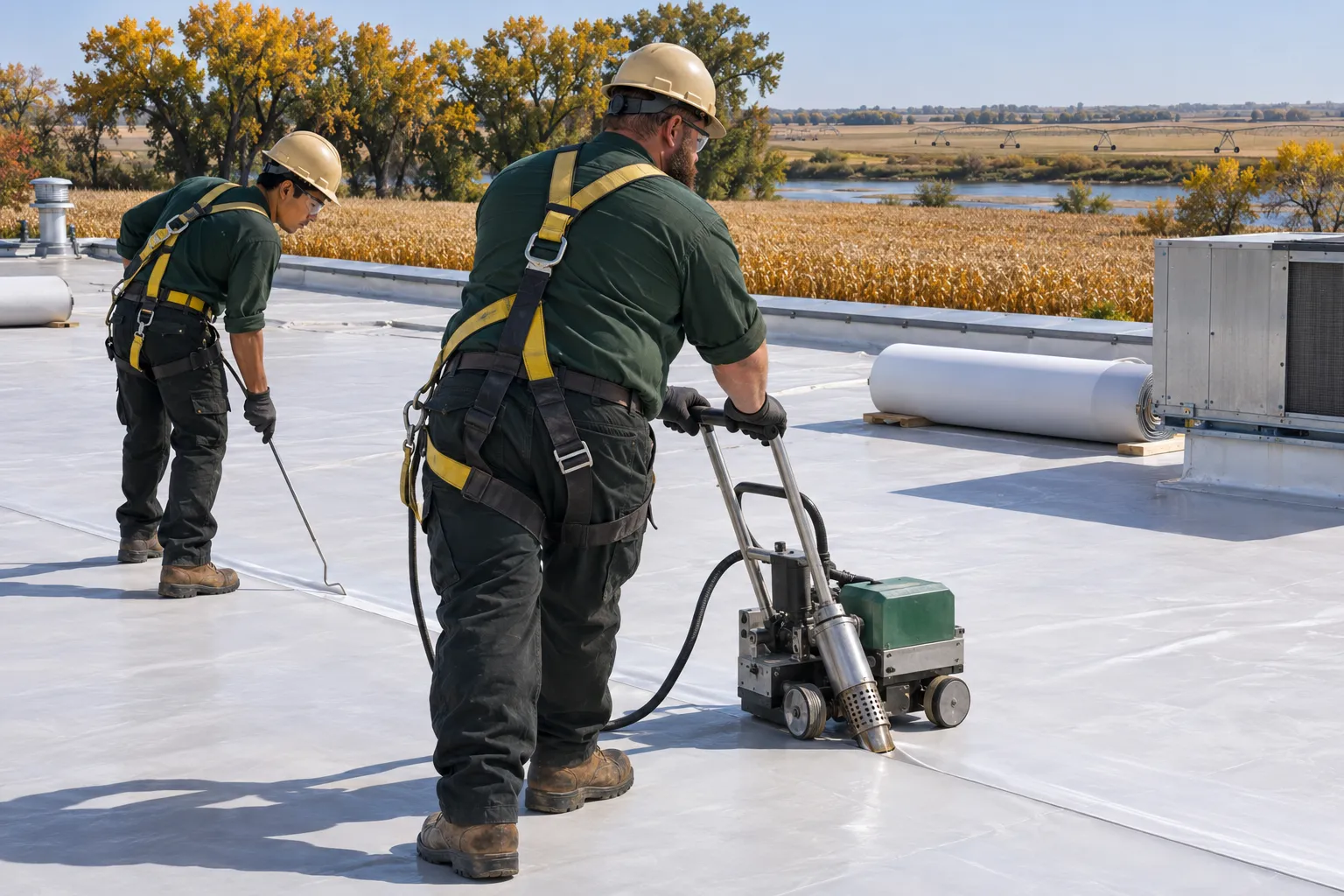
TPO tops flat retail and office sections where staff and customers work all day.
TPO Roofing details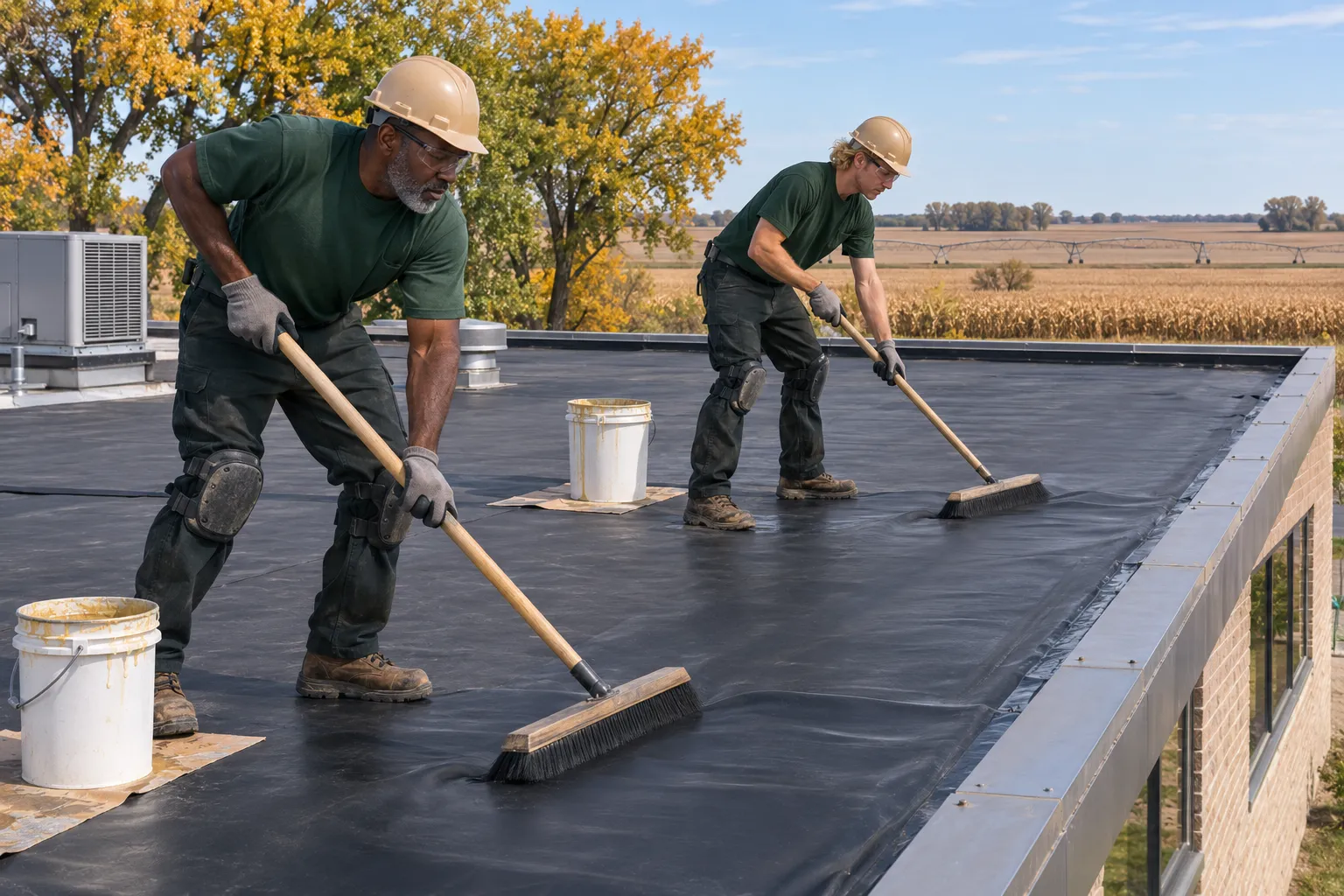
EPDM handles older flat roofs on storage additions with a flexible sheet that rides out the cold.
EPDM Roofing details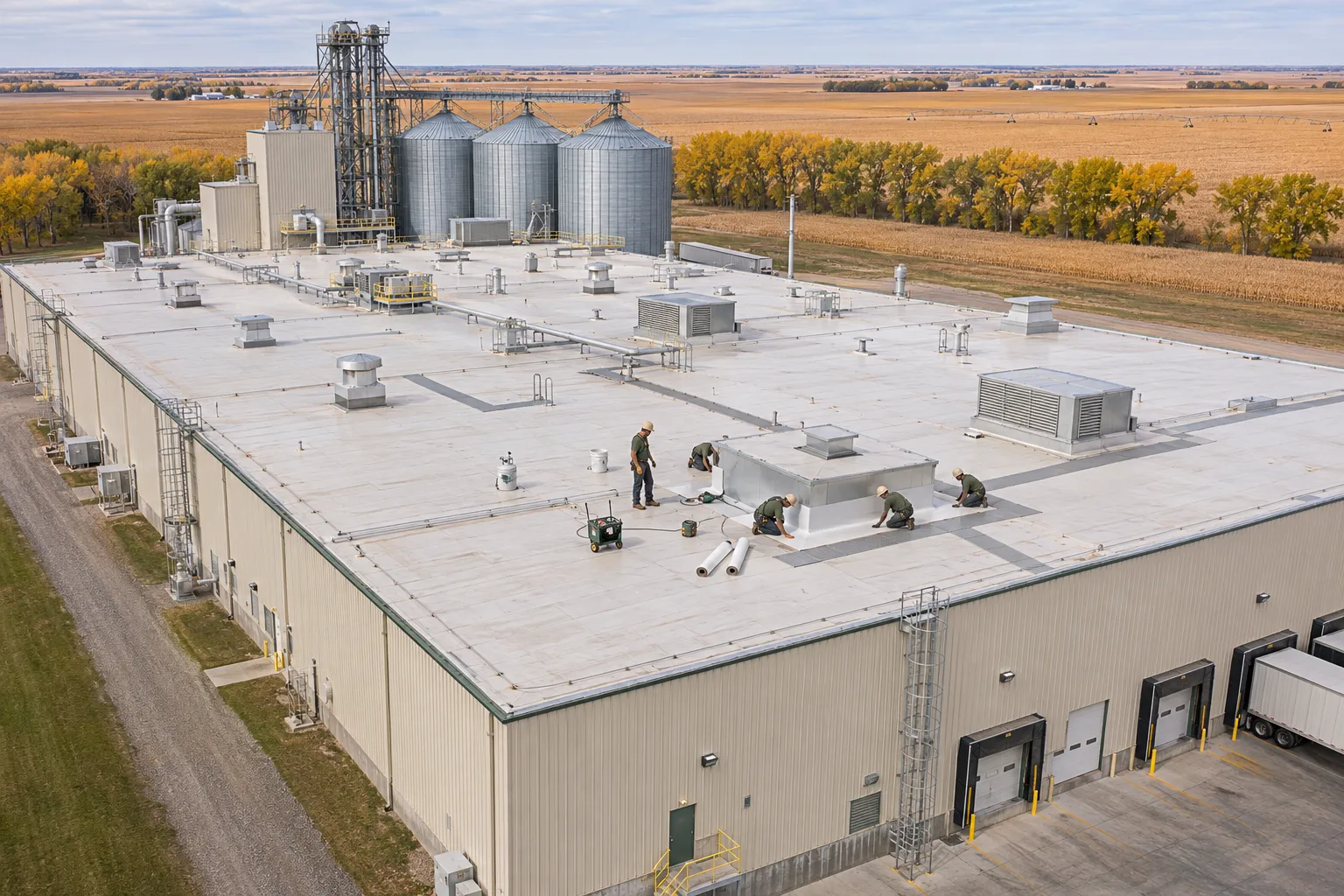
Mills and processing buildings with dust and exhaust get an industrial membrane plan.
Industrial Roofing details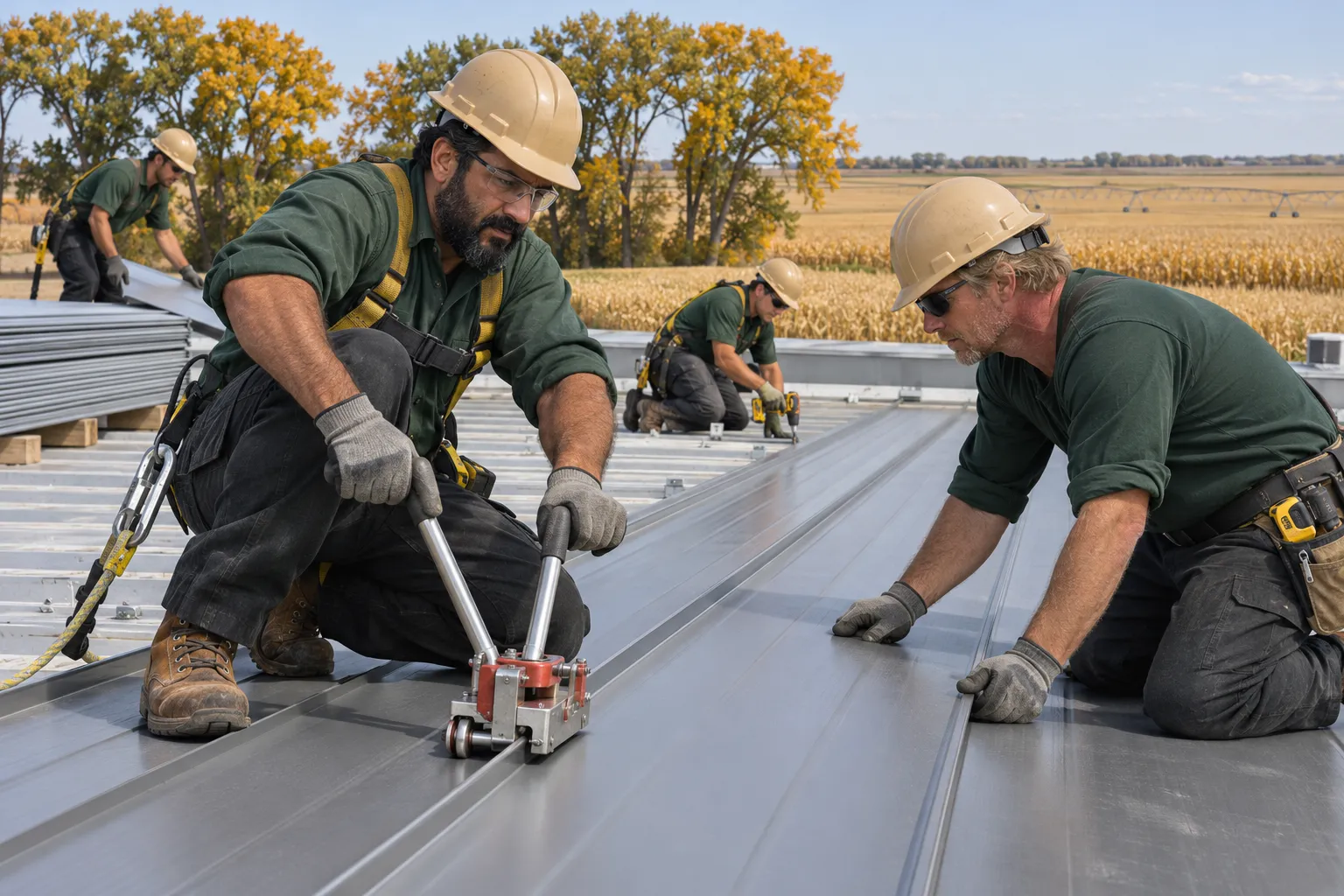
Ribbed and standing-seam steel covers shops, machine sheds, and sloped storage.
Commercial Metal Roofing detailsDistance shapes the plan, so these five steps front-load the details.
One visit covers every roof, gutter run, and panel length so nothing is missing when the trucks roll.
Panels, trim, fasteners, and membrane come on as few deliveries as the job allows.
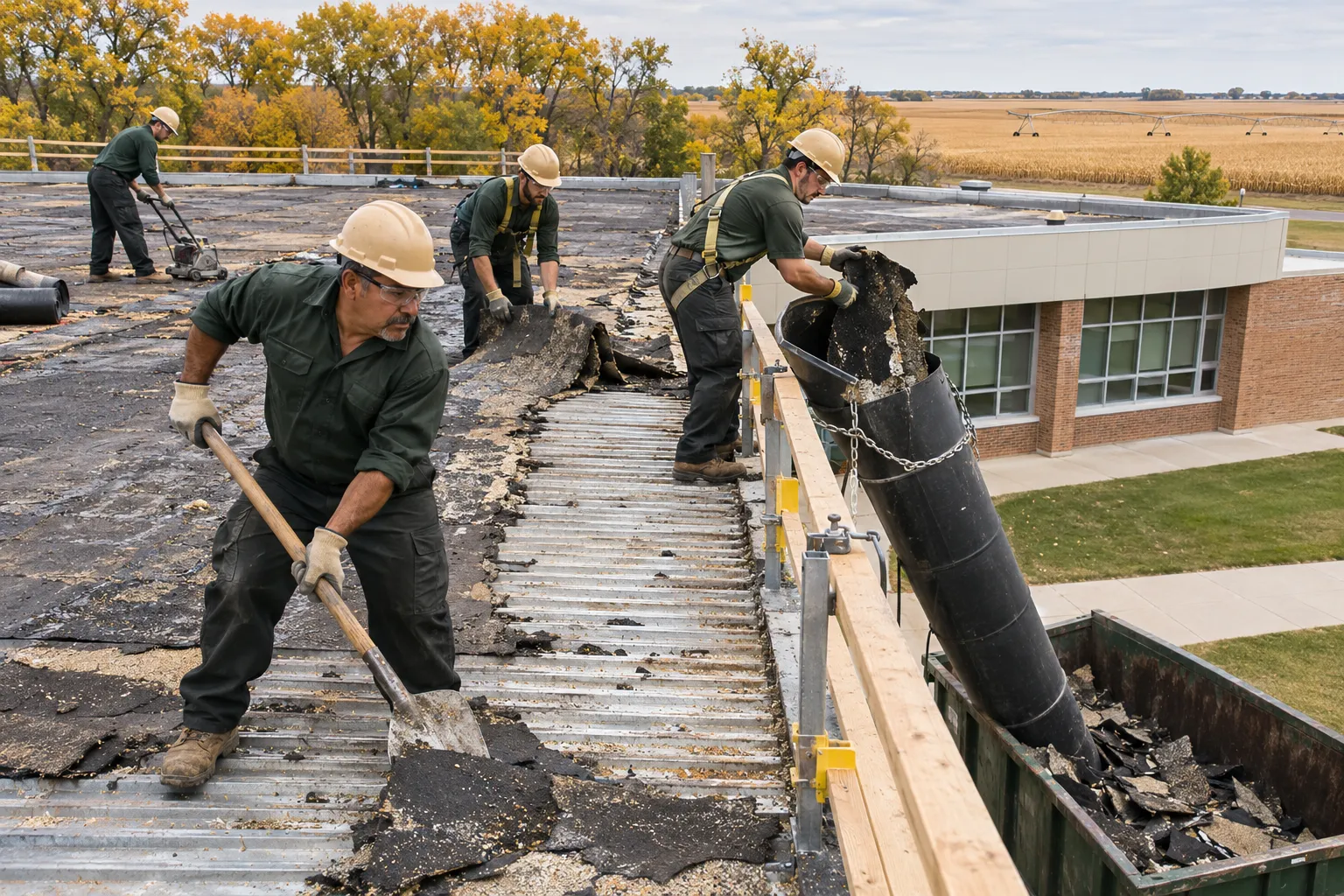
Dust and chaff come out first so rust and rot under them can be seen and fixed.
New steel or single-ply goes on section by section, with stock kept covered below.
Snow guards, trim, and resized gutters finish the job before the crew heads back.
Ord is the farthest of our five towns around Grand Island. For a building past it, call us or send us a message.
What farm supply and grain businesses ask.
Sloped storage and shop buildings mostly take metal roofing, and low-slope offices and retail take single-ply membrane. Grain dust holds moisture on the roof, so drains and gutters need regular cleaning. Every building gets inspected before a system is chosen.
Panel type and gauge, roof area, and how much old steel comes off set most of it. Trim, gutters, and snow guards add lines, and the distance from Grand Island adds travel and delivery to the scope.
That is for you to judge from the scope. We price travel openly as its own line, and planning full loads keeps the number of trips down.
Yes, when the rest of the roof is solid. Rusted panels come out, new ones in the same profile go in, and every fastener in that area gets new washers.
Our work covers building roofs on the property: shops, warehouses, offices, and storage buildings. Bins and elevator heads fall outside that, so we point you to a bin specialist for those and handle the roofs around them.
At least after harvest and again in spring, plus after any heavy dust season. Packed gutters are the main cause of rusted eaves we see on these roofs.
Tell us what the building stores and how the roof drains, and we will plan the trip out.