
Freeze-Thaw
Gaps in Parapet Coping
- You See
- Open joints in the cap along the top of the brick wall.
- What It Means
- Water runs into the wall from above and stains the ceiling below the parapet. New coping or counterflashing closes the top of the wall.
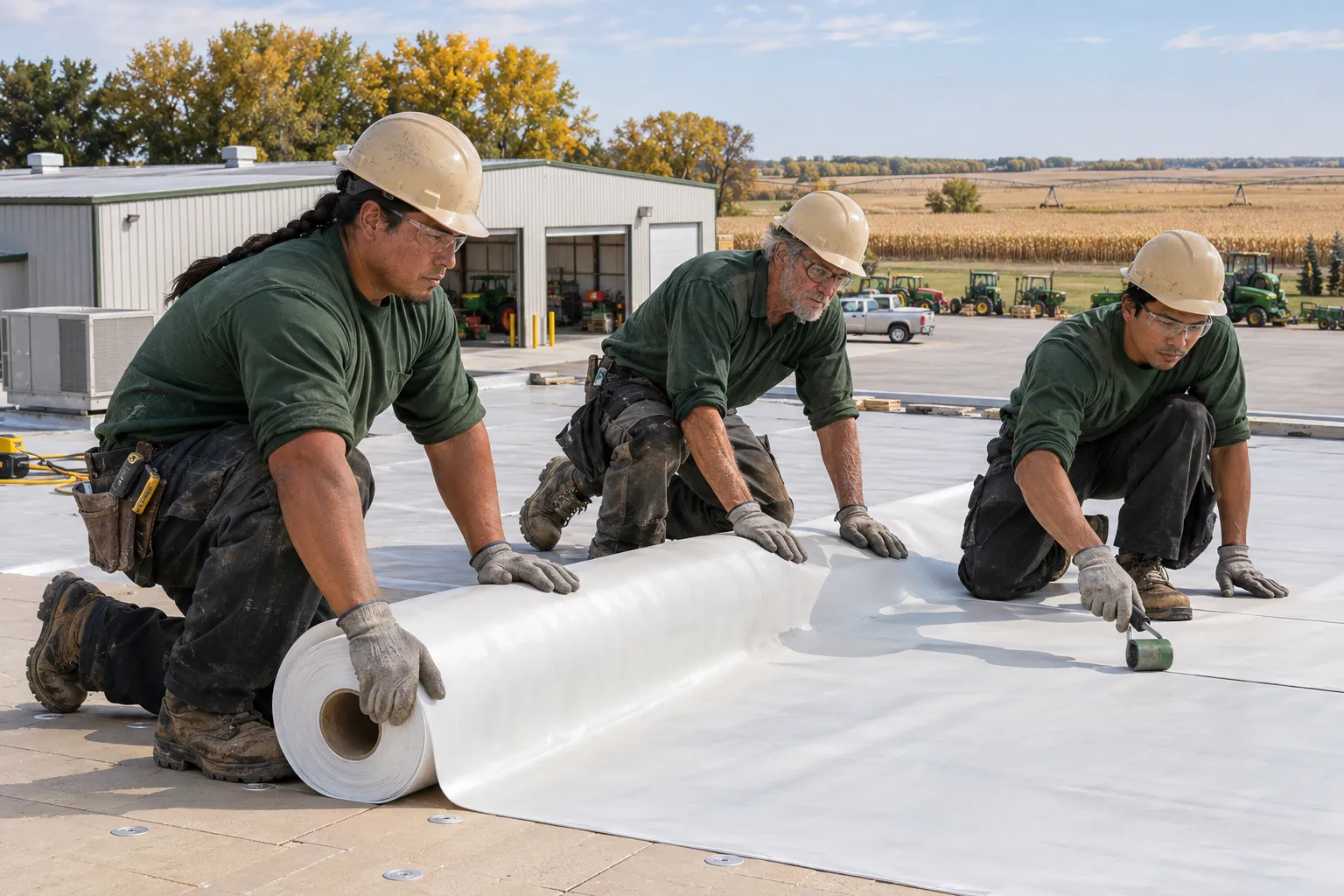
We take Aurora commercial roofing jobs on brick storefronts, retail, and shops east of Grand Island, starting with a walk across the roof.
Most Aurora commercial roofing calls we plan for involve storefronts that share a wall with the building next door. Water crossing that wall can show up a door away from where it got in.
So we flash the party wall, check the scupper or drain each roof empties to, and stage material from the alley so the storefront stays open to customers.
Older downtown roofs share the same weak spots. Here is what each one looks like from the roof.
What a new roof changes for a downtown business.
Staging from the alley and working one roof at a time keeps the front door, sidewalk, and display windows clear during business hours.
Party-wall flashing ties your membrane to the brick, so water from either roof stays out of the shared wall.
Tapered insulation and rebuilt scuppers send rain toward the alley side instead of pooling at the parapet.
Removing old patch layers and wet board stops the slow drip that keeps staining tiles above the sales floor.
Each system below goes on storefronts and shops in Aurora.
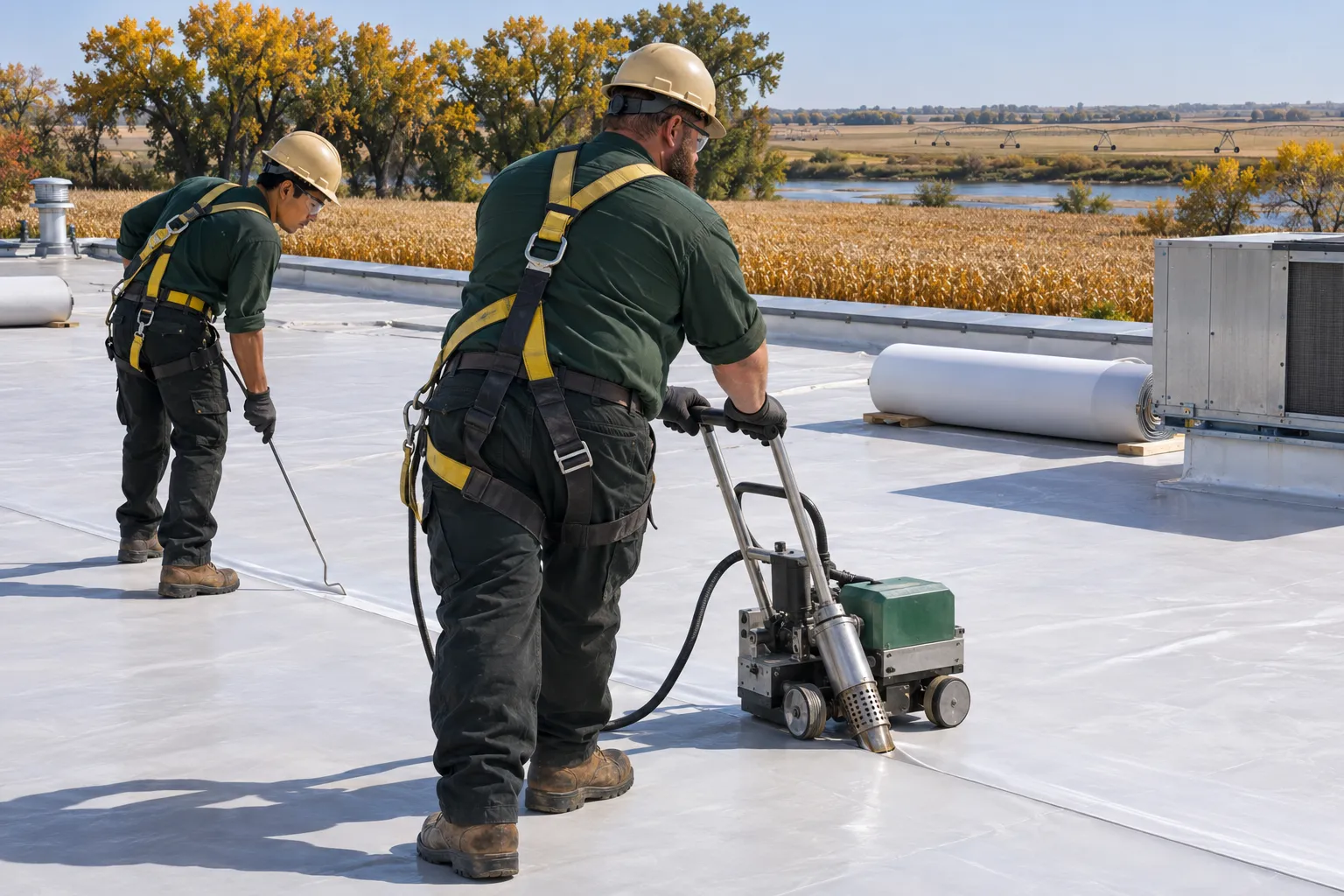
White TPO fits sunny retail roofs, with welded seams tied into parapet walls on every side.
TPO Roofing details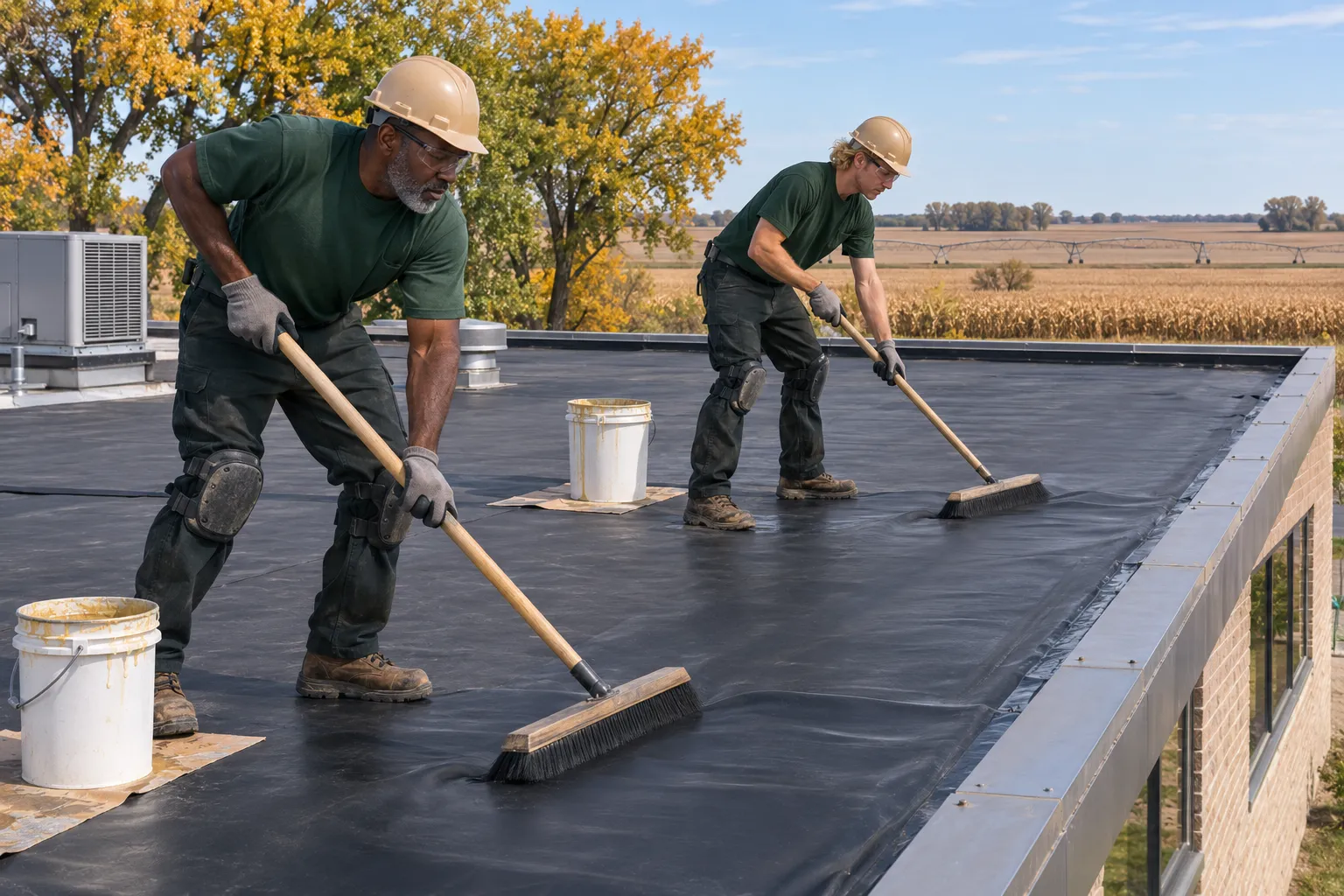
Rubber EPDM suits older flat roofs behind brick fronts, adhered so the surface stays clean to inspect.
EPDM Roofing details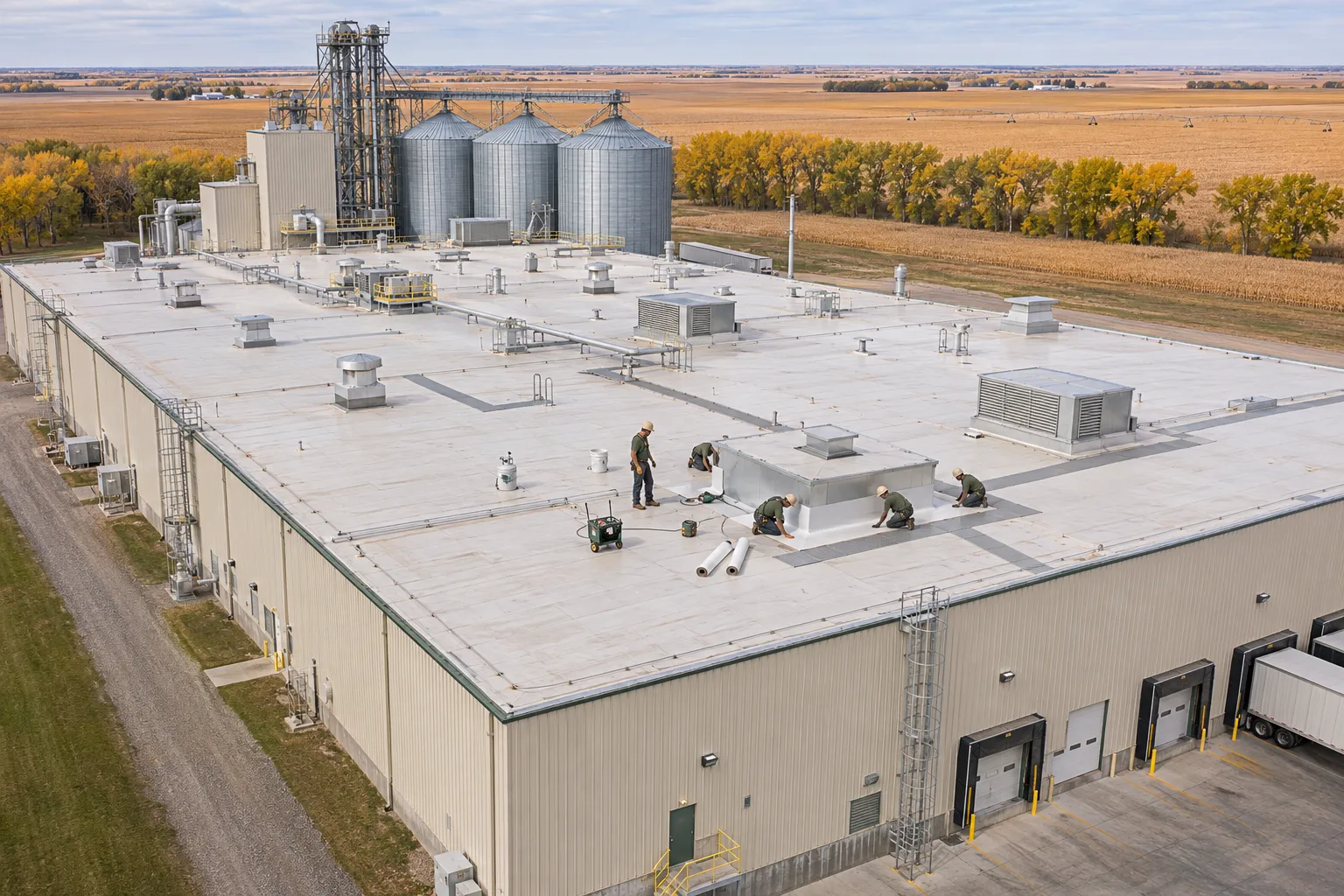
Shops with process exhaust or heavy units get a membrane matched to what the fans put out.
Industrial Roofing details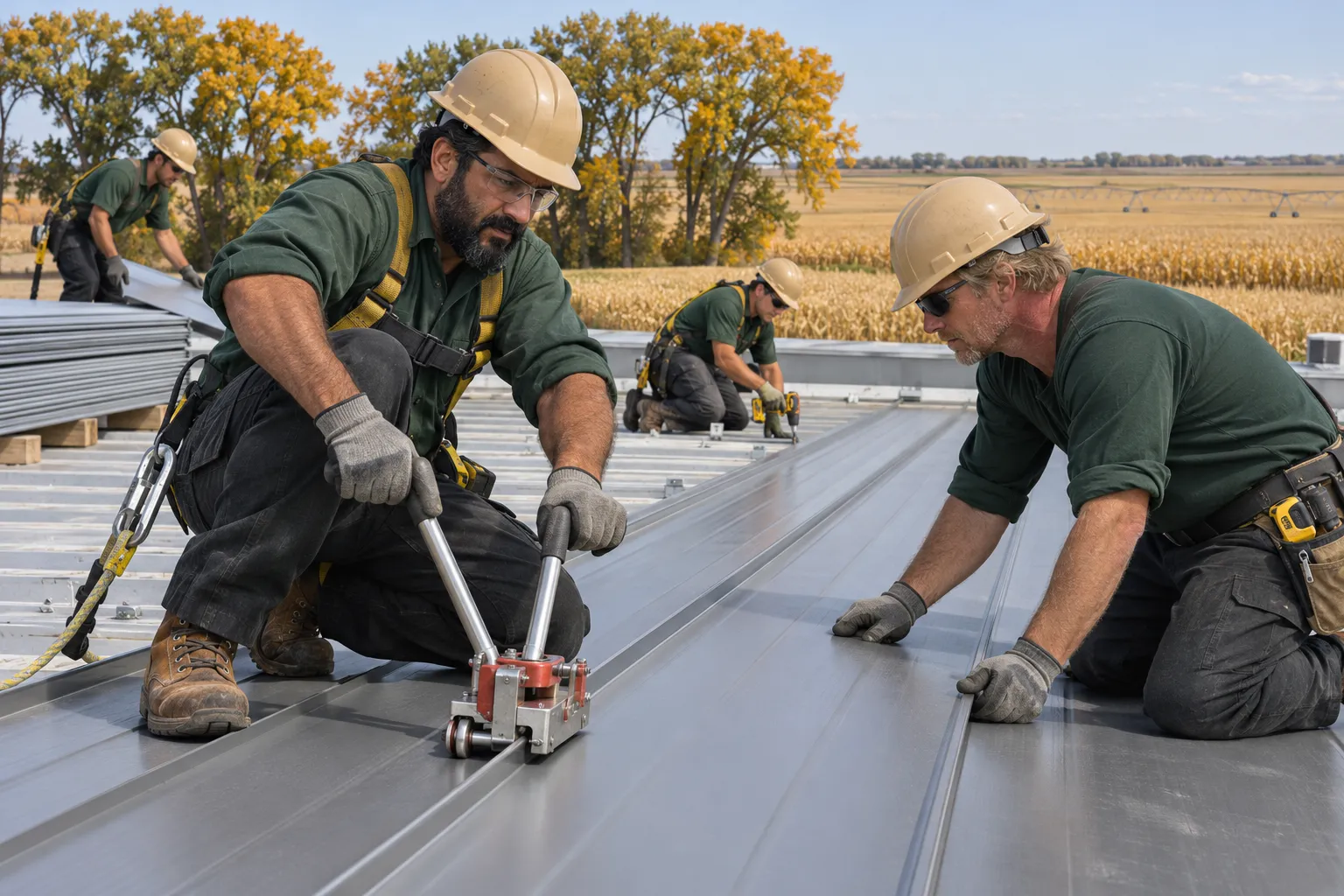
Steel panels cover sloped shops and storage buildings on the edges of town.
Commercial Metal Roofing detailsStorefront roofs follow five steps that keep the street side open.
With the neighbor's permission, we look at the shared wall from each roof to see where water gets in.
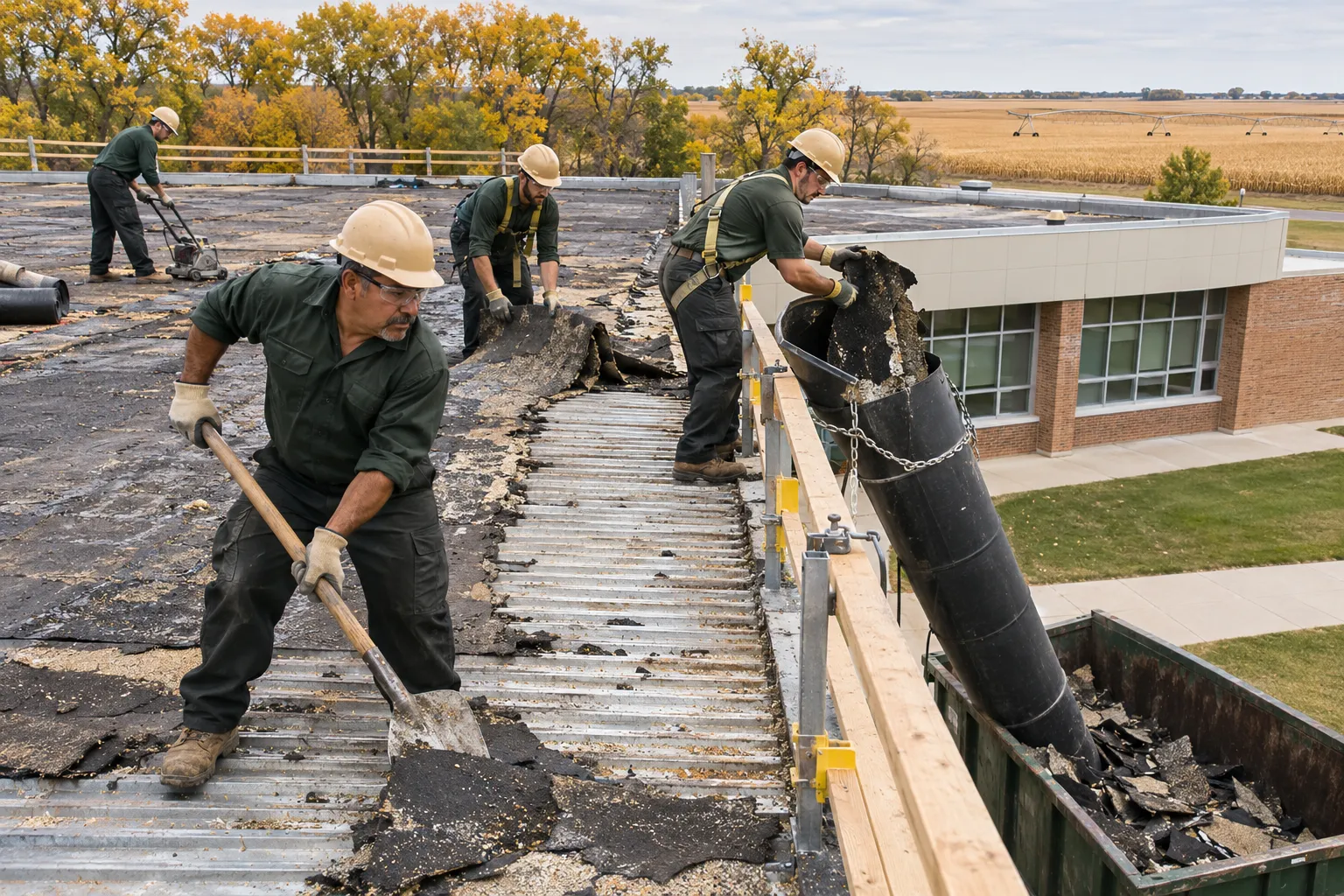
Dumpster, lift, and deliveries set up behind the building, away from the sidewalk and front entrance.
Patch buildup and wet insulation come off down to the deck, a section at a time.
Tapered insulation pitches water toward the rear, then the new membrane goes down and up the parapet walls.
Coping, counterflashing, and scupper boxes finish the edges, and the alley gets swept clean.
Besides Aurora, we roof buildings in the towns below. Somewhere else nearby? Call us or send us a message.
What storefront and shop owners ask.
Slope and building use decide it. Low-slope retail and office roofs in Aurora mostly take TPO or EPDM, while sloped shops and storage buildings take standing-seam or exposed-fastener metal. Every roof gets inspected before we recommend a system.
Roof size, the number of old layers, and how much wet insulation sits under them set most of it. Party walls and parapets add flashing, and scupper or drain rebuilds add a line. Alley access and lift placement change labor time.
No. Each roof can be done on its own, with flashing tied into the shared wall. When the neighbor plans work too, doing both at once saves staging and leaves one clean joint at the wall.
It starts on your roof, then the wall you share and the ceiling below any stain. If the source sits on the next roof, we tell you before quoting anything on yours.
Only when core cuts show dry insulation and the roof has a single existing layer. Many older storefronts already carry two or more, and the parapet height limits how much can be added, so tear-off is the usual answer downtown.
Usually, yes. Most storefront jobs stage from the alley, with material lifted to the rear of the roof, so the sidewalk and front door stay open.
Tell us which storefront and which wall the water follows, and we will walk the roof.