
If Your Roof
Sits Over Offices or Conditioned Space
Summer sun beats on a dark roof, and the floors below run warm until late evening.
Start WithTPO roofing
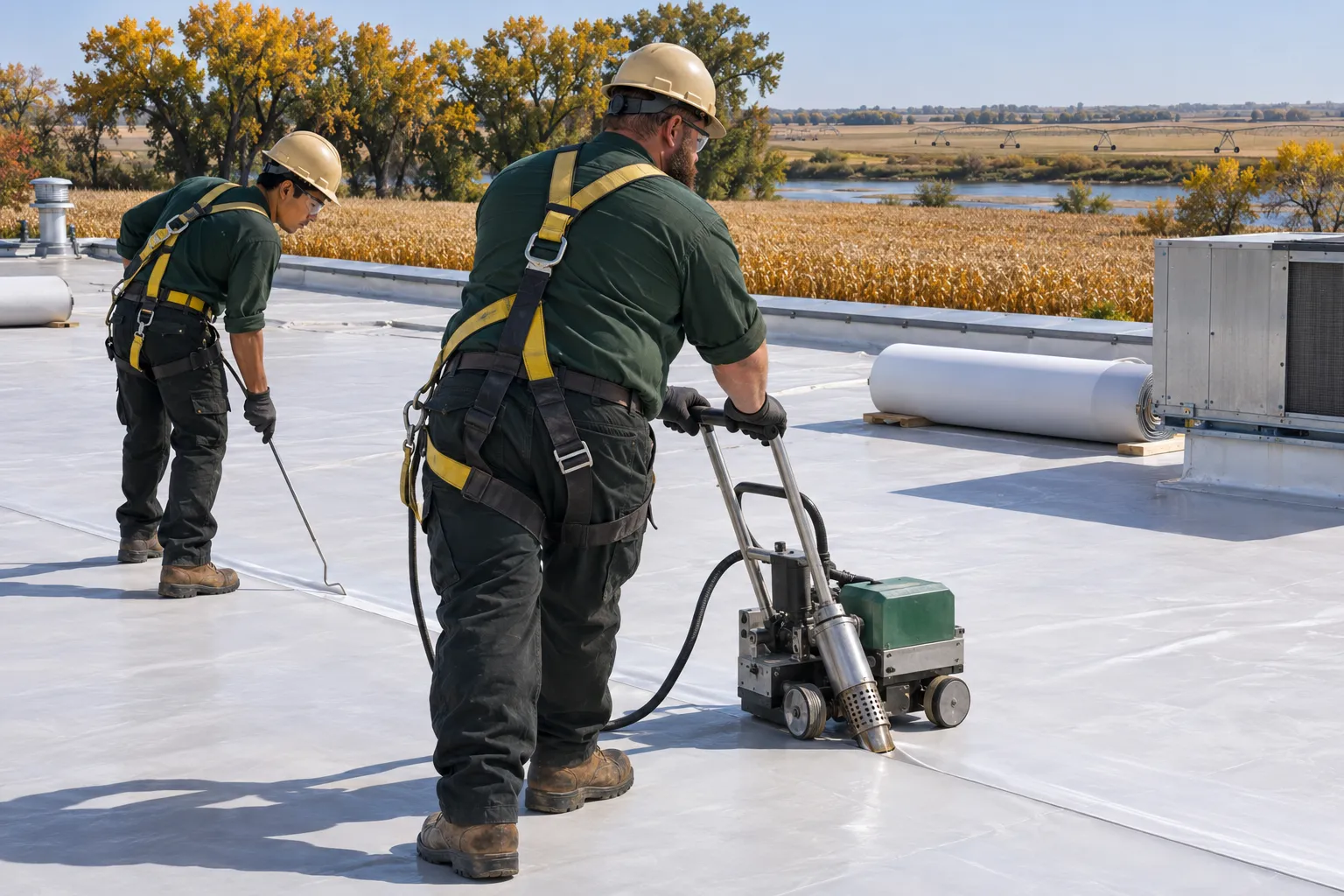
We install Grand Island TPO roofing over new insulation on low-slope offices, retail, and warehouses, with every seam heat-welded and probed.
Grand Island TPO roofing fits most low-slope commercial roofs. These four cases show where it leads and where another job comes first.
Summer sun beats on a dark roof, and the floors below run warm until late evening.
Techs cross the field often, so a thicker sheet and walkway pads carry the wear.
Kitchen or process exhaust collects around the fans and softens some membranes.
Water stands for days beside the drain bowls after every rain.
What we find on aging TPO roofs, and on older flat roofs that are ready to be replaced with it.
Thickness, attachment, and insulation shape both the price of a TPO roof and how it holds up.
| Choice | Option | Where It Fits |
|---|---|---|
| Sheet thickness | Standard membrane | Roofs with light service traffic and a cover board over the insulation. |
| Sheet thickness | Thicker membrane | Roofs with heavy HVAC traffic or a history of hail damage. |
| Attachment | Mechanically fastened | Steel decks where speed and installed cost lead the decision. |
| Attachment | Fully adhered | Edges and corners with higher wind uplift, and a smoother finished surface. |
| Insulation | Polyiso with cover board | Roofs that need R-value and better hail resistance in one assembly. |
| Drainage | Tapered insulation | Roofs with ponding at drains or flat spots in the field. |
What a new TPO roof does for the building and the people under it.
White membrane reflects much of the summer sun, which keeps rooftop temperatures down over offices, retail space, and conditioned warehouses.
Hot air melts the overlapping edges together, and each weld gets probed, so the laps hold like the field membrane around them.
Tear-off exposes any wet board, and new polyiso goes in at the R-value your energy code calls for on a replacement roof.
Future patches weld onto the existing sheet with the same hot-air tool, so a puncture years from now gets a tight, matched repair.
Each TPO roof goes on in five steps, one section at a time.
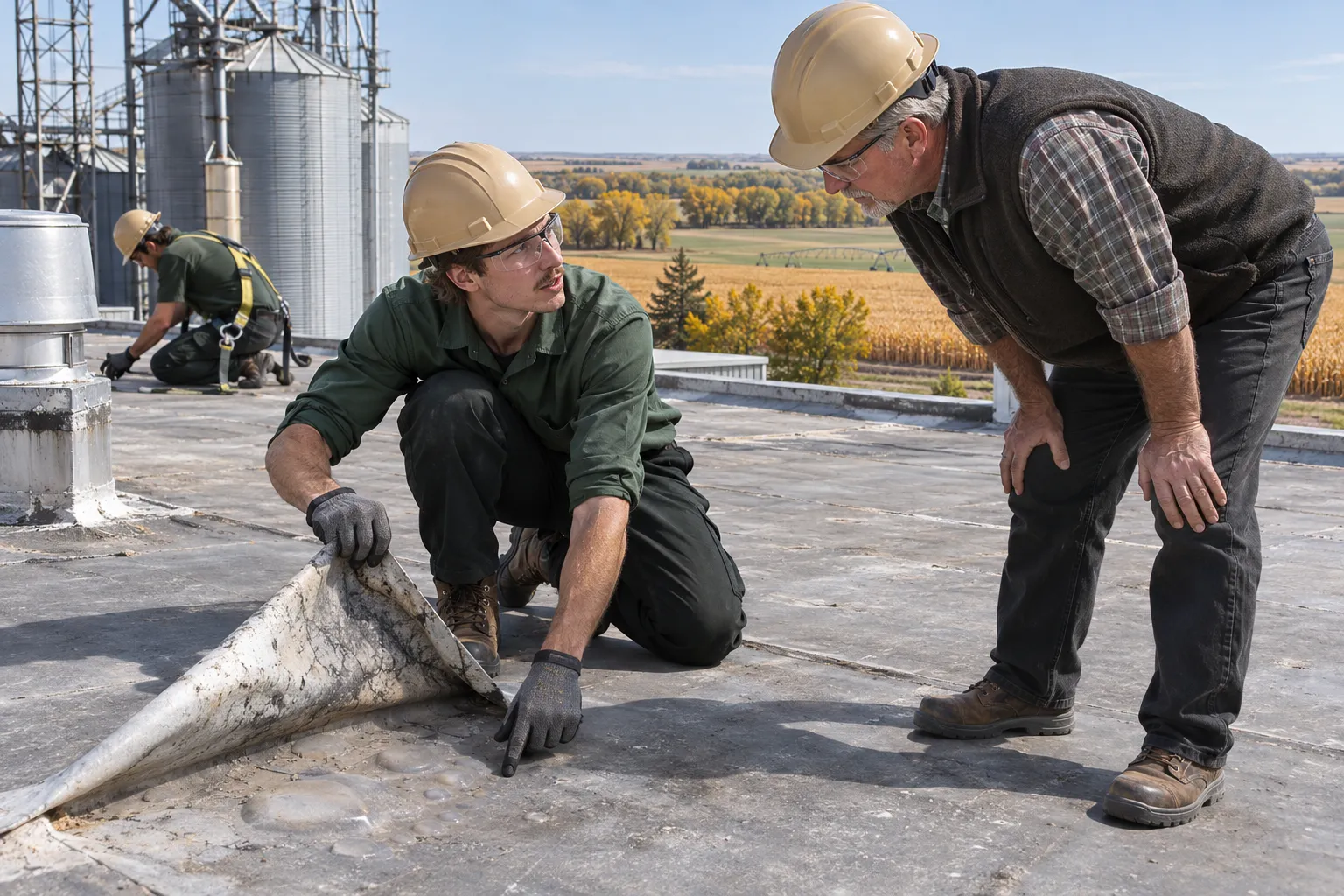
Core samples and a moisture scan show what sits under the old roof and how much insulation has to come out before TPO goes on.
Old layers come off down to the deck, and rusted or soft deck gets repaired before any new board goes down.
Polyiso and cover board go down first, then the TPO rolls out and gets fastened or adhered as the scope calls for.
Test strips get welded each morning to set heat and speed, and every finished lap gets probed along its full length.
Curbs, drains, pipes, and walls get TPO flashing and new edge metal before that section of roof is closed out.
When TPO is the wrong sheet for the building, one of these usually fits.
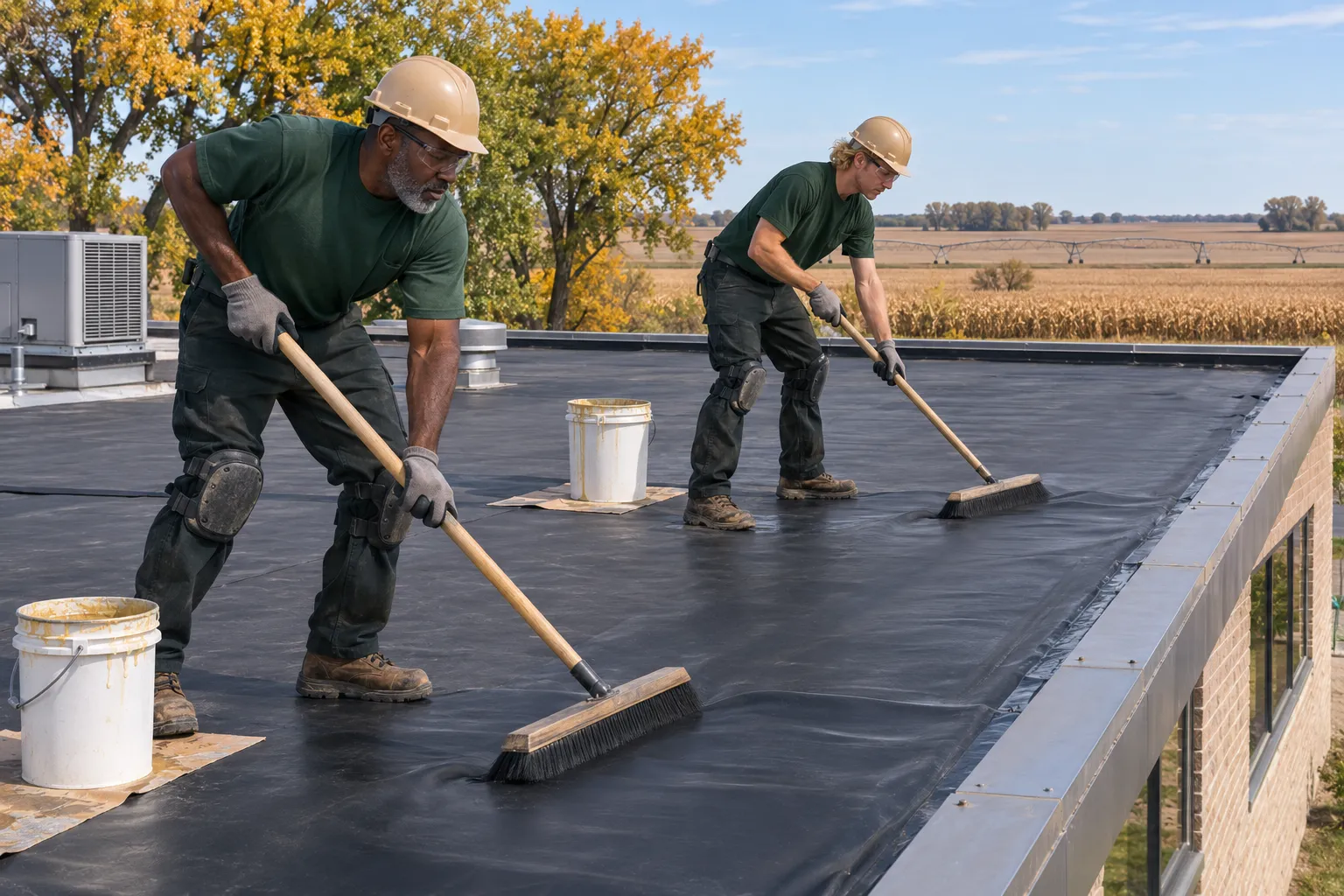
Pick EPDM for cold rooms and older flat roofs where a flexible rubber sheet with taped seams fits better than welded TPO.
EPDM roofing details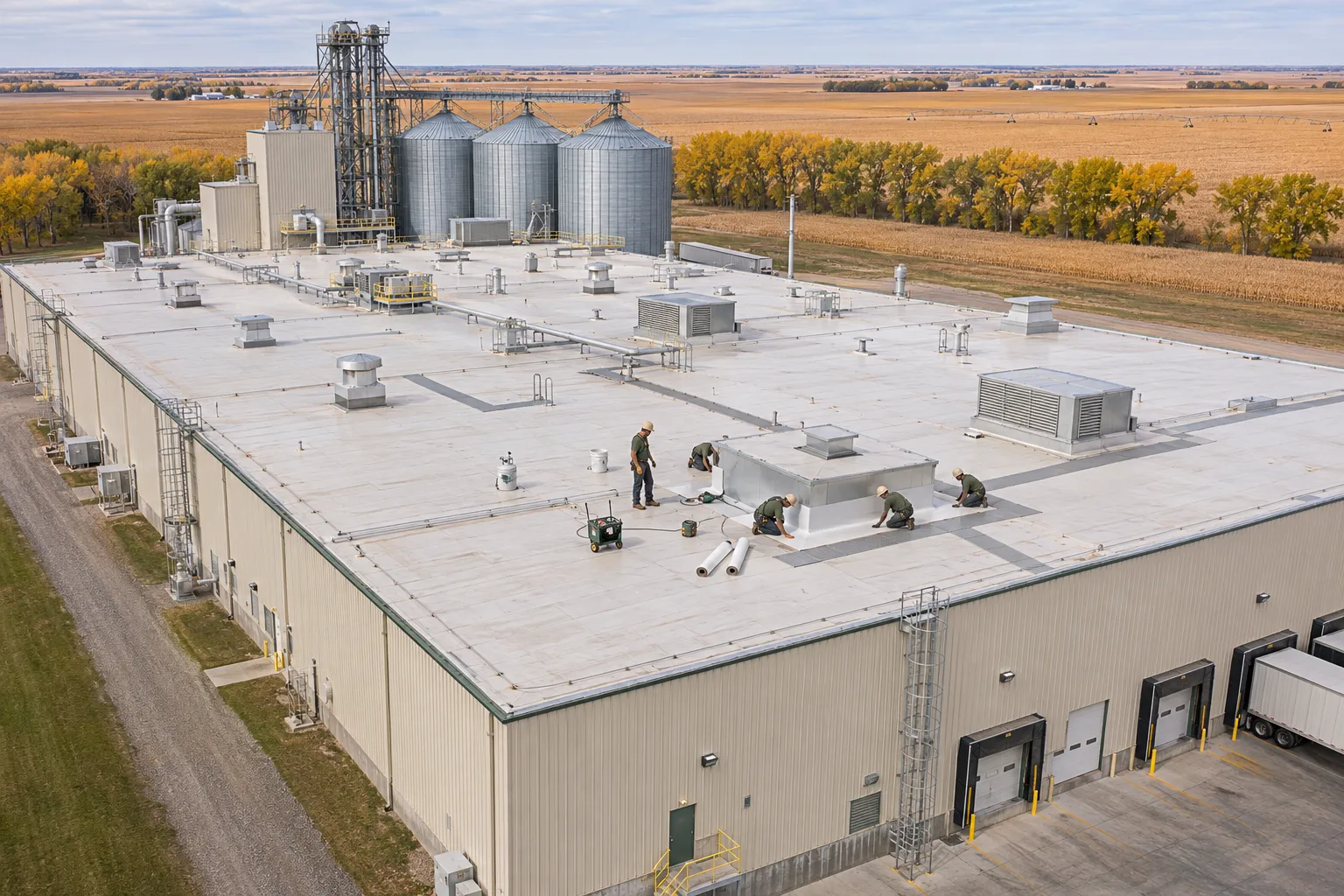
Plants with heavy exhaust or crowded curbs get a membrane matched to what comes out of the fans and a phased tear-off.
Industrial roofing details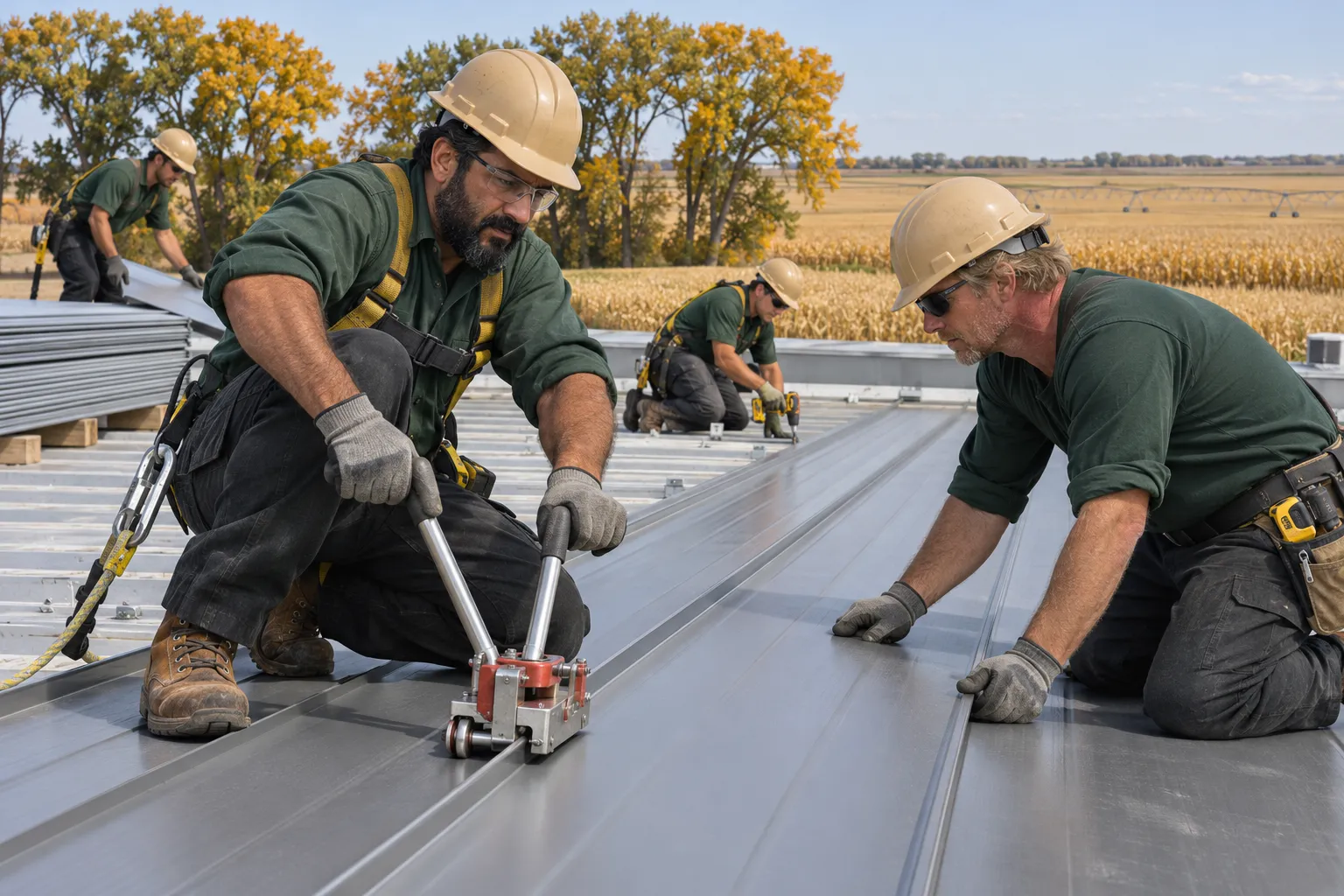
Sloped shop roofs and machine sheds take steel panels on purlins in place of a single-ply membrane over insulation.
Metal roofing detailsAnswers owners ask for before choosing TPO.
It is a single-ply thermoplastic sheet, white in most cases, laid over rigid insulation on a low-slope roof. Hot air melts the overlapping edges into one seam, and the sheet is either fastened through the insulation or glued down. The white face keeps rooftop heat down over offices.
Well, when the weld is made at the right heat and speed. Cold stiffens TPO, so welder settings move with the temperature and test strips get pulled every day. Bad welds show up later as open laps at corners and around curbs, which is why every seam gets probed.
Membrane thickness, insulation thickness, attachment, and tear-off set most of it. Thicker sheets and fully adhered systems cost more than thinner, fastened ones. Curbs, pipes, parapets, and edge metal add flashing hours, and wet insulation or deck repairs found after tear-off add material.
That comes down to sheet thickness, weld quality, and upkeep. Thicker membrane has more to wear before it fails, while hail, service traffic, and ponding at drains cut life short. Manufacturers rate systems by thickness and spec, so ask what rating the proposed system carries.
Sometimes. A recover over one dry existing roof works when core cuts show dry insulation and the deck checks out. Wet board has to come out first, and a roof that already carries a recover layer usually needs a full tear-off before TPO goes down.
Send the roof size and what you see at the seams and drains, and we will schedule the core cuts.