
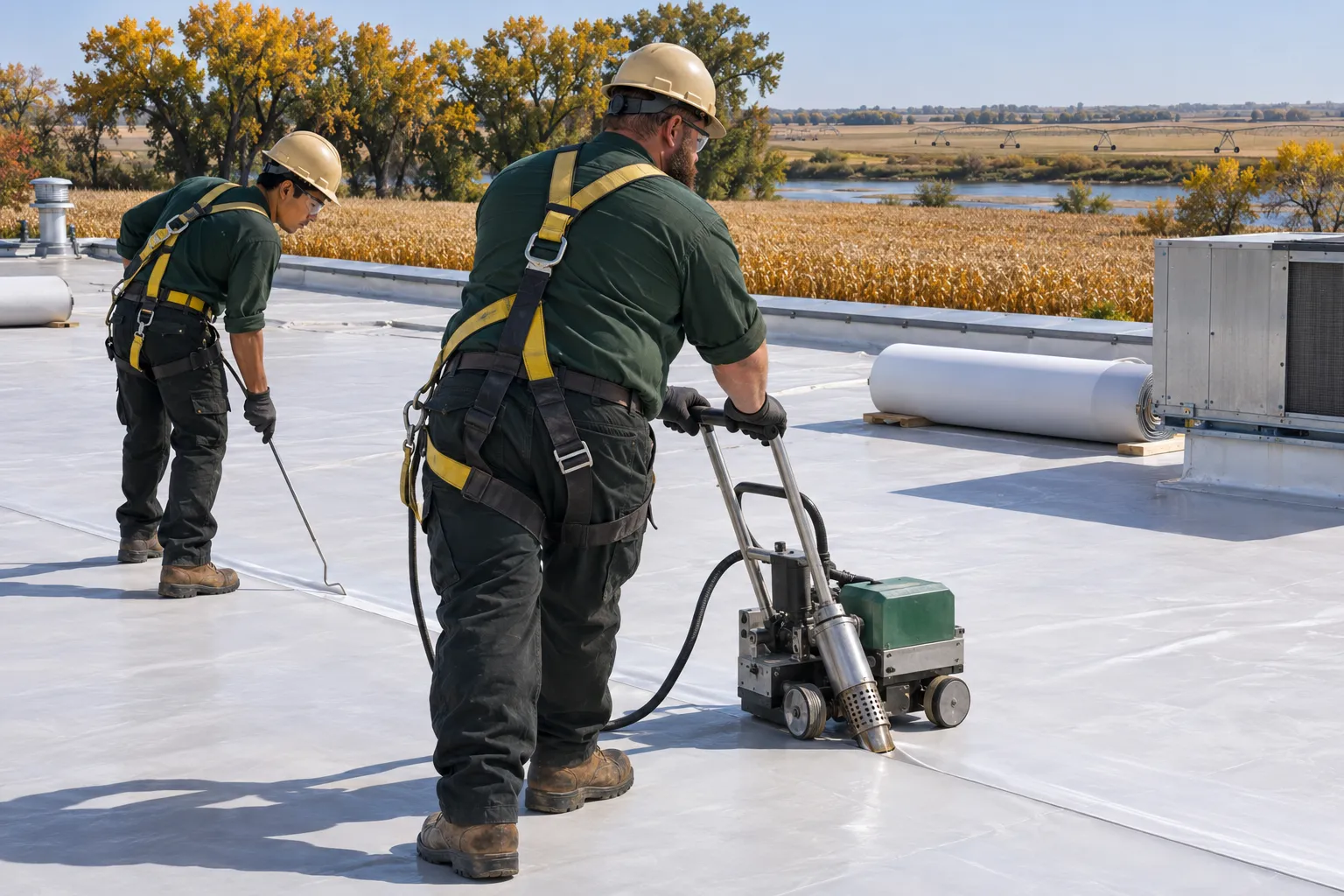
TPO Roofing
Heat-welded white membrane for low-slope offices, retail, and conditioned warehouses. Welds get probed and every curb flashed before the roof is closed out.
See TPO roofing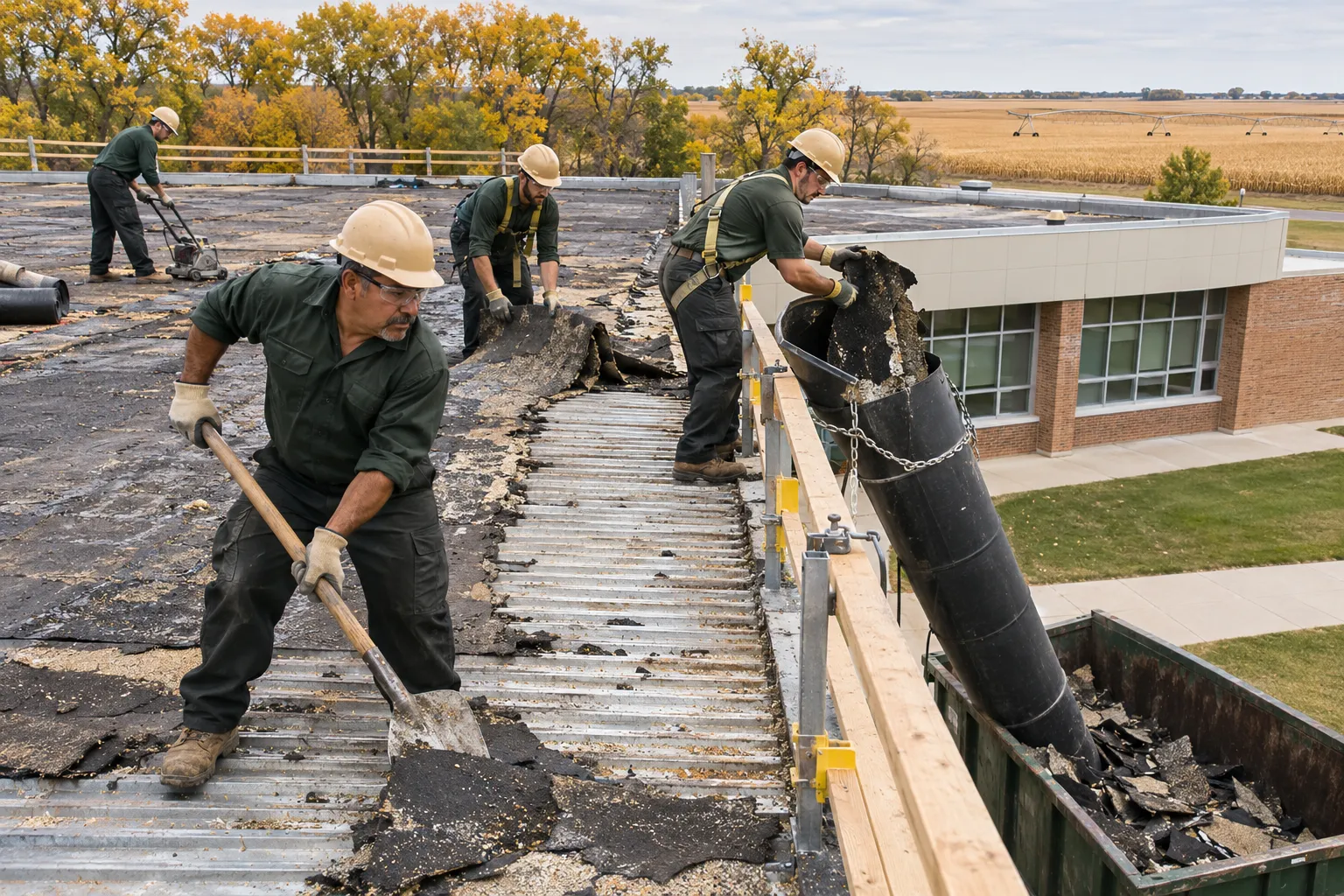
Our commercial roofing services in Grand Island cover TPO, EPDM, industrial, and metal roofs, plus full replacement when a roof is past repair.
Four systems make up our commercial roofing services in Grand Island. Each card names the roofs it fits.
Heat-welded white membrane for low-slope offices, retail, and conditioned warehouses. Welds get probed and every curb flashed before the roof is closed out.
See TPO roofing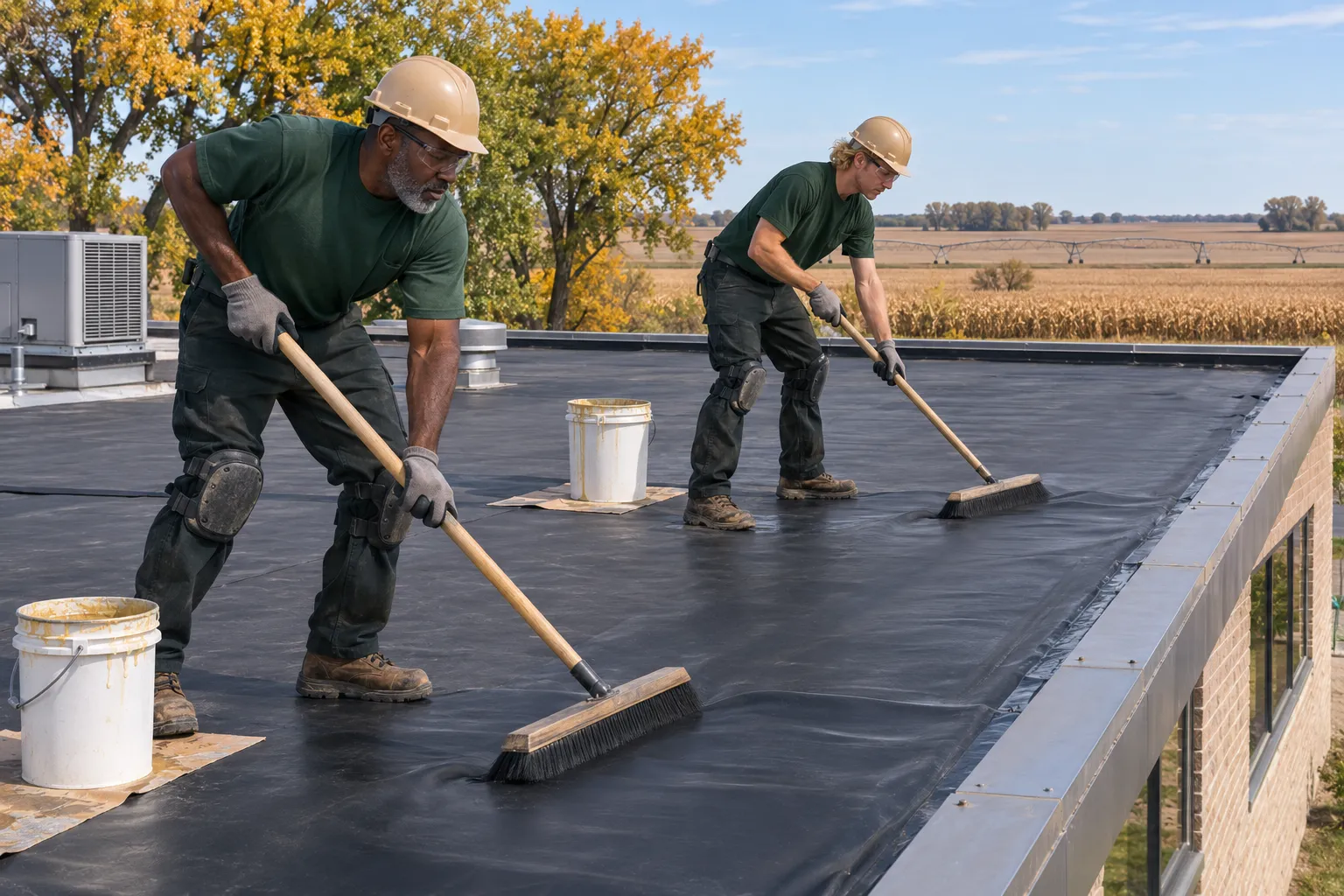
Flexible black rubber sheet, adhered or ballasted, for cold rooms and older flat roofs. Seams are primed and taped, and flashing runs up every wall.
See EPDM roofing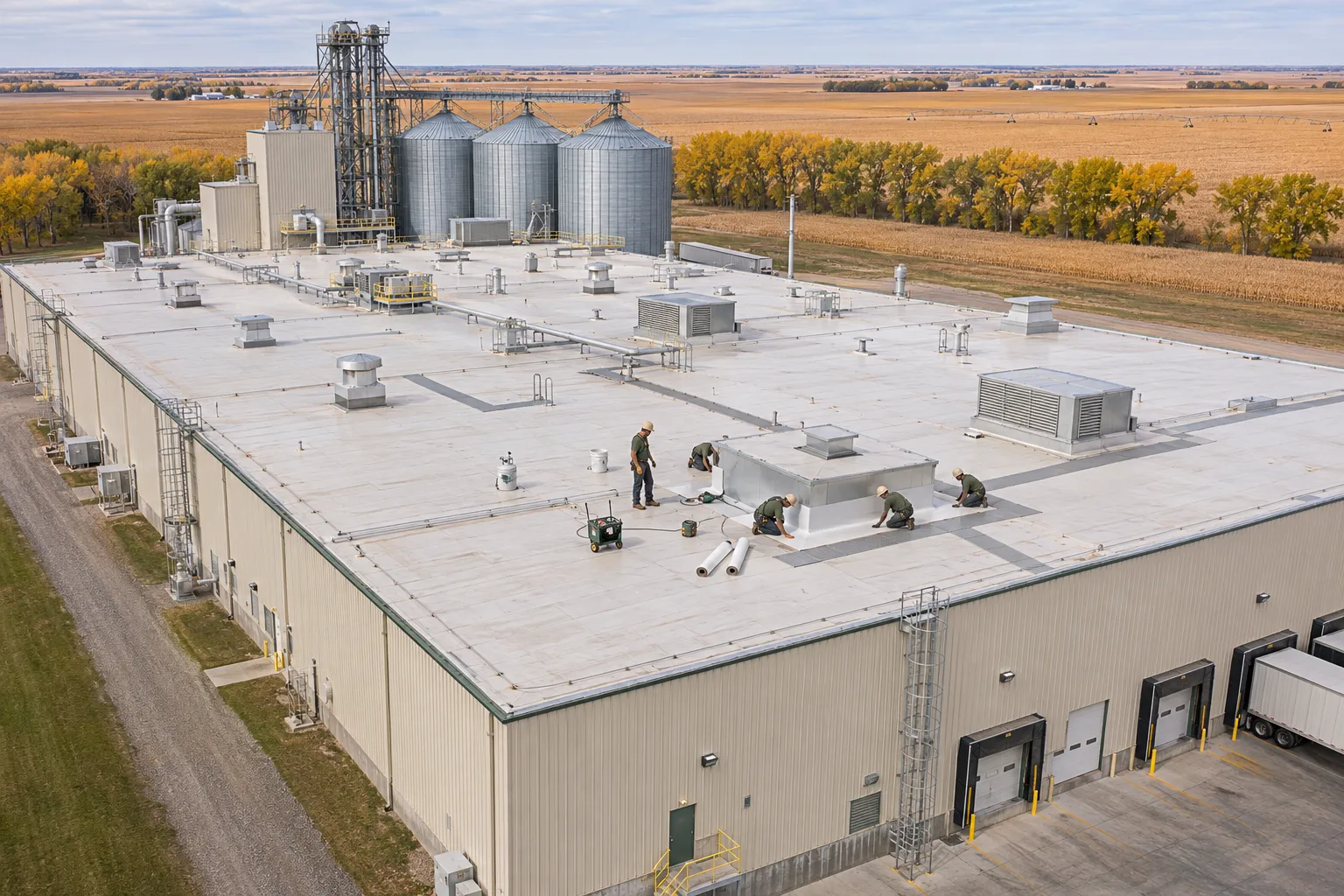
Membrane or metal chosen for plant exhaust, heavy curbs, and wide spans, with tear-off phased so production keeps going below.
See industrial roofing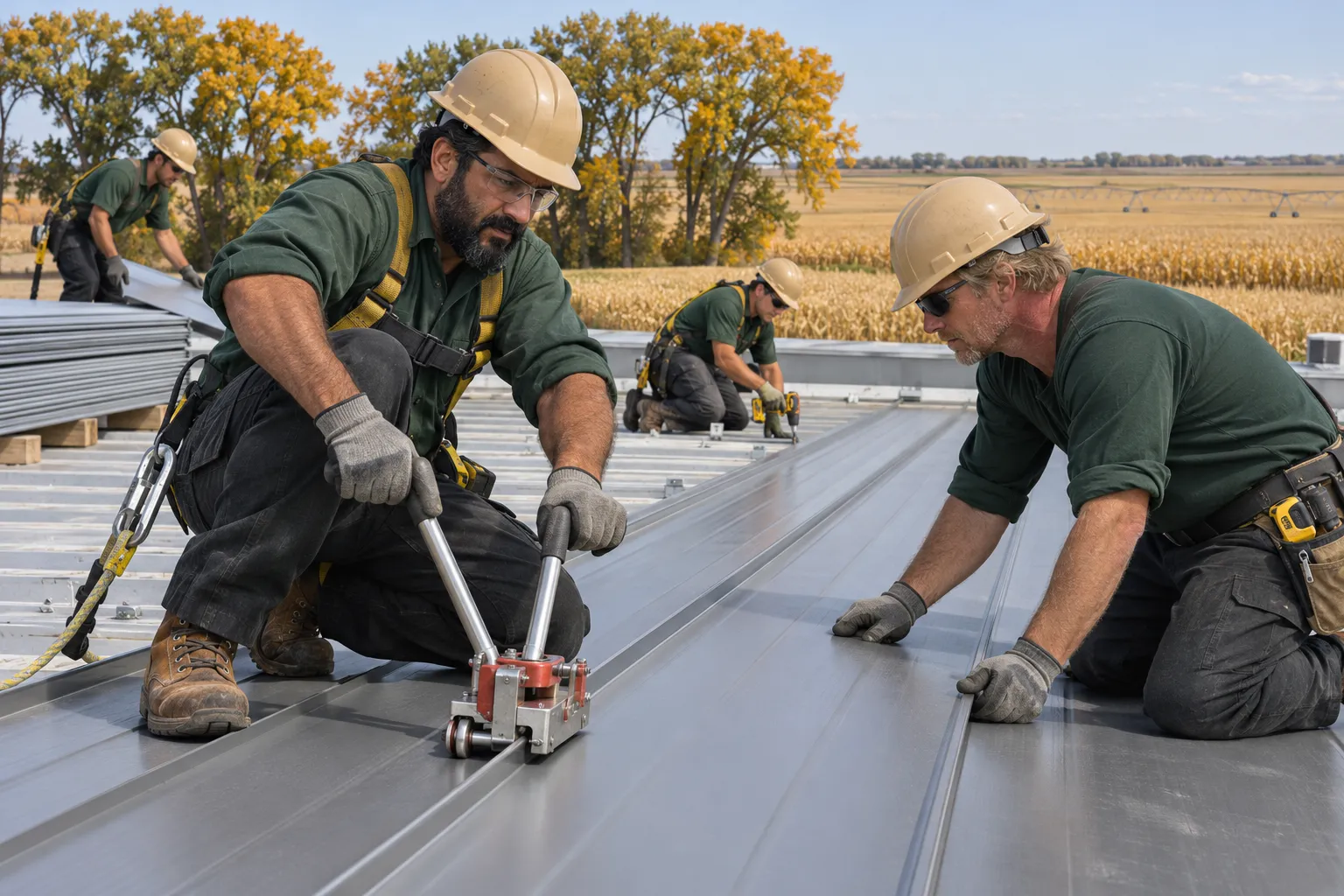
Standing-seam or exposed-fastener steel for shops, dealer buildings, and machine sheds, with snow guards and eave trim detailed for drifting.
See commercial metal roofingStart from the roof in front of you. Each card pairs a common condition with the job that comes first.
Everything else on the walk checks out fine.
Grease and chemicals at the vents break down some membranes quickly.
Core cuts or a scan show soaked boards far past the leak areas.
Upper floors heat up all summer under a dark membrane.
Commercial roof replacement in Grand Island makes sense once repairs stop holding. These are the signs we look for.
A scope you can compare line by line is the fastest way to judge two bids for the same roof. Ours lists these four items on every replacement.
The system, brand, and sheet thickness, plus whether the field is mechanically fastened, adhered, or ballasted over the deck.
Board type, total thickness and R-value, any tapered sections at drains, and the cover board that goes over the foam.
Heights and materials at parapets, curbs, pipes, and drains, with new edge metal where the old trim is bent or loose.
How many layers come off, where the crane and dumpsters set up, and which sections are open on which days.
Replacement runs in sections so the building stays dry and open every night, with the same five steps repeated until the last section is flashed.
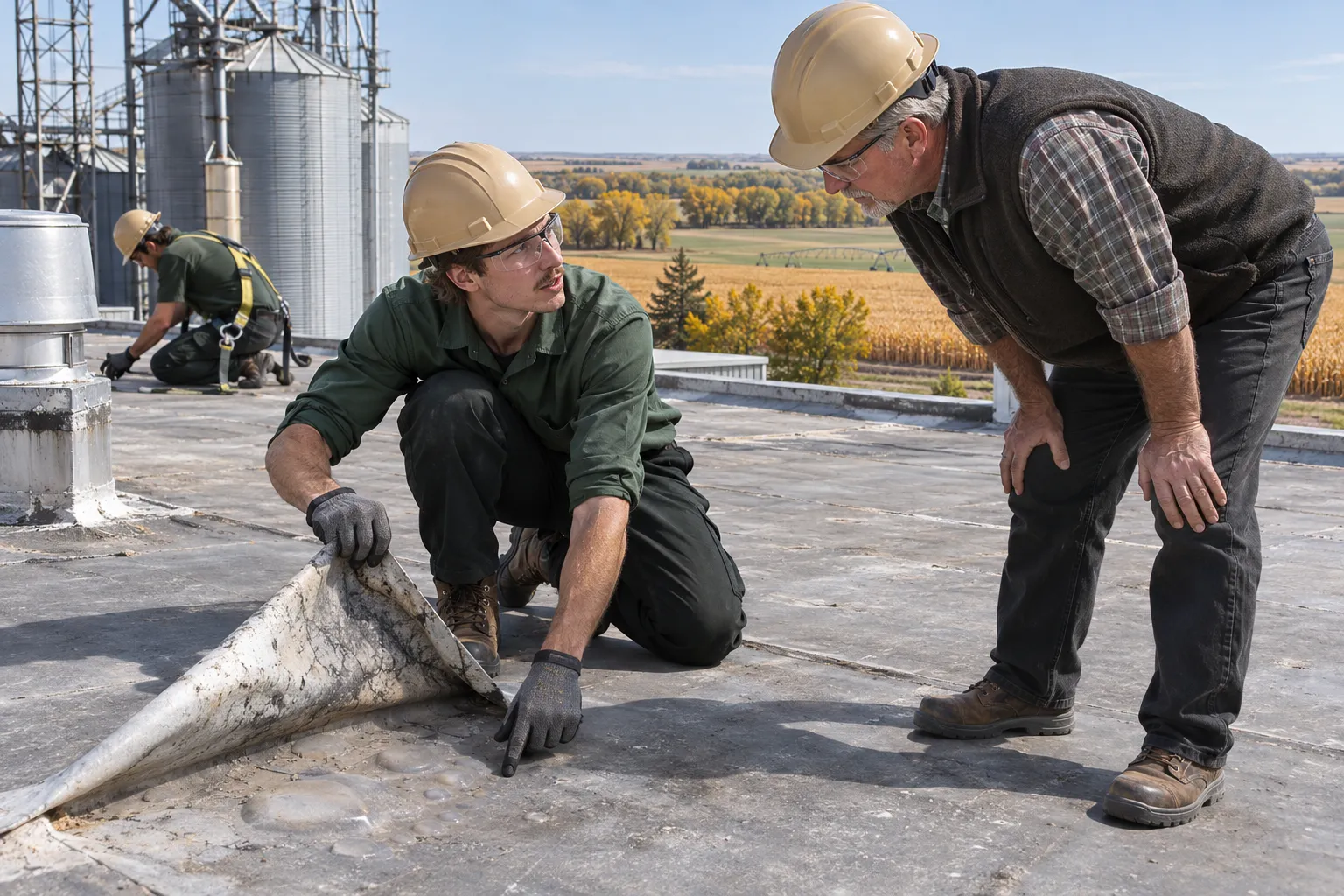
Core cuts, a moisture scan, and a look at the deck from inside show how many layers come off and how much insulation is wet.
Permit paperwork, crane days, and dumpster spots get settled so shipping doors and entrances stay clear.
Old membrane and wet boards come off only as far as the roof can be dried in before evening.
New insulation, cover board, and the chosen sheet go down, with tapered boards wherever water used to stand.
Curbs, drains, and parapet walls get new flashing, seams get probed, and the next section begins.
What owners ask once replacement is on the table.
Replace it when leaks keep turning up in new spots, when the membrane is brittle and shrinking, or when wet insulation runs across big parts of the roof. A moisture scan or core cuts show how far the water spread. Isolated damage on a healthy roof gets a repair.
Plan on one. City Code Section 8-22 calls for a building permit before a building is altered or repaired, and the 2021 International Building Code the city adopted covers roof assemblies in Chapter 15. Check the scope with the Building Department before tear-off starts.
Grand Island has adopted the 2021 International Building Code and the 2021 International Existing Building Code. The state code under Neb. Rev. Stat. 71-6403 points to the 2018 editions, and the city applies its newer local adoption to each reroof permit.
Work runs section by section, and each day's tear-off is dried in before evening. Crane lifts, dumpsters, and loud work get timed around shipping, customer hours, or shifts. A mechanical contractor disconnects rooftop units where needed, and interior protection goes under open areas.
Up front, yes. A recover skips removal and disposal, so it costs less when the old roof is dry and has one layer. Tear-off removes wet insulation and resets the roof for the next replacement, and core cuts decide which one your roof allows.
Often it does. An old ballasted EPDM roof can come off for TPO, or a worn membrane over sloped framing can become standing-seam metal. The walk-through and the building's use set the system, and the scope spells out what changes at curbs, edges, and drains.
Send the address and what you are seeing on the roof, and we will schedule the walk-through.