
Mixed Ages
Three Systems on One Lot
- You See
- Metal on the shop, rubber on the office, and old built-up on storage.
- What It Means
- Each roof needs its own repair materials and schedule. A single property plan keeps them from failing one after another.
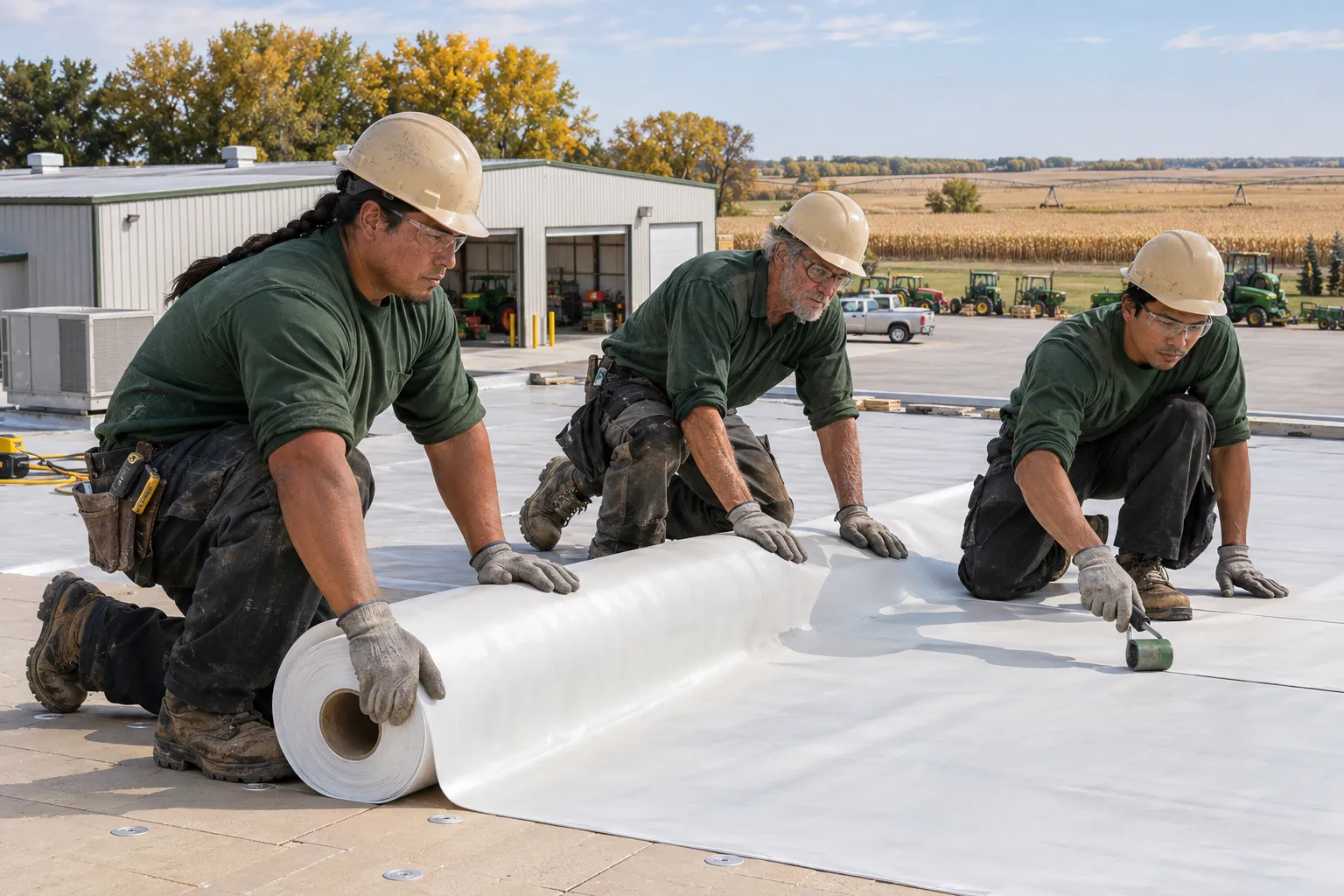
We handle Central City commercial roofing for owners with several buildings on one lot, phasing TPO, EPDM, and metal roofs one building at a time.
A lot of Central City commercial roofing work sits on properties with a shop, an office, and a storage building side by side. Each roof aged on its own clock.
We walk every roof in one visit, rank them by condition, and write a plan that replaces the worst first and repairs the rest until their turn.
Roofs on one property rarely wear out together. These conditions show up most.
Why one plan for the whole property beats one-off calls.
Ranking roofs by condition spreads replacement over several seasons, so the money goes to the worst roof first.
Metal, rubber, and TPO on the same lot get handled under one scope, with matching flashing where buildings join.
Cranes, dumpsters, and deliveries serve two buildings in one trip when their schedules line up.
Walking the back buildings every visit keeps small splits from turning into wet stock and ruined inventory.
Each building on the lot gets the system that fits it.
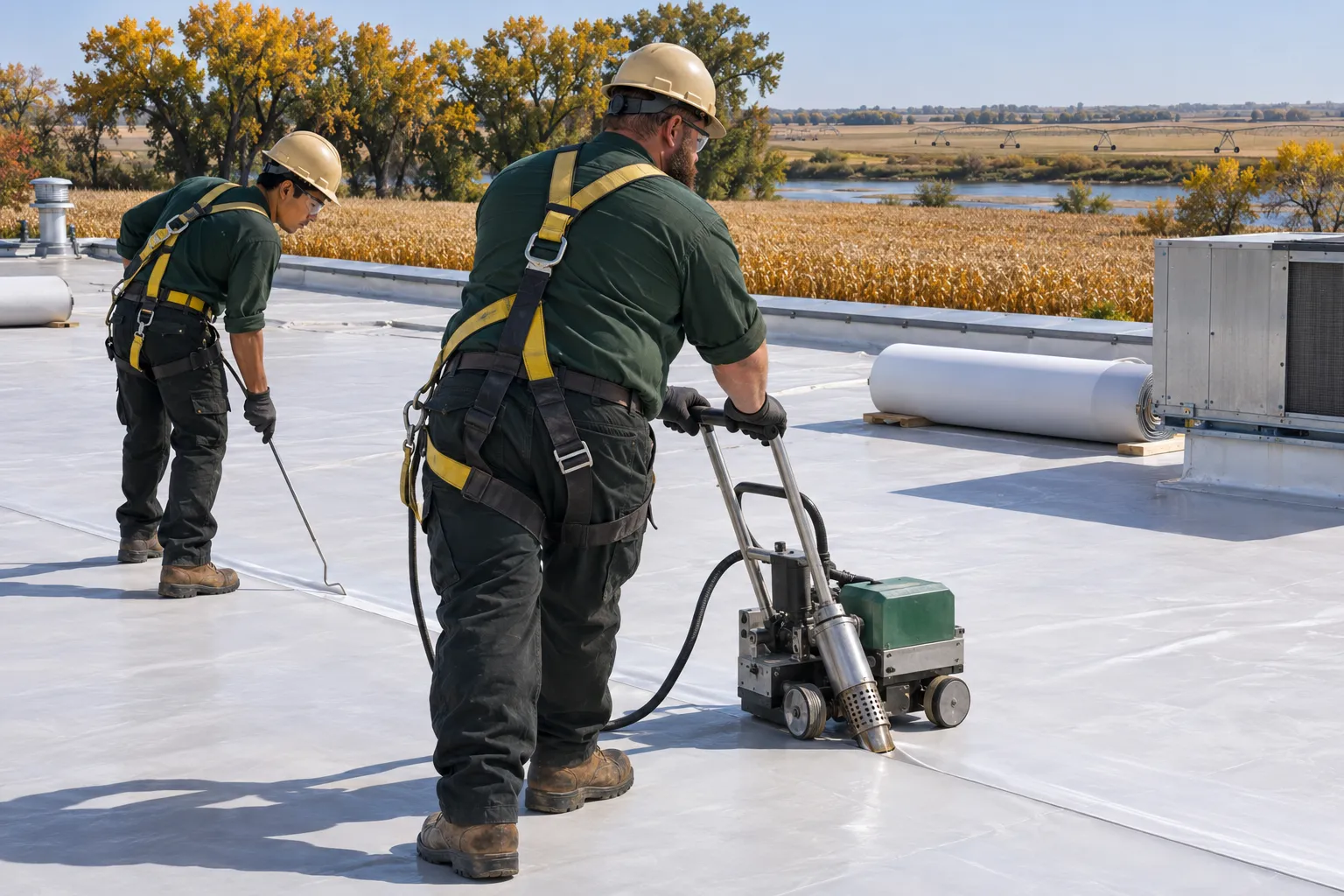
TPO goes on offices and conditioned shops that sit in full sun through the summer.
TPO Roofing details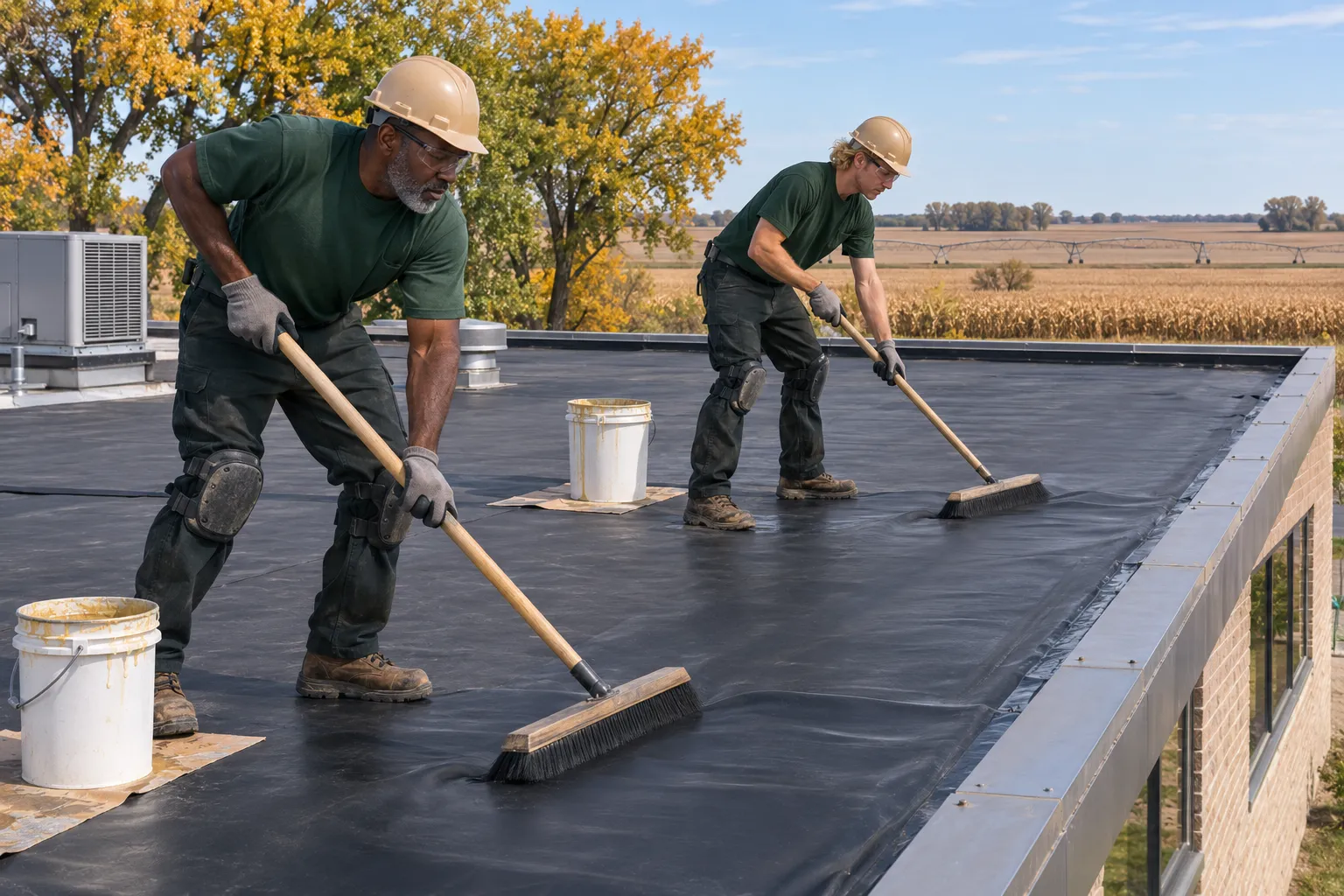
EPDM covers older flat storage roofs and cold rooms where flexibility matters more than color.
EPDM Roofing details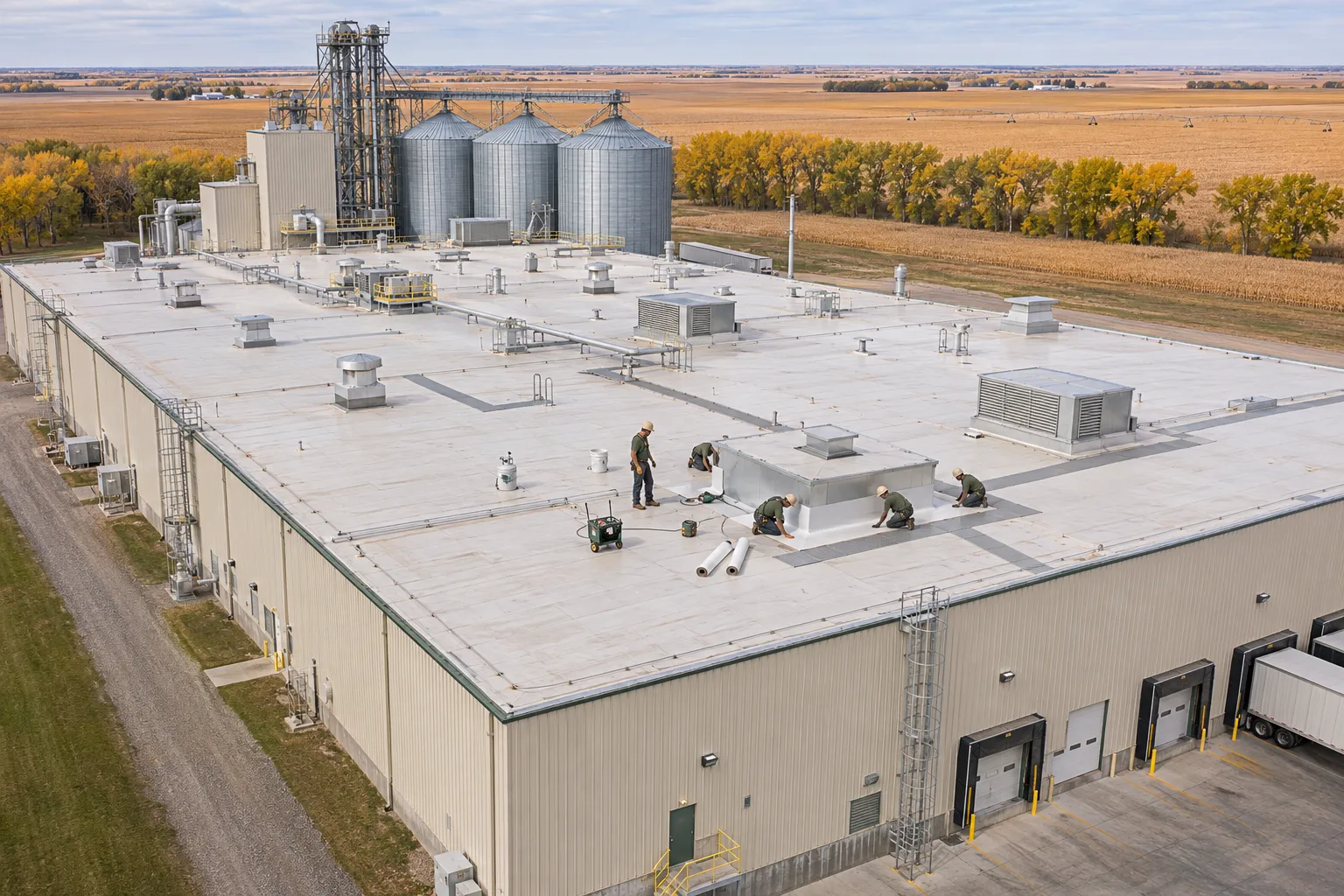
Process buildings with fans and heavy curbs get an industrial membrane plan of their own.
Industrial Roofing details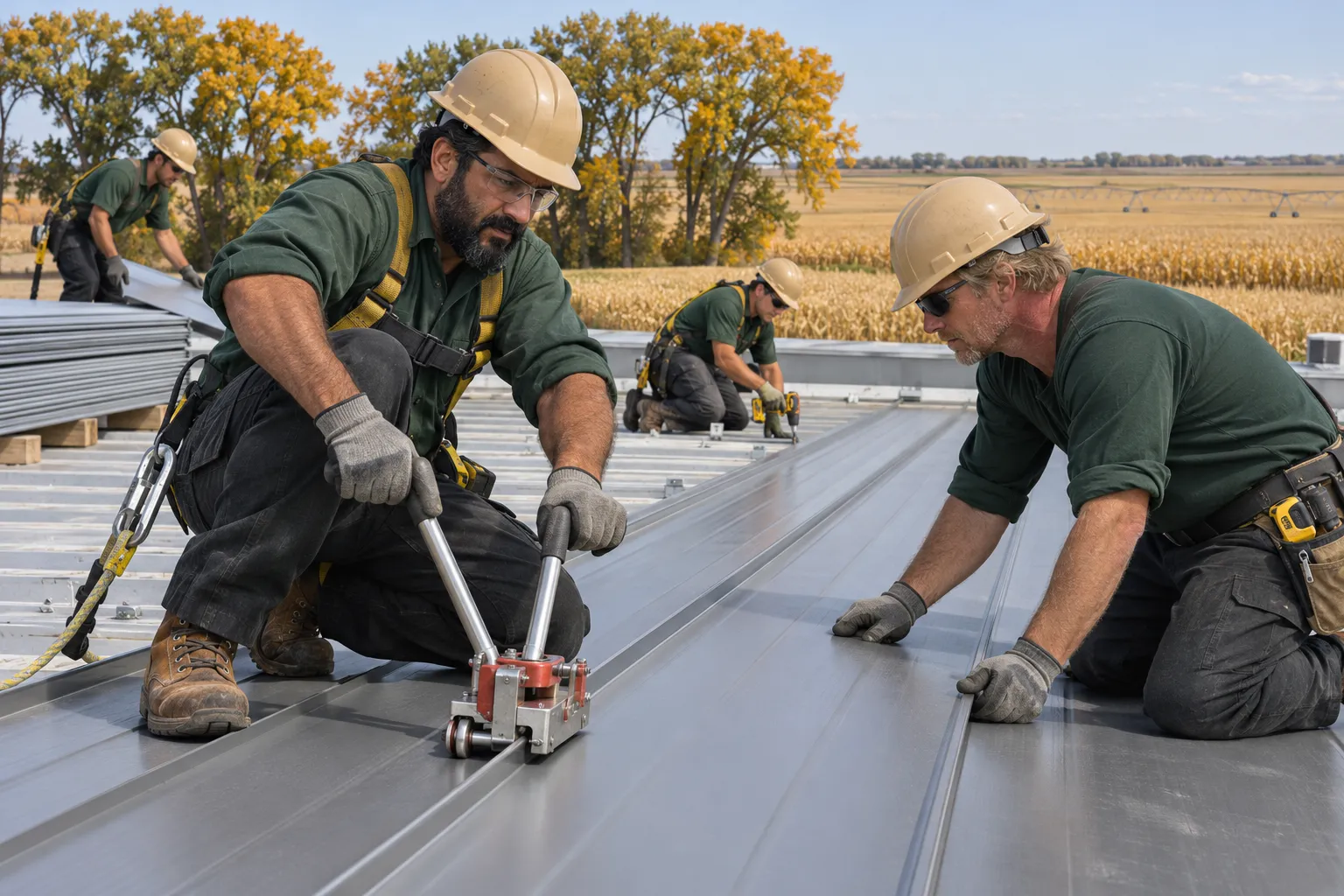
Metal panels replace worn steel on shops and equipment buildings with sloped framing.
Commercial Metal Roofing detailsFive steps take a property from scattered leaks to a planned order of work.
Shop, office, storage, and any additions get walked in one visit, with core cuts where the surface hides wet board.
Roofs go on a list from worst to best, with repairs noted for the ones that can wait.
Central City has its own permit rules, so the scope notes what the city asks for before tear-off.
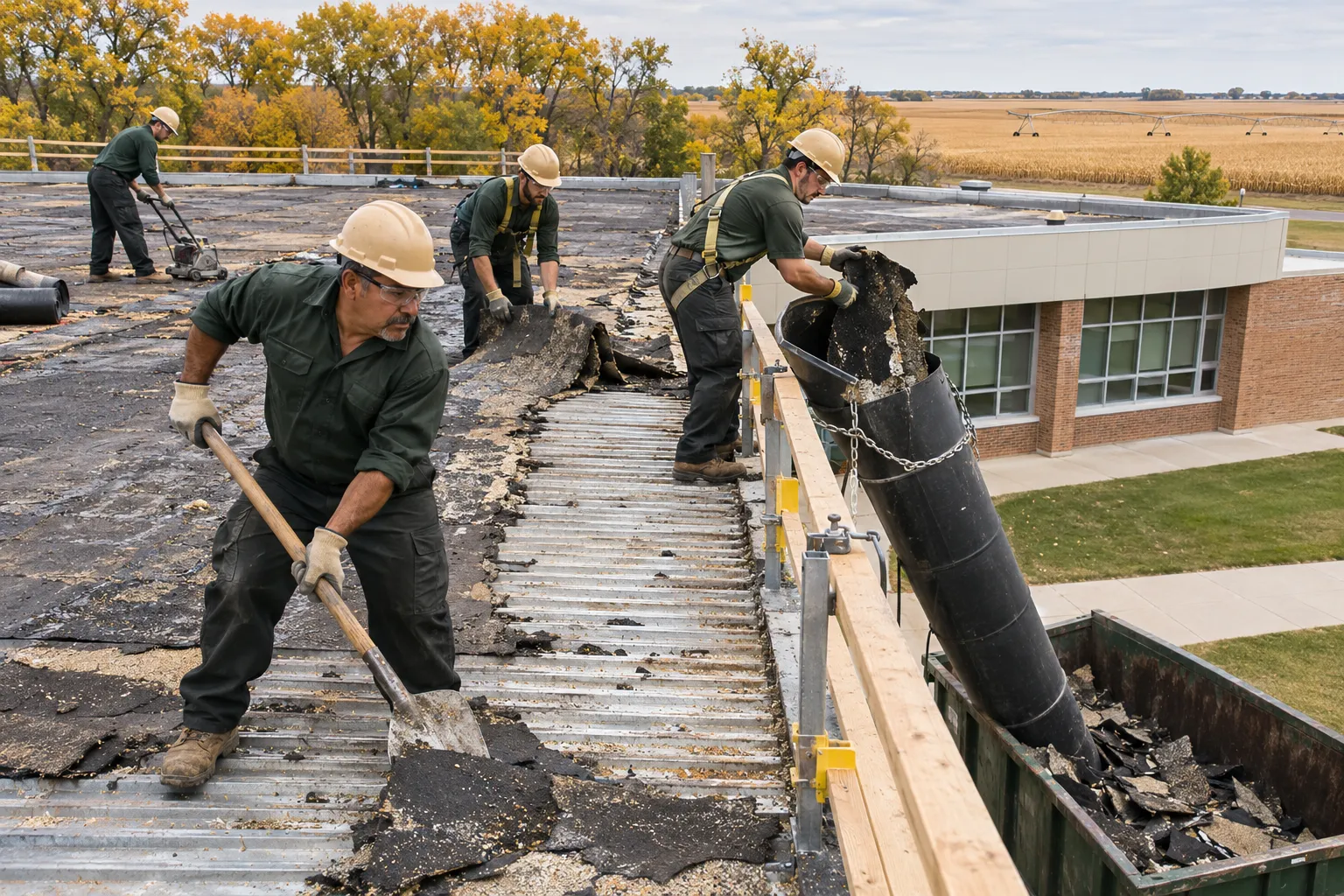
Tear-off, insulation, membrane or panels, and flashing finish on one roof before the next opens.
Where buildings meet, new flashing or joint covers bridge the old and new roofs.
Central City is one of five towns we serve near Grand Island. For a property elsewhere, call us or send us a message.
What owners of multi-building lots ask.
Start by confirming permit rules with the city. Then plan where the dumpster and crane go, and how tenants or customers get in while the roof is open. Leave room in the schedule and budget for deck repairs that only show up after tear-off.
Yes. One walk-through covers each building, and the written plan lists every roof separately with its own scope and price, so you can approve them in the order you choose.
Usually. A roof over inventory or equipment might move up even if another one looks worse. We rank by condition and by what sits underneath, then you set the final order.
Joints move as each building expands and settles. New flashing or an expansion joint cover bridges them, and it gets redone whenever either roof is replaced.
That comes down to the number and size of the roofs and how you want the work spread out. Some owners replace one building a season, while others group two to share cranes and dumpsters. The written plan lists each roof so you set the pace.
For a roof two or three seasons out, targeted repairs at seams and flashing keep water out until its turn comes. We price those repairs separately in the plan.
List the buildings on your lot, and we will walk all of them in one visit.