
If Your Roof
Has One Bad Seam on a Healthy Membrane
Replacing the whole field would cost far more than the problem.
Start WithA repair, written up as one
Here is what to know about our Grand Island commercial roofing work: how we walk roofs, write scopes, and install TPO, EPDM, and metal systems.
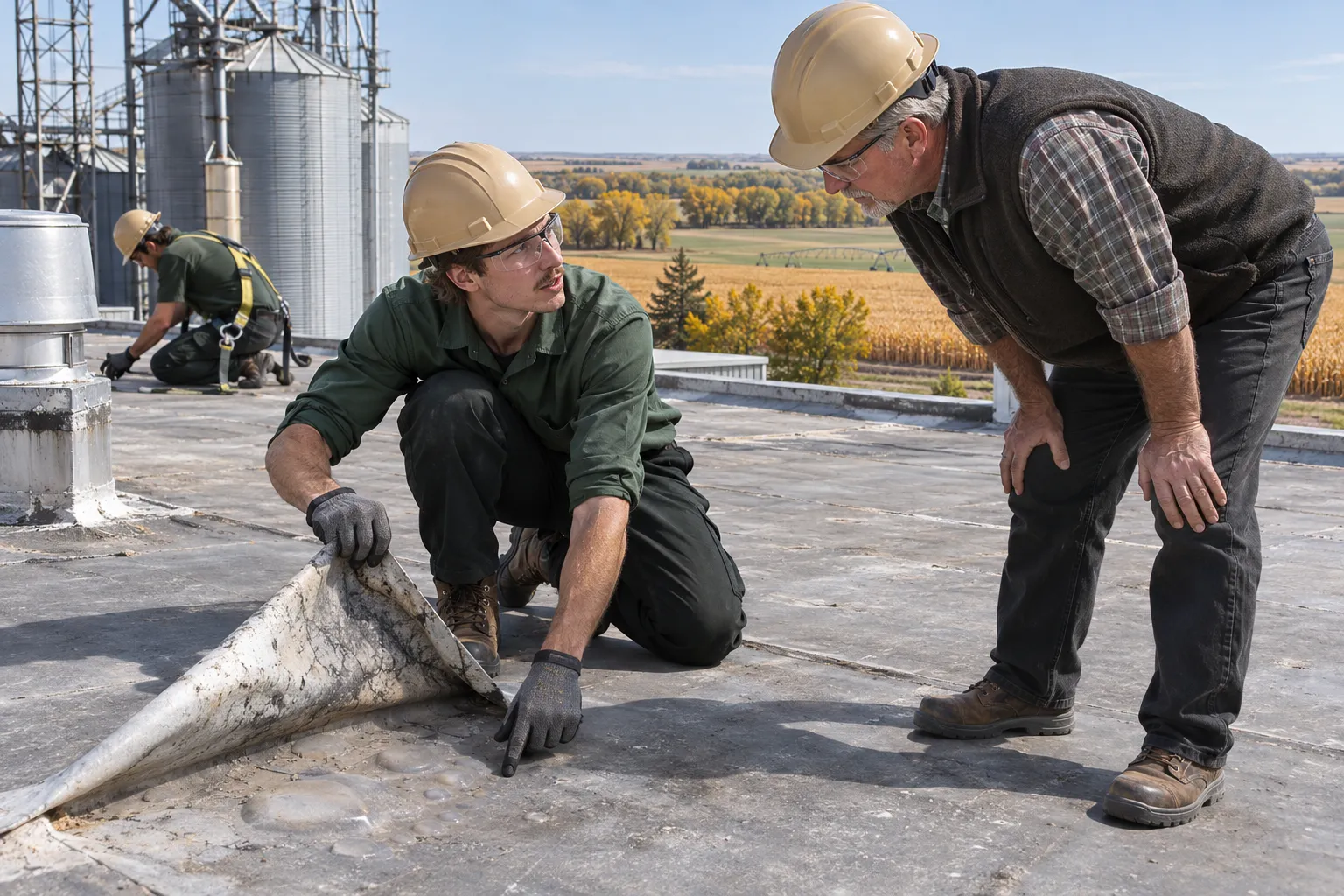
Everything about our Grand Island commercial roofing work starts on the roof, with the owner or facility manager walking it beside us. Seeing a split lap or a soft spot together keeps the scope honest.
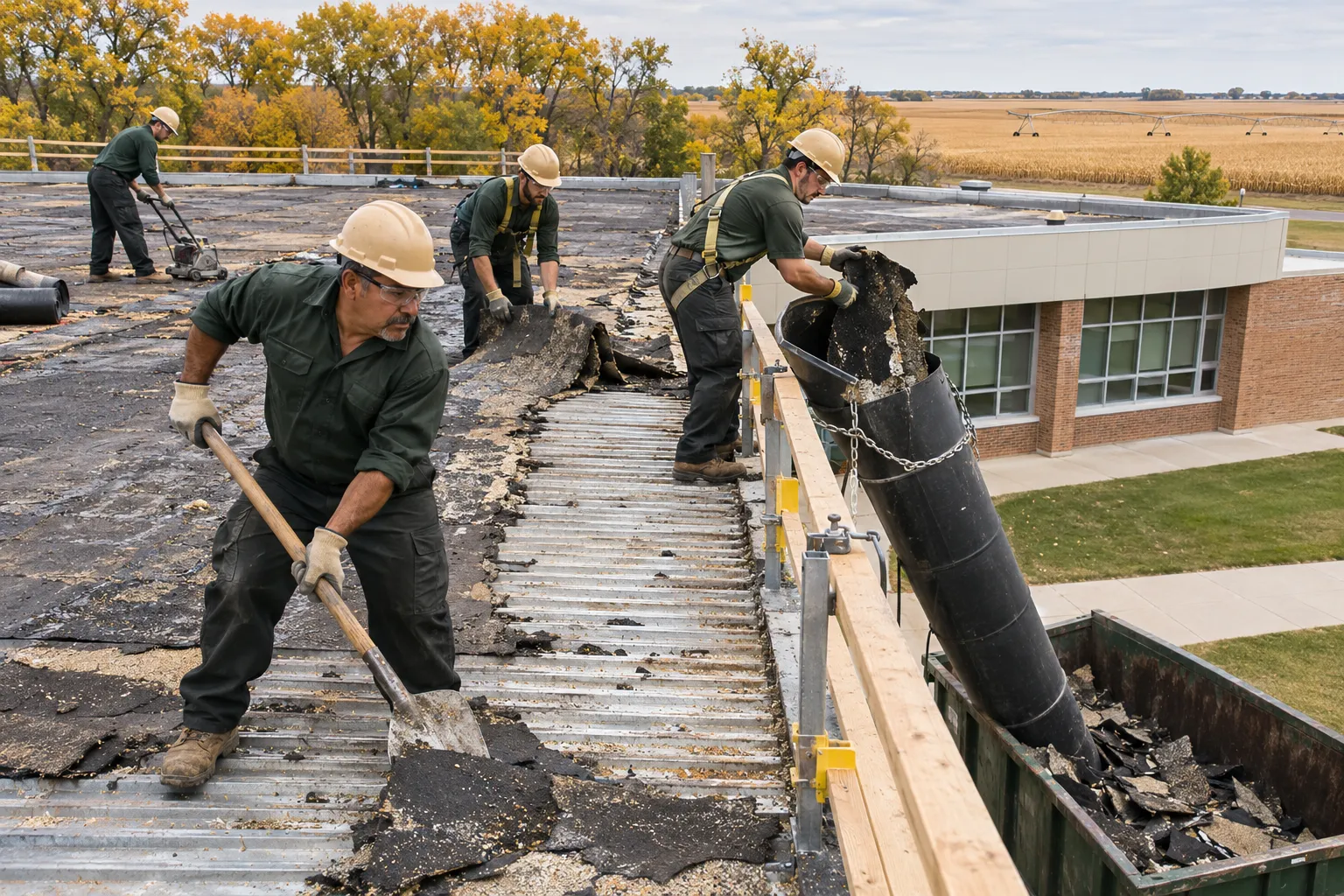
From there the job follows the scope: tear-off in sections, new insulation, the membrane or metal system chosen for the building, and flashing at every curb, drain, and wall.
The first visit looks at the whole roof and the rooms under it, so the scope covers more than the leak you called about.
Some roofs need less than a new system, and some need a step before one. These are the calls we make out loud.
Replacing the whole field would cost far more than the problem.
Another layer over soaked boards traps water inside the roof.
Ballast or a recover layer adds load the structure has to carry.
Rooftop equipment over the work area needs a mechanical contractor.
Every proposal spells out the same items, so you know what goes on the roof.
Membrane or panel type, thickness or gauge, and how it attaches to the deck or purlins.
Board type, R-value, tapered sections at drains, and how much wet board comes out.
Every curb, drain, pipe, and wall that gets new flashing or edge metal.
Which sections open on which days, plus crane and dumpster spots around the lot.
Call or request an estimate, and we will start with a walk across your roof.