If Your Roof
Covers a Cooler, Freezer, or Unheated Shop
Rubber stays pliable at temperatures that stiffen other sheets.
Start WithFully adhered EPDM
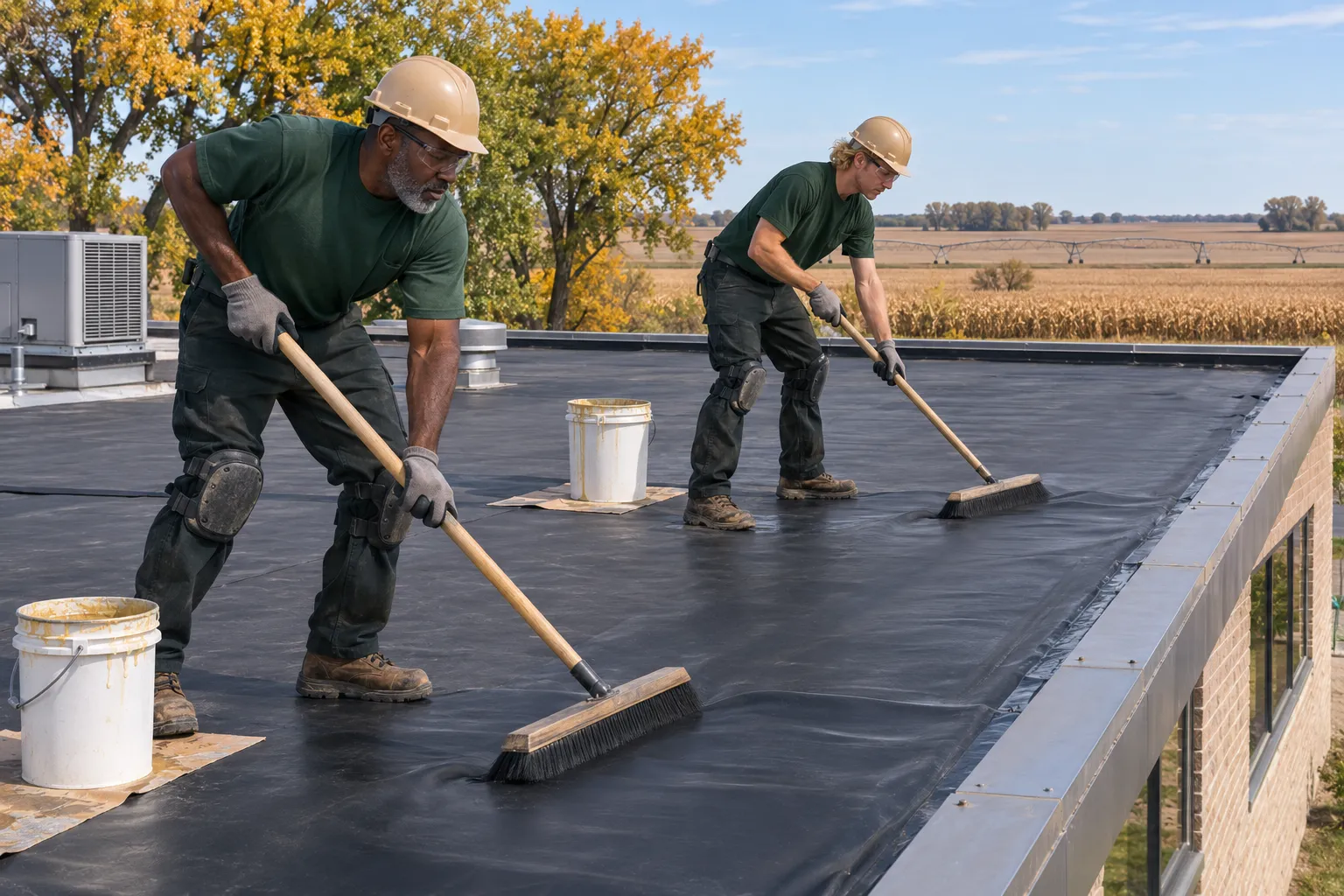
We install Grand Island EPDM roofing, fully adhered or ballasted, on cold storage rooms, older flat roofs, and buildings whose decks move with the seasons.
Grand Island EPDM roofing earns its place on cold, moving, or wide-open roofs. These cases show where it fits and where to look elsewhere.
Rubber stays pliable at temperatures that stiffen other sheets.
Older wood or steel decks move, and a stretchy membrane rides along with them.
Large sheets cover big areas with fewer seams to tape and check.
Grease at the fans attacks rubber, so another membrane serves better.
Rubber roofs fail in familiar places. Here is what each condition looks like and what it tells us.
How the sheet is held down and how thick it runs matter as much as the rubber itself.
| Choice | Option | Where It Fits |
|---|---|---|
| Attachment | Fully adhered | Roofs that need a smooth surface, easy inspection, and strong wind resistance. |
| Attachment | Ballasted | Strong decks that can carry rock or pavers, where a faster install pays off. |
| Attachment | Mechanically fastened | Steel decks where fasteners and plates go through the insulation. |
| Sheet | Reinforced EPDM | Roofs with traffic or fastened systems that need extra tear strength. |
| Sheet | Wide standard rolls | Big open fields where fewer seams save tape and labor. |
| Insulation | Polyiso with cover board | Roofs that need R-value and protection from hail underfoot. |
Why owners of cold rooms and older flat roofs keep coming back to rubber.
Glued sheets give a smooth, wind-resistant surface you can inspect. Ballast speeds the install but needs a structure that carries the weight of the rock.
Rubber keeps its stretch through freeze-thaw swings, so the sheet moves with the deck instead of cracking at folds and corners.
Large rolls cover big fields in a few pieces, which cuts the number of taped laps that need checking over the years.
Cuts and punctures get cleaned, primed, and covered with a matching patch, keeping small damage from growing into a leak.
Every EPDM install follows the same five steps, adjusted for adhered or ballasted work.
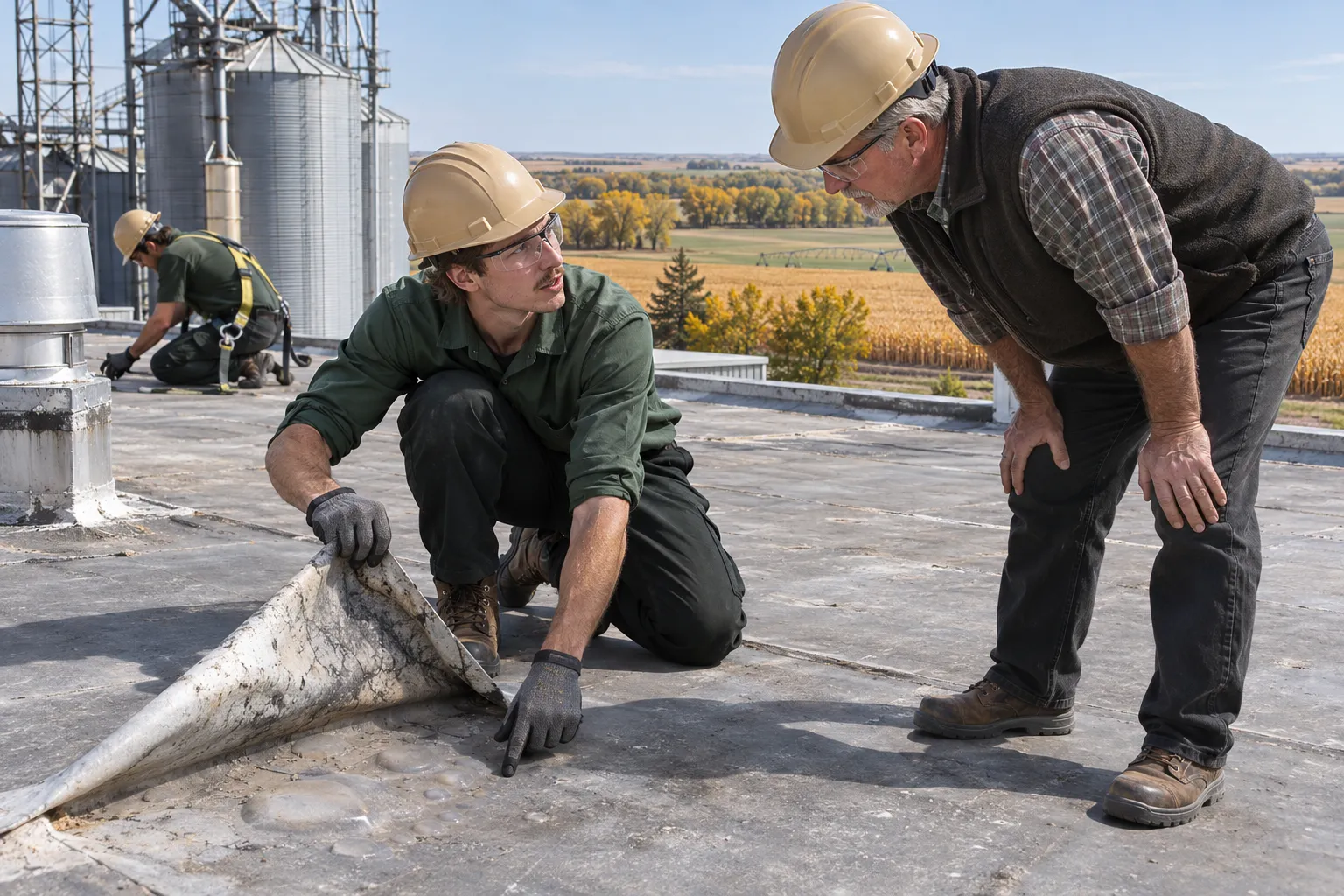
Core cuts and a look at the deck from inside show what has to come off and whether the structure can take ballast.
Tear-off runs a section at a time, with wet insulation hauled out and any damaged deck replaced before new board.
Insulation and cover board go down, then EPDM sheets relax in the sun before they are glued, fastened, or ballasted.
Seam areas get cleaned and primed, tape goes on, and each lap is rolled tight along its full length.
Parapets, curbs, and pipes get flashing with termination bar and counterflashing, and edge metal closes the perimeter.
A rubber sheet fits many roofs, though some buildings call for a different system.
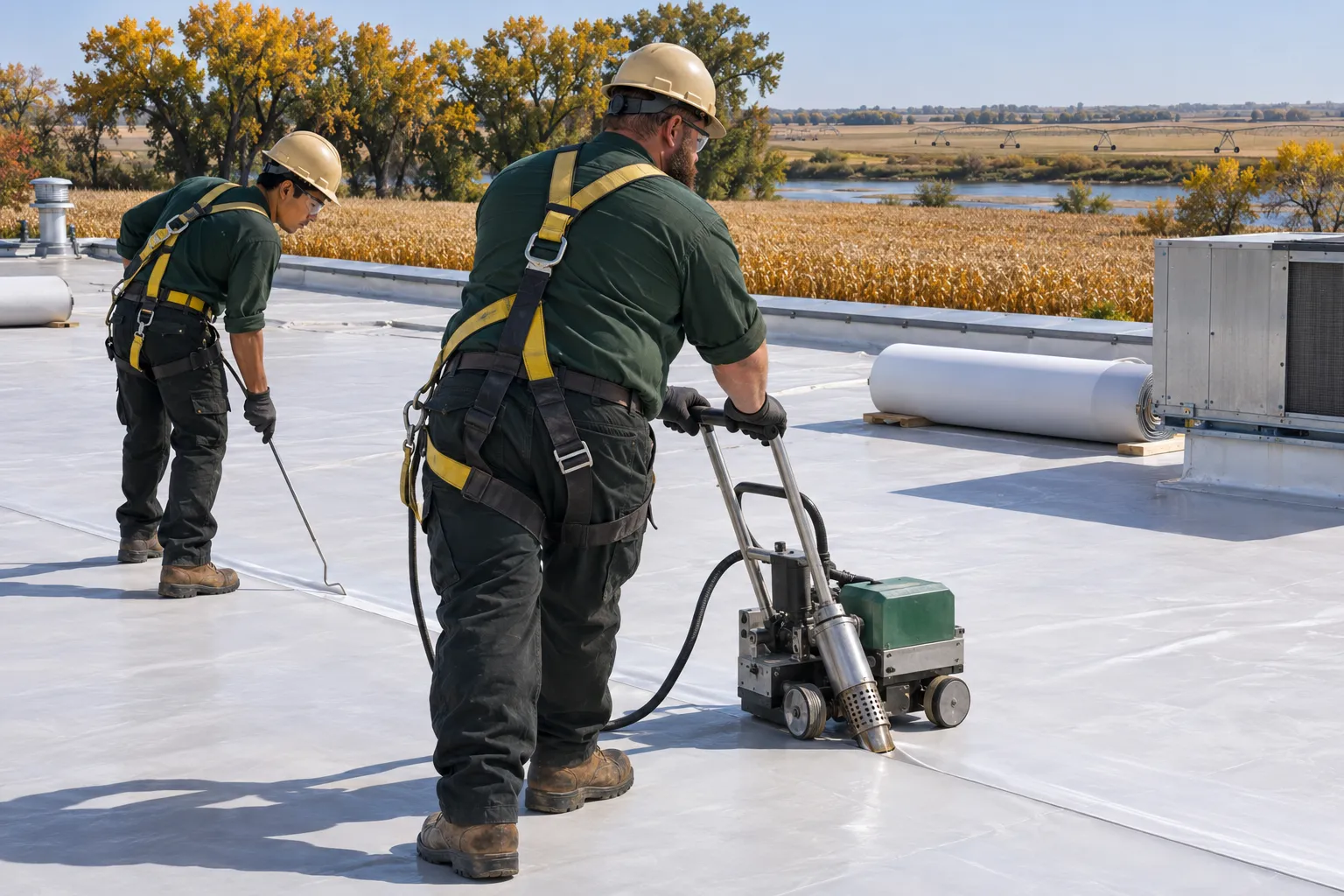
Offices and retail buildings in full sun often do better under white TPO with heat-welded seams.
Read about TPO roofing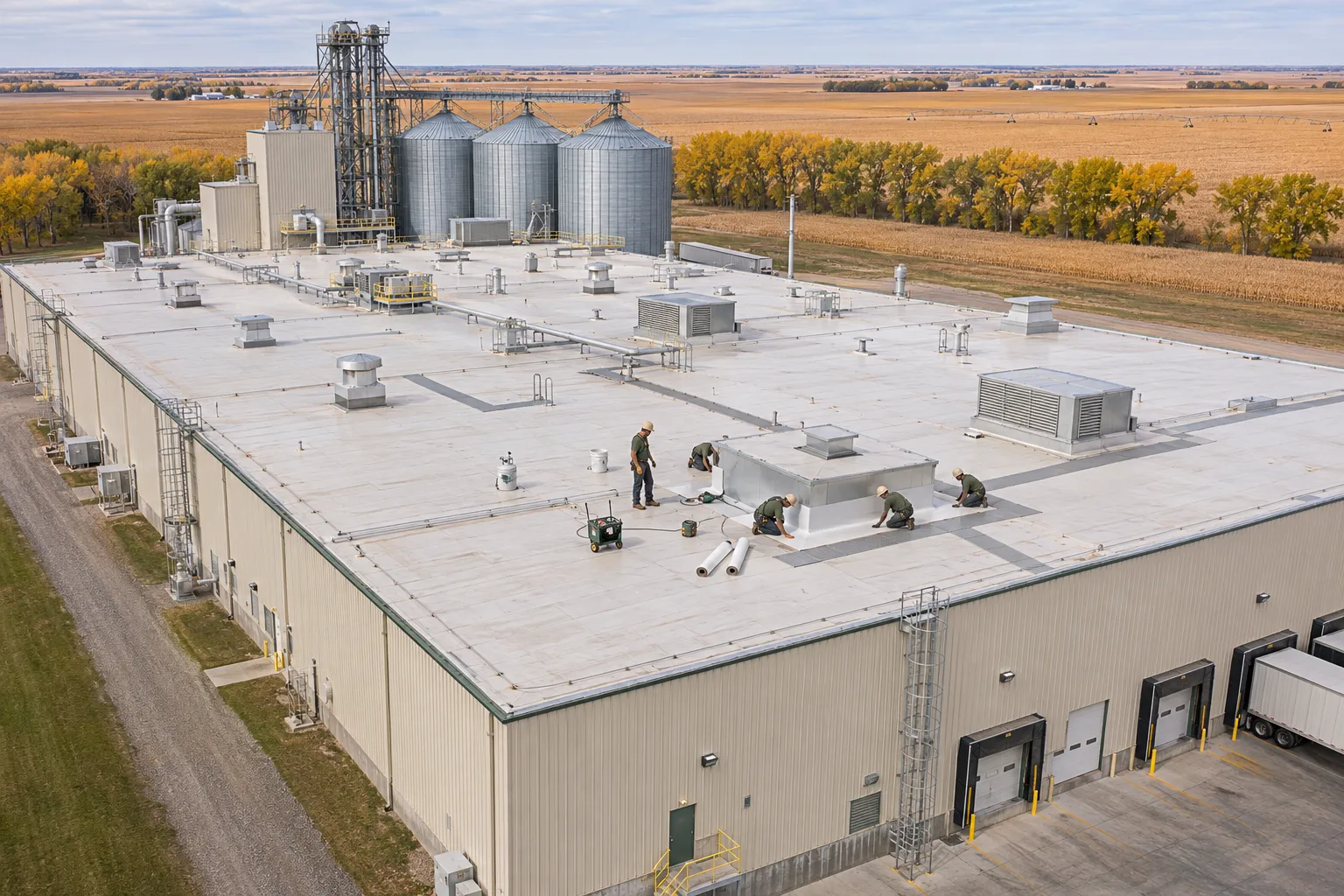
Manufacturing roofs with grease or chemical exhaust need a sheet that resists what comes out of the fans.
Read about industrial roofing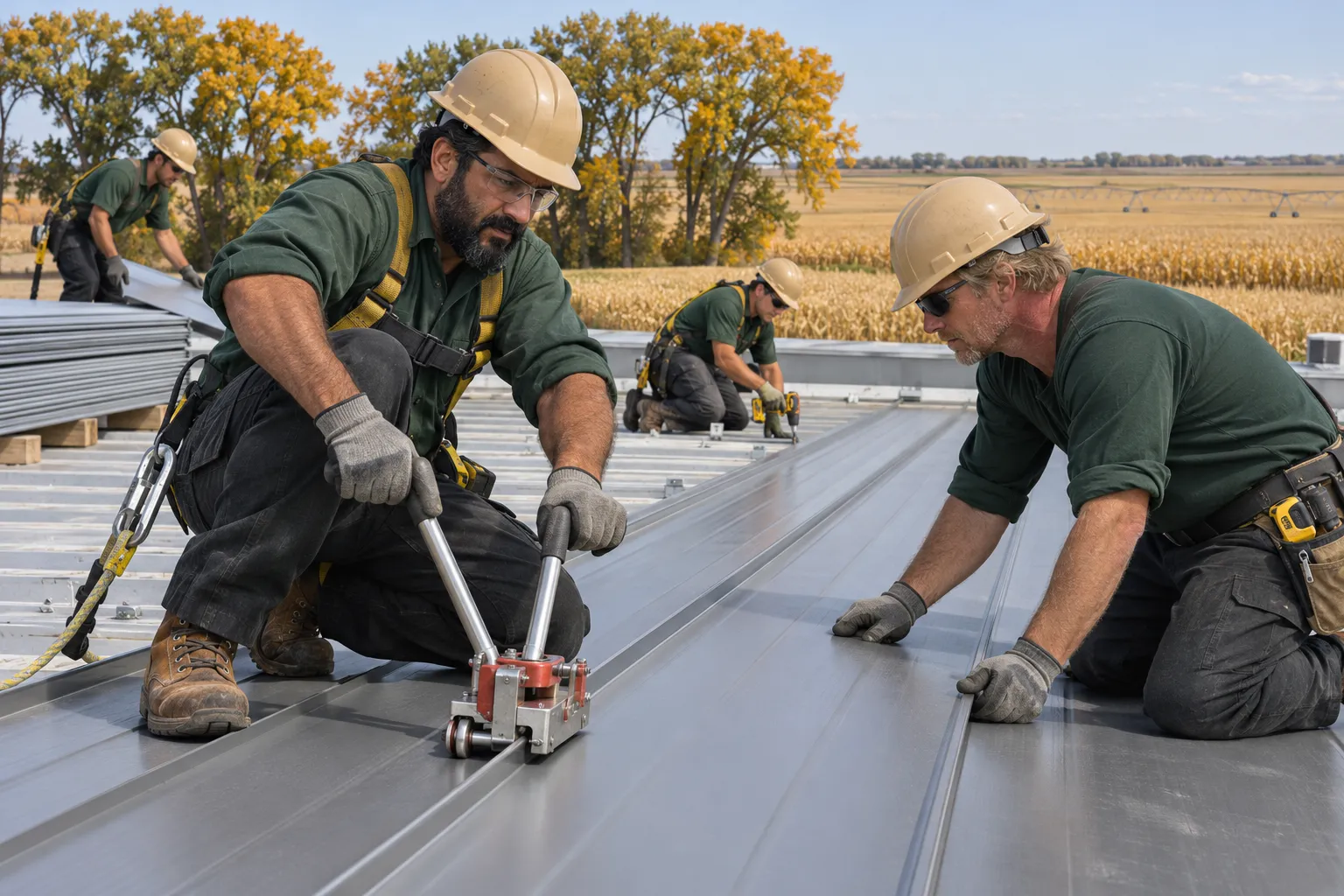
Buildings with sloped framing take standing-seam or exposed-fastener panels on purlins.
Read about metal roofingWhat owners ask about rubber roofs.
An adhered sheet is glued to the insulation, which leaves a smooth surface that resists wind and is easy to inspect. A ballasted sheet lies loose under river rock or pavers, which goes on faster but adds weight. The deck and structure decide which one the roof can carry.
Sheet thickness, seam tape quality, and foot traffic set it. EPDM stays flexible in the cold, which helps through freeze-thaw cycles, and the field sheet often outlasts its seams and flashings. Checking seams each year and patching after hail stretches the time before replacement.
Thickness, attachment, insulation, and tear-off drive it. Reinforced sheet costs more than standard rolls, and adhered work takes more adhesive and labor than ballast. Wide sheets save seams on big fields, while lots of curbs and pipes add detail hours.
Shrinkage pulling the sheet off walls, seams failing in many places, and wet insulation underneath are the signs. A few open seams get repaired. Widespread wet board found by a moisture scan usually means tear-off, since new rubber over soaked insulation traps the water.
Old membrane and wet boards come off one section at a time, the deck gets repaired where needed, and new insulation and cover board go down. The new sheet is then glued, fastened, or ballasted, seams get primed and taped, and walls and curbs get fresh flashing.
Tell us whether the roof is adhered or covered in rock, and we will plan the walk-through around it.