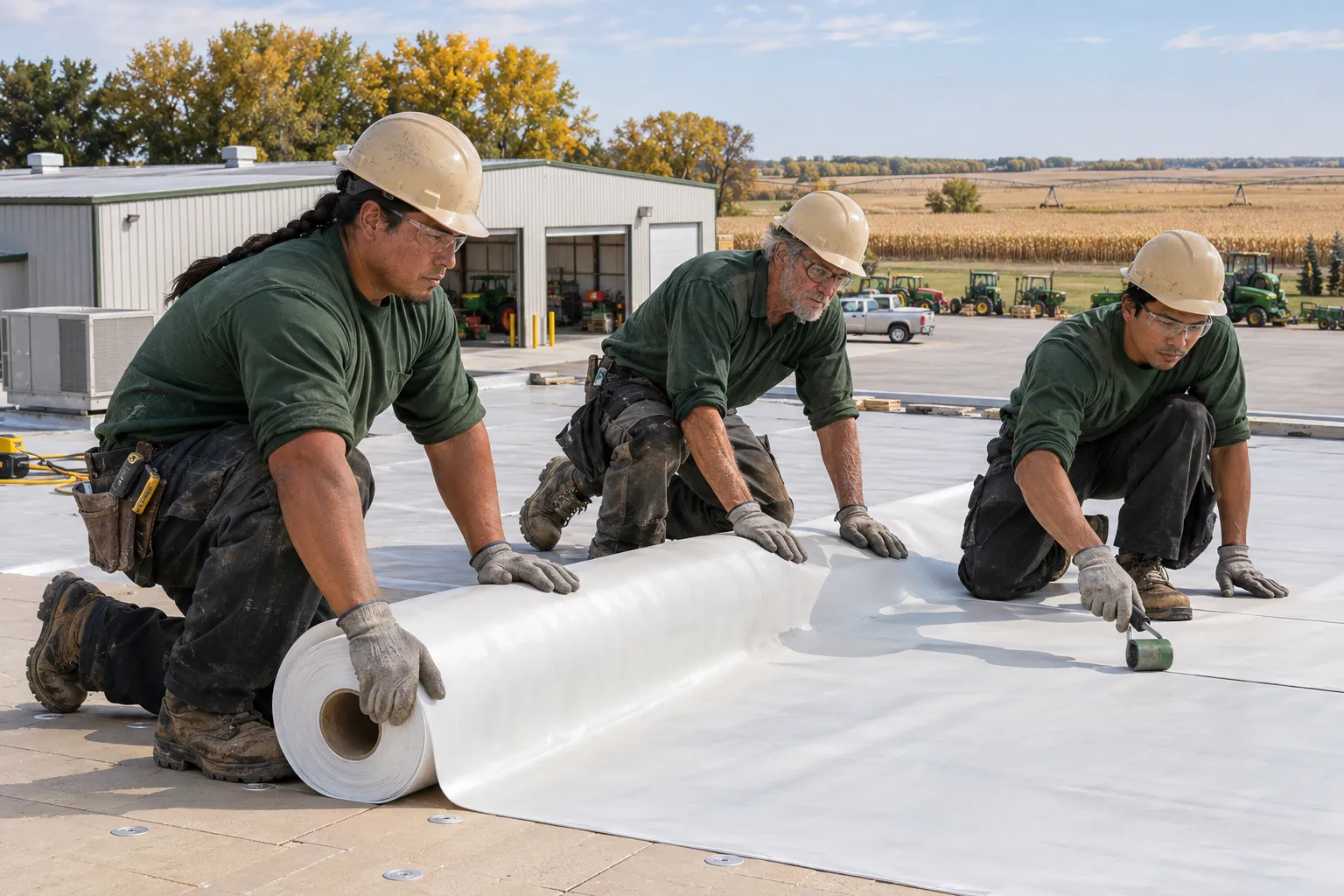
Roofing crew rolling out white TPO membrane on a flat commercial roof in Grand Island, NE

Grand Island Commercial Roofing Contractor

New Roofs for Processing Plants, Ag Dealers, and Machine Sheds

We handle Grand Island commercial roofing on plants, shops, and offices: TPO, EPDM, industrial, and metal roofs, new or replacement. Every job starts with a roof walk.

  • Four roof systems installed
  • Roof walk before any price
  • Work phased around your hours
  • Written scope, line by line

Grand Island Commercial Roofing Systems We Install

Pick your roof type below. Each Grand Island commercial roofing system fits a different building, slope, and budget, and the walk-through shows which one your roof needs.

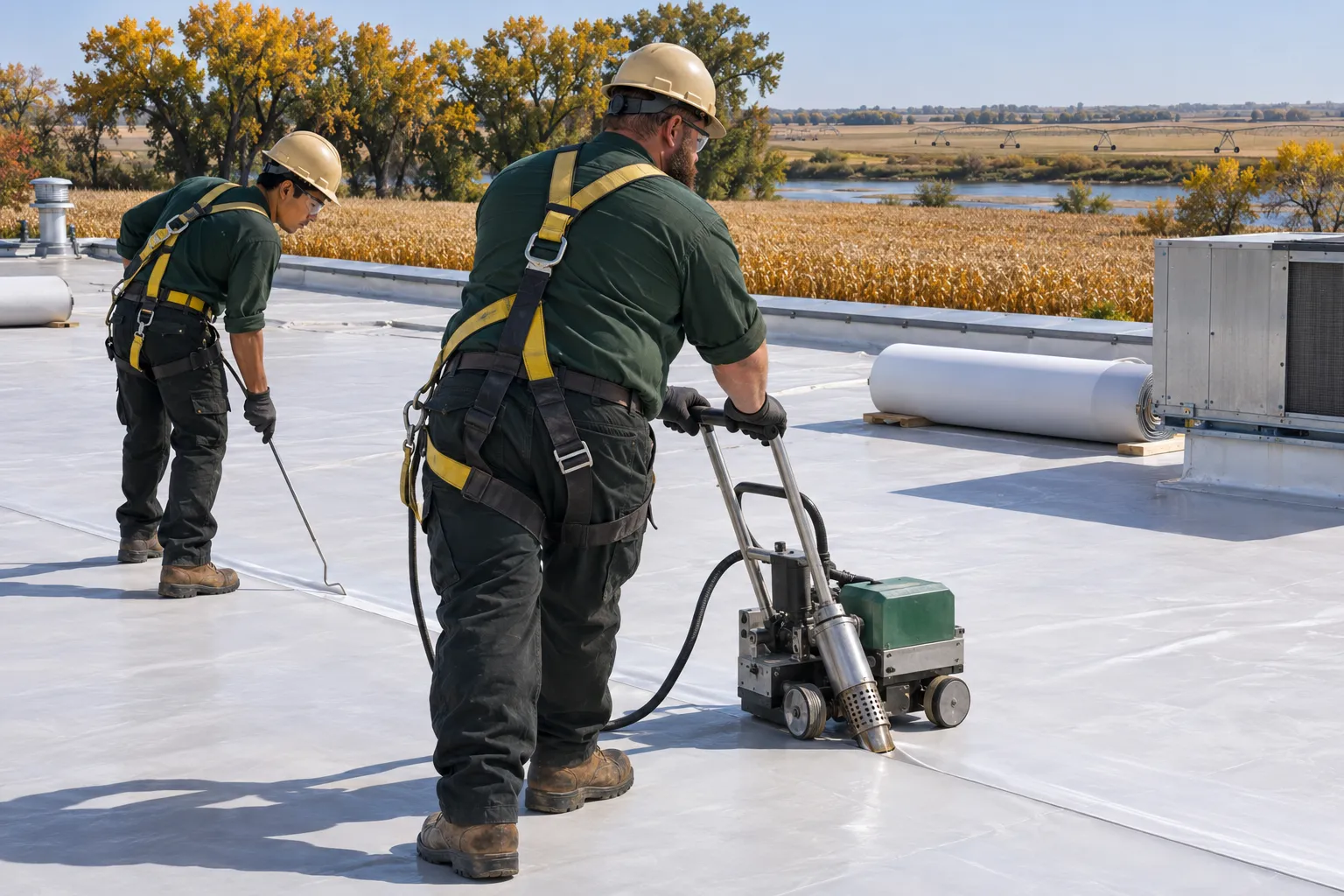
Roofer heat-welding a TPO seam with a hot-air welder on a commercial roof

TPO Roofing

White TPO membrane goes down over rigid insulation on low-slope roofs, and every seam is heat-welded. It fits offices, conditioned warehouses, and retail roofs that sit in full summer sun.

Best For

  • Low-slope offices and retail
  • Conditioned warehouses
  • Roofs with steady foot traffic

Check First

  • Wet insulation under the old roof
  • Curb heights at rooftop units
TPO Roofing in Grand Island
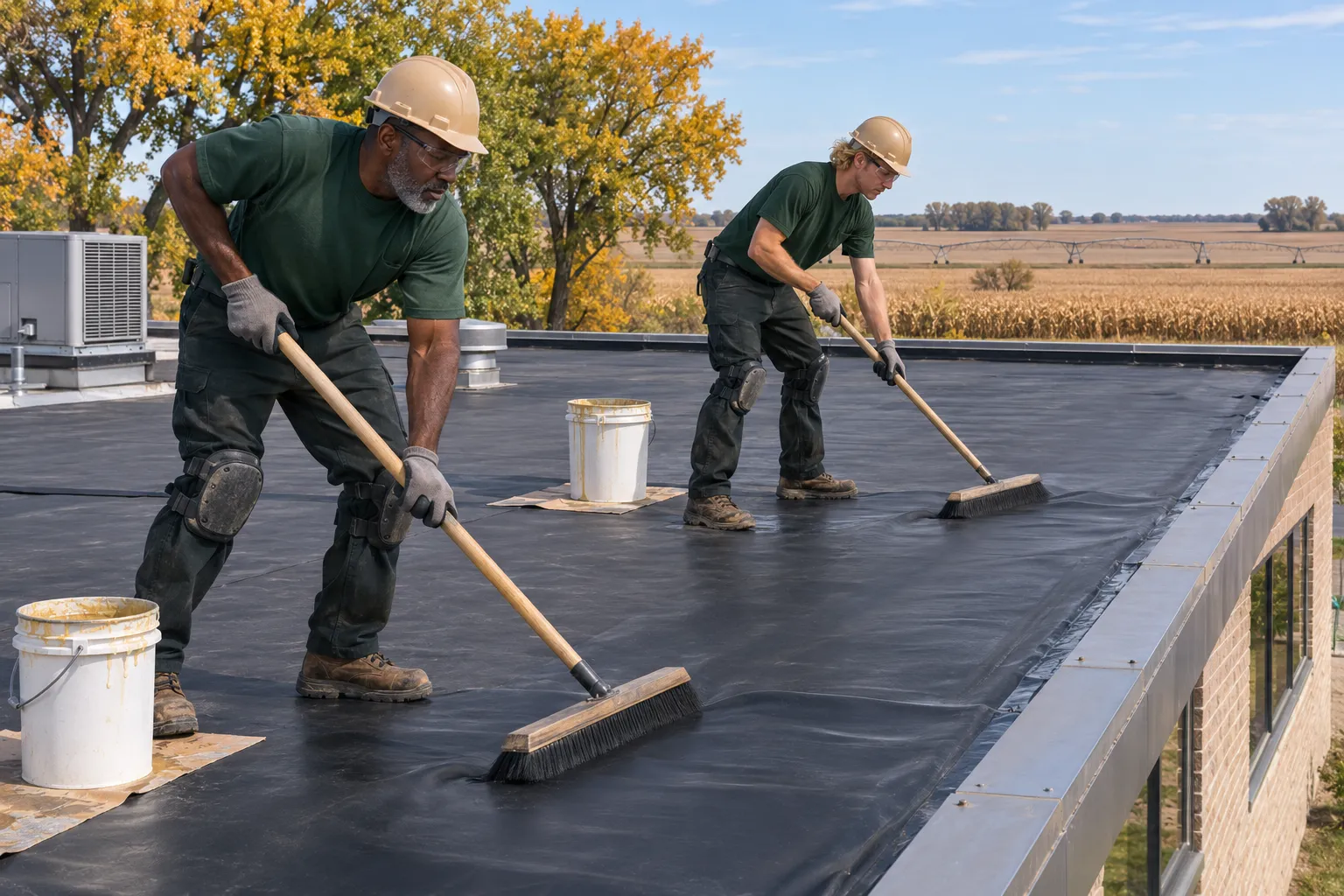
Crew brushing black EPDM rubber membrane into adhesive on a flat commercial roof

EPDM Roofing

Black EPDM rubber stays flexible through Nebraska winters. We install it fully adhered or ballasted, with taped seams, on low-slope roofs where cold and deck movement lead the list.

Best For

  • Cold storage and older flat roofs
  • Decks that move with the building
  • Wide, open roof fields

Check First

  • Deck capacity before ballast
  • Shrinkage at parapet walls
EPDM Roofing in Grand Island
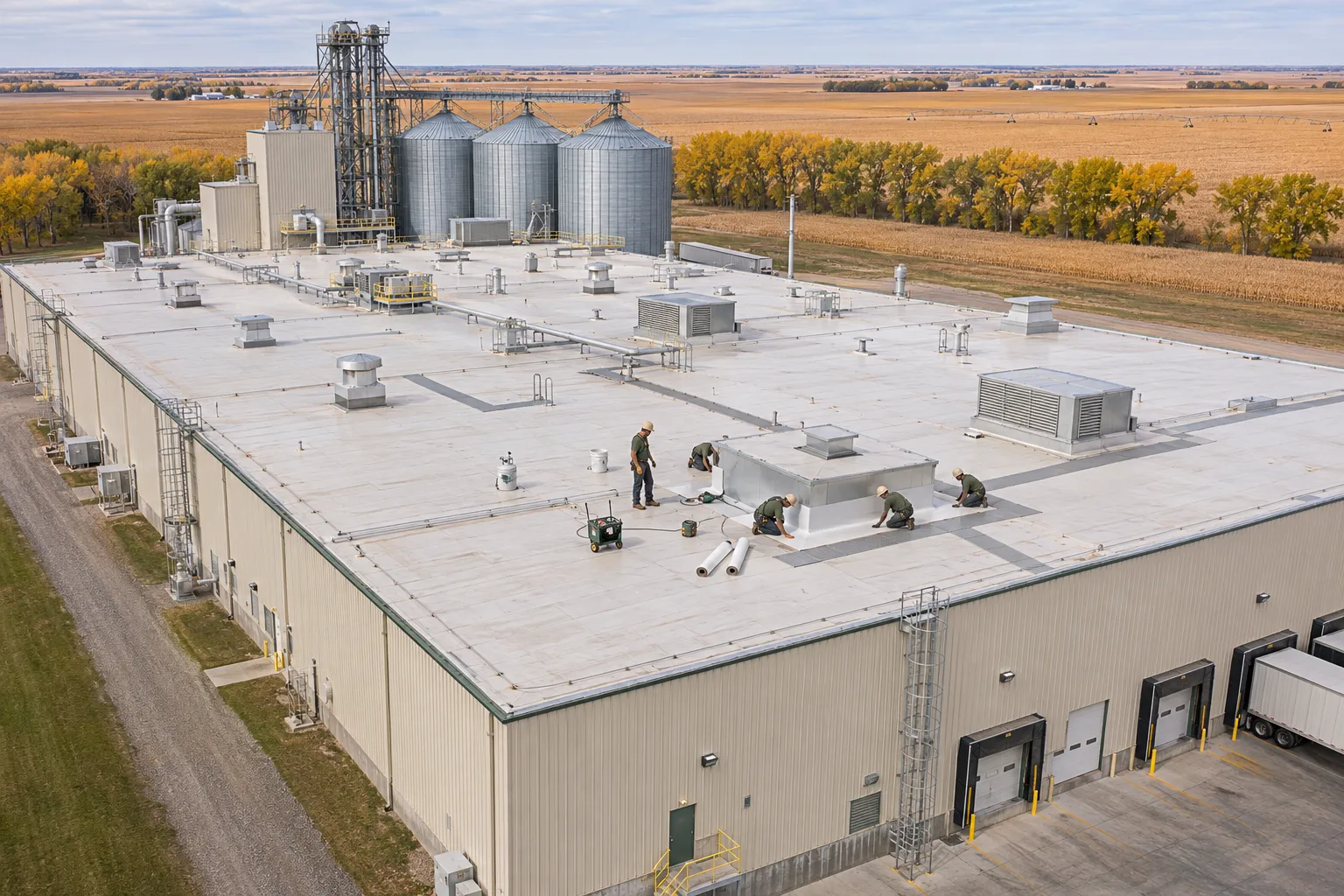
Roofers working between rooftop units on a large industrial plant roof near Grand Island grain bins

Industrial Roofing

Plant roofs carry exhaust fans, ductwork, and heavy curbs. We choose membranes that hold up to the plant's exhaust, add walkway pads, and phase tear-off so production lines keep running.

Best For

  • Processing and manufacturing plants
  • Roofs crowded with equipment
  • Buildings that run several shifts

Check First

  • Grease or chemical exhaust at vents
  • Wind uplift at corners and edges
Industrial Roofing in Grand Island
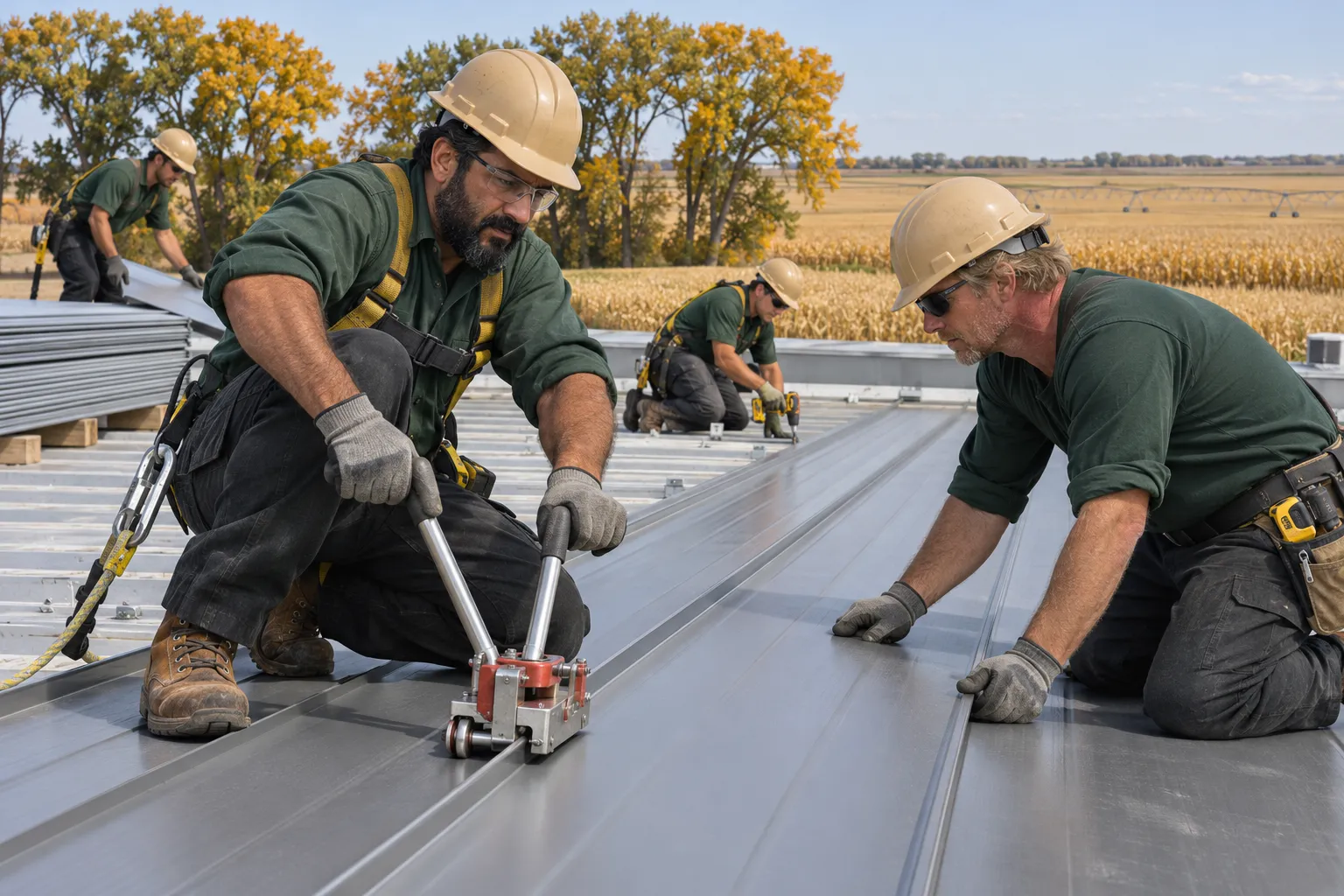
Roofer fastening standing-seam metal panels on a commercial building

Commercial Metal Roofing

Standing-seam and exposed-fastener steel panels cover shops, dealer buildings, and machine sheds. Panels shed snow and rain on sloped roofs, and eave trim is detailed for drifting.

Best For

  • Ag dealer shops and machine sheds
  • Sloped storage buildings
  • Recovering an old roof on framing

Check First

  • Purlin spacing and structure
  • Condensation under the panels
Commercial Metal Roofing in Grand Island

Roof Problems We Find on Hall County Buildings

Roofs here take hail, drifting snow, and hard freeze-thaw swings. These are the conditions that show up most on our walk-throughs, grouped by cause.

Hail

Cracked Membrane and Crushed Insulation

You See
Bruised spots, split laps, or soft areas underfoot after a storm.
What It Means
Hail broke the membrane or crushed the foam board under it. NWS Hastings logged tennis ball size hail inside Grand Island on June 13, 2017.
Freeze-Thaw

Open Seams and Lifted Flashing

You See
Seam edges curling up and flashing pulling away at curbs.
What It Means
Water gets into a weak lap, freezes, and pries it open a little further each cycle until the seam leaks.
Wind

Billowing Membrane at Corners

You See
Sheet lifting at roof corners, loose edge metal, or popped fasteners.
What It Means
Corners and edges carry the highest uplift. Loose edge metal lets wind under the sheet and peels it back.
Snow Drift

Leaks Below Parapets and Roof Steps

You See
Stains along walls where snow piles against parapets or lower roof levels.
What It Means
Drifts hold meltwater against base flashing for weeks. Short flashing heights and worn counterflashing let it in.
Age

Shrunk, Brittle Membrane

You See
Sheet pulled tight at walls, cracks at folds, and chalky surface wear.
What It Means
An aging membrane has lost its stretch. Patches buy little time once shrinkage bridges the corners.
Drainage

Water Standing After Rain

You See
Dirt rings and water still sitting two days after a storm.
What It Means
Low spots or blocked drains keep the membrane wet. Tapered insulation or drain work fixes the slope during a reroof.

Commercial Roofing for Grand Island Processing Plants

A new roof should fix the problem that brought you here and keep the building working while it goes on.

TPO vs EPDM for Commercial Buildings Comes Down to Use

Seam method, foot traffic, and exhaust decide it. Welded TPO with a white surface fits sunny offices, while taped EPDM fits cold rooms and decks that move.

Dry Insulation Under a Tight Membrane

Wet boards come out at tear-off, and new insulation goes down at the thickness your energy code calls for, so the building holds heat again.

Flashing Built for Snow and Drifts

Base flashing runs high at parapets and roof steps, so drifted snow melts onto membrane and stays off the wall joints.

A Schedule That Fits Your Shifts

Sections come off and get dried in one at a time, with crane lifts and dumpsters kept away from shipping doors and customer entrances.

Water Coming Through the Ceiling Tile?

Leaking now

Call and tell us where the water shows up.

Planning a new roof

Book a roof walk and a written scope.

Get A Free Estimate

Best Commercial Roofing Options for Grand Island Buildings

Match what you see on your roof to the job that usually comes first.

If Your Roof

Leaks in One Spot on a Newer Membrane

A torn lap or punctured sheet with dry insulation around it.

Start WithA targeted repair
If Your Roof

Is Low-Slope Over Offices or Retail

Sun loads the roof all summer and HVAC units sit in the field.

Start WithTPO roofing
If Your Roof

Covers Cold Storage or Moves With the Seasons

Decks that flex and rooms kept cold all year reward a stretchy sheet.

Start WithEPDM roofing
If Your Roof

Sits on a Shop or Machine Shed

Sloped framing, purlins, and snow sliding off the eaves.

Start WithCommercial metal roofing

How Commercial Roofing Work Runs in Grand Island

Five steps take a roof from the first walk to the final cleanup.

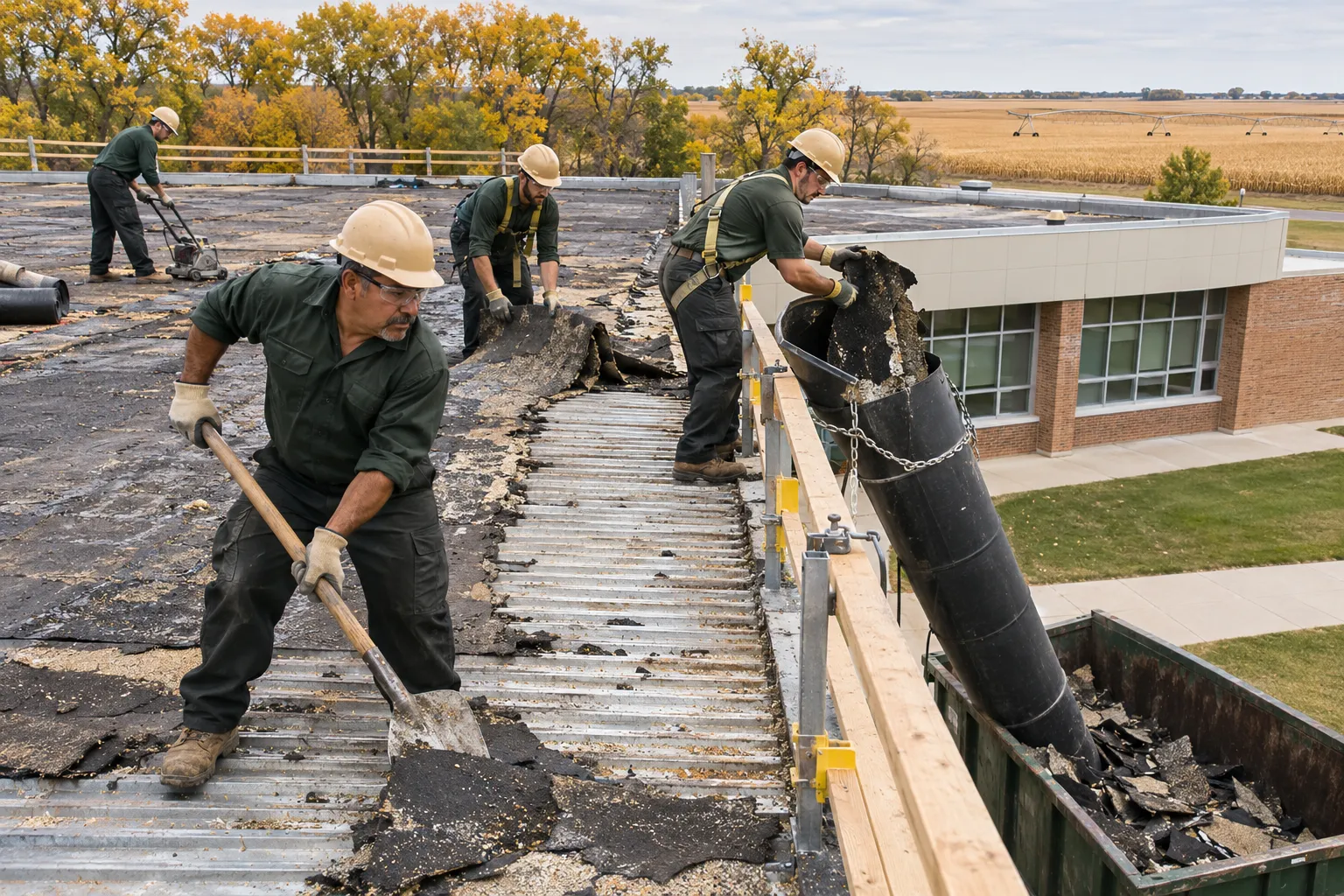
Crew tearing off an old membrane and wet insulation on a commercial roof
  1. 1

    Walk the Roof

    We check seams, drains, curbs, and edge metal, then core-cut or scan for wet insulation so the scope matches what sits under the membrane.

  2. 2

    Write the Scope

    Membrane, thickness, insulation, attachment, and flashing details go on paper, line by line, so you can compare bids evenly.

  3. 3

    Set the Schedule

    Tear-off sections, crane days, dumpster spots, and the building permit are settled before material arrives.

  4. 4

    Tear Off and Dry In

    Each section comes off, the deck gets checked, and new insulation and membrane go down before evening.

  5. 5

    Flash, Test, and Clean Up

    Curbs, drains, and parapets get flashed, seams are probed, and the roof and lot are cleared of debris.

Serving Grand Island And Five Nearby Towns

We take commercial roofing work in Grand Island and five towns nearby. Outside them? Call us or send us a message.

Storefronts and Low-Slope Retail

  • AuroraBrick storefronts and flat retail roofs to the east.
  • St. PaulChurches, schools, and Main Street buildings to the north.

Farm Supply, Grain, and Metal Shops

  • OrdGrain, farm supply, and shop buildings to the northwest.
  • Central CityLots with several roofs to phase, to the northeast.

Tear-Offs With New Insulation

  • Wood RiverReroofs where insulation choices set the scope, to the southwest.
  • Grand IslandPlants, dealer shops, and offices across the city.

Commercial Roofing Questions From Grand Island Owners

Short answers to what owners ask first.

What drives commercial roof replacement cost in Grand Island?

Size and system set the base. After that, the number of old layers coming off, how much insulation is wet, and deck repairs found at tear-off move the total. Every parapet, curb, and drain adds flashing work, and crane access or after-hours staging adds labor.

TPO or EPDM: which fits a Grand Island commercial building?

Pick TPO when the roof sits in full sun over conditioned space and you want welded seams under a white surface. Pick EPDM when the building runs cold, the deck moves, or the roof sees little foot traffic. Vent exhaust and the attachment method also steer it.

How long does a commercial roof last in Grand Island?

Service life comes down to the system, how well it went on, how water drains, and how often someone checks it. Hail, freeze-thaw cycles, and ponding at drains wear roofs faster here. Two inspections a year and quick seam repairs help a roof reach its rated range.

What should Grand Island owners compare when choosing commercial roofing companies?

Put the written scopes side by side. Compare membrane brand and thickness, insulation type and R-value, how the sheet is attached, flashing details, and the tear-off plan. Ask who pulls the city building permit and how rooftop units get lifted and reset.

Do you work on roofs outside the city limits?

Yes. Aurora, Central City, St. Paul, Ord, and Wood River are part of our service area along with all of Grand Island. For a building somewhere else nearby, call and describe where it sits and what the roof needs.

Hire a Grand Island Commercial Roofing Contractor

Tell us about the building and the roof, and we will set up a walk-through and a written scope.

Call Us (402) 833-7562